Yiran Long
A shared resonance field — Resonance exhibition concept

Resonance

01 / 06
Scroll to explore the project
Resonance exhibition proposal

China Industrial Design Exhibition · Suzhou · 2026

Resonance

Six frequencies. One connected exhibition.

Exhibition concept · Team project

Explore the exhibition

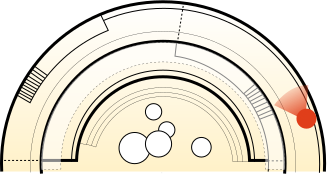
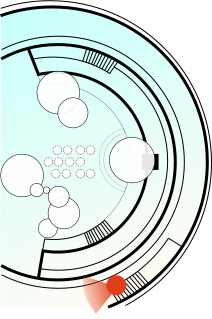
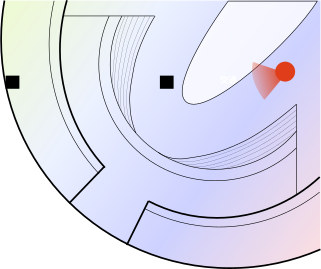
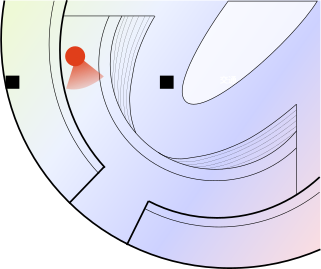
Follow the floor plan

Click an area to see its spaces and design development.

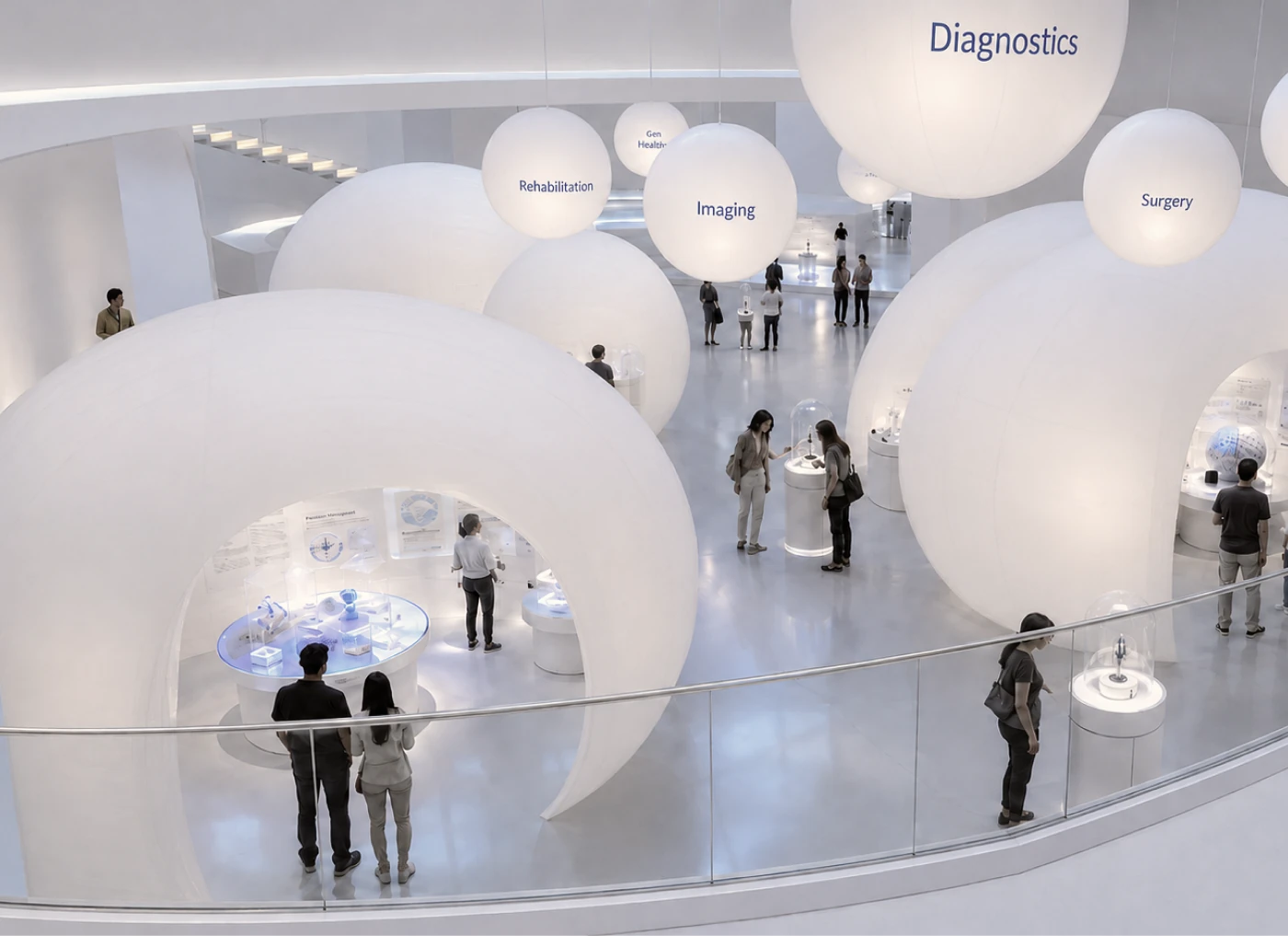
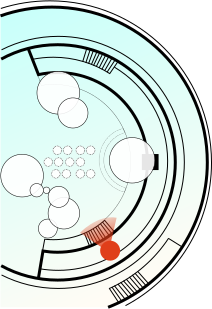
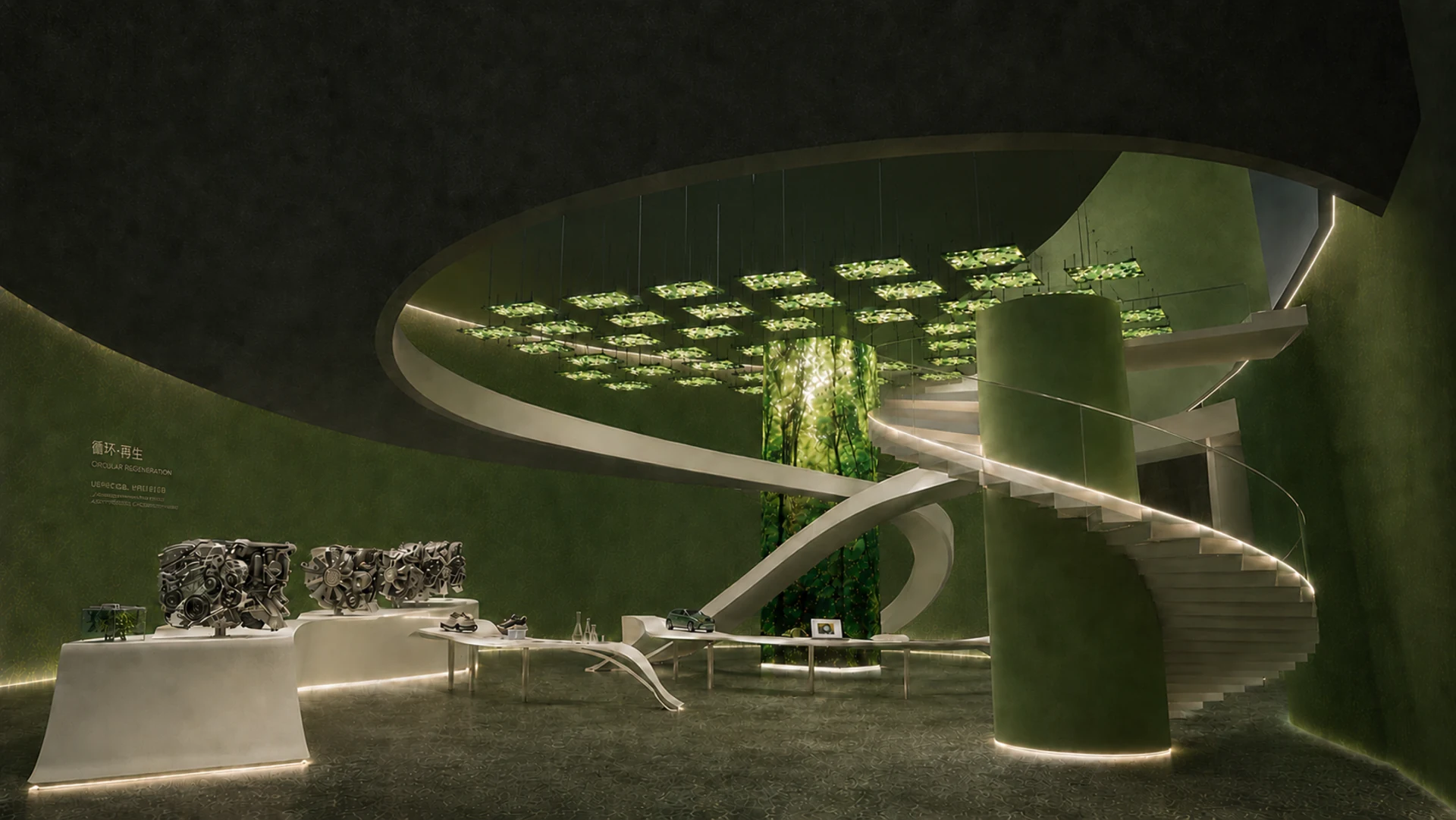
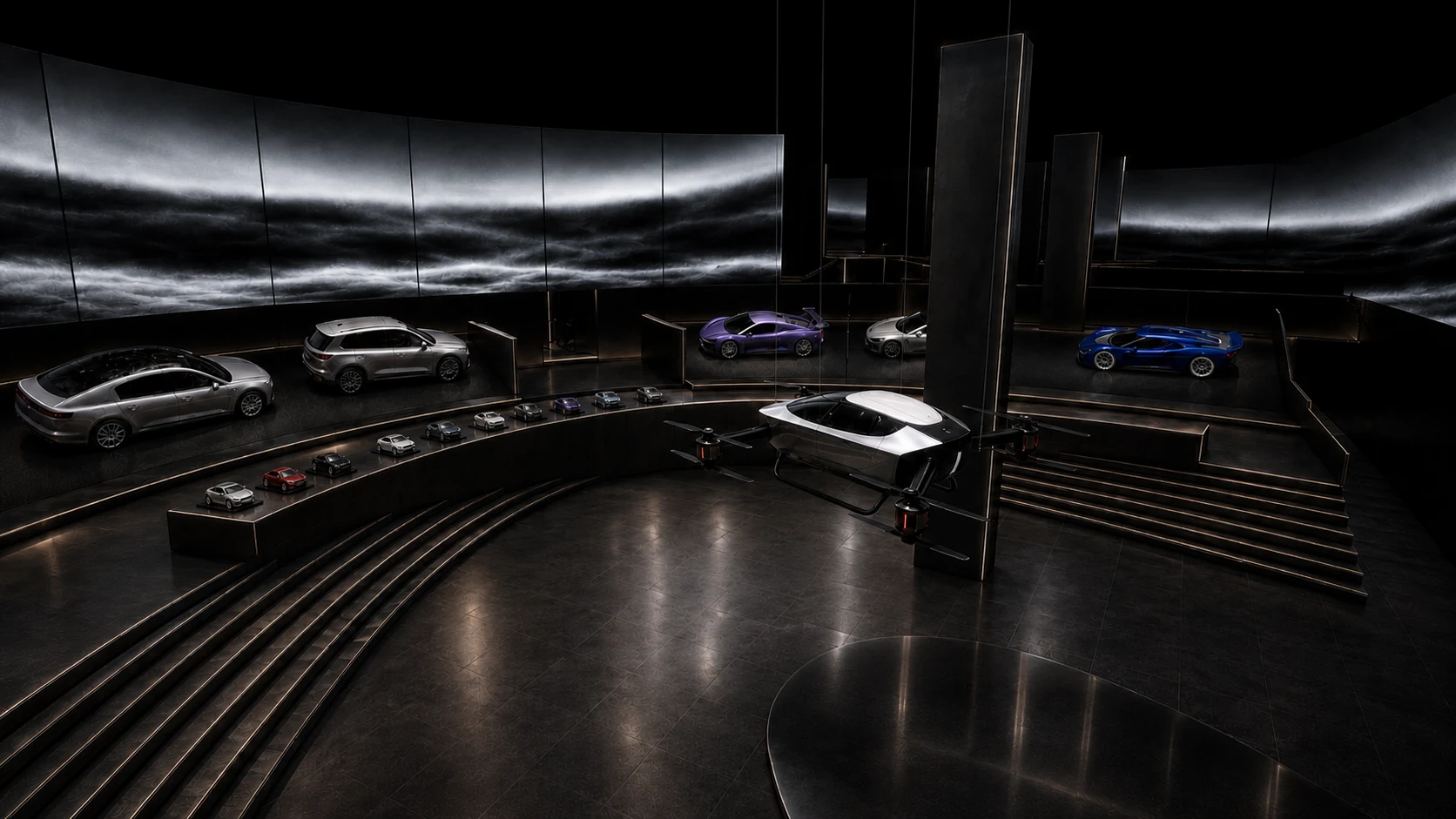
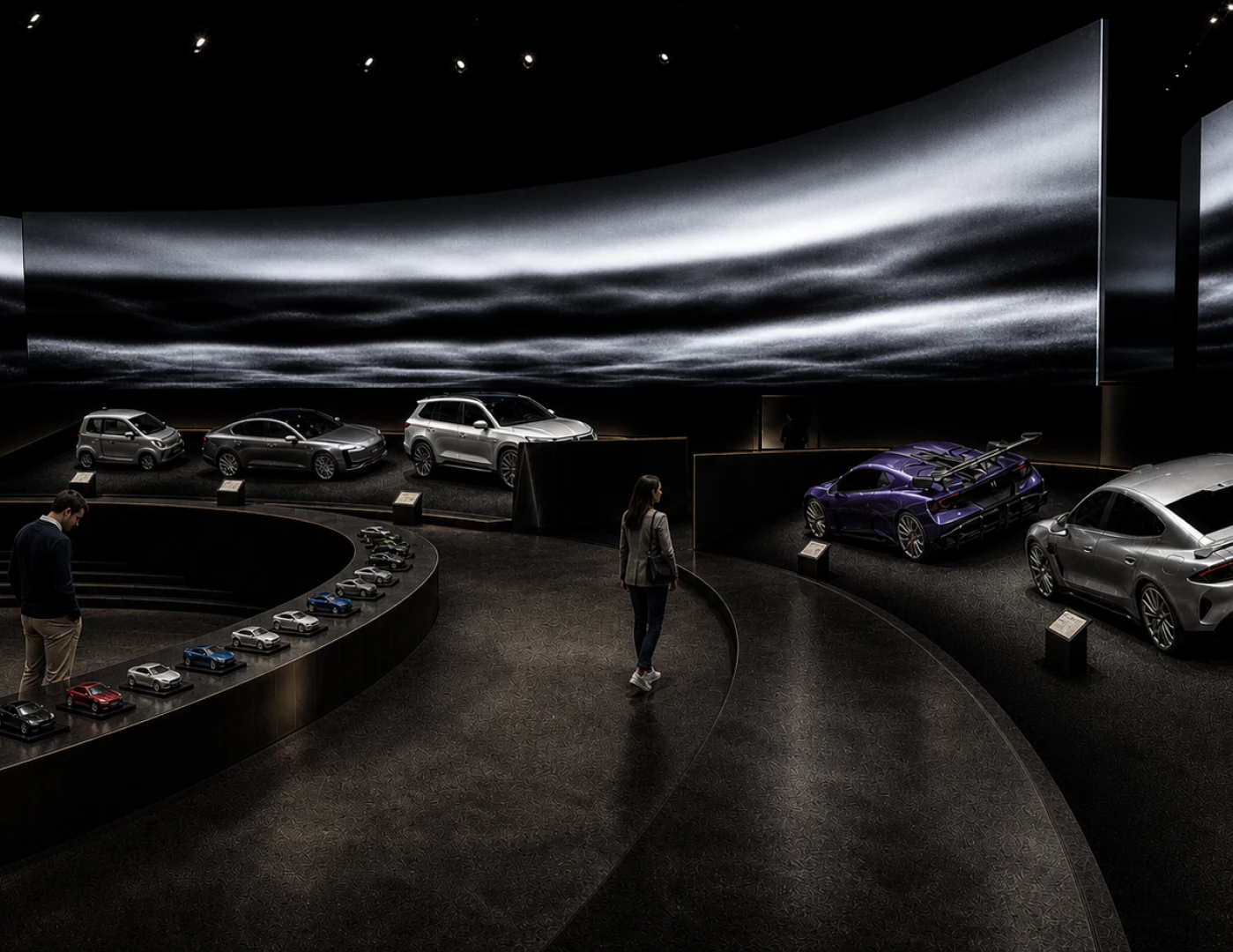
PrologueLifeaestheticsMedicaltechnologyCirculareconomyFuturemanufacturingSmartmobilityNationalindustrial systems

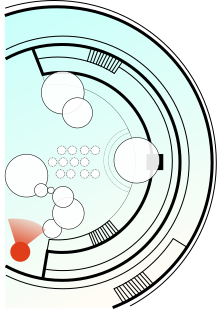
Prologue

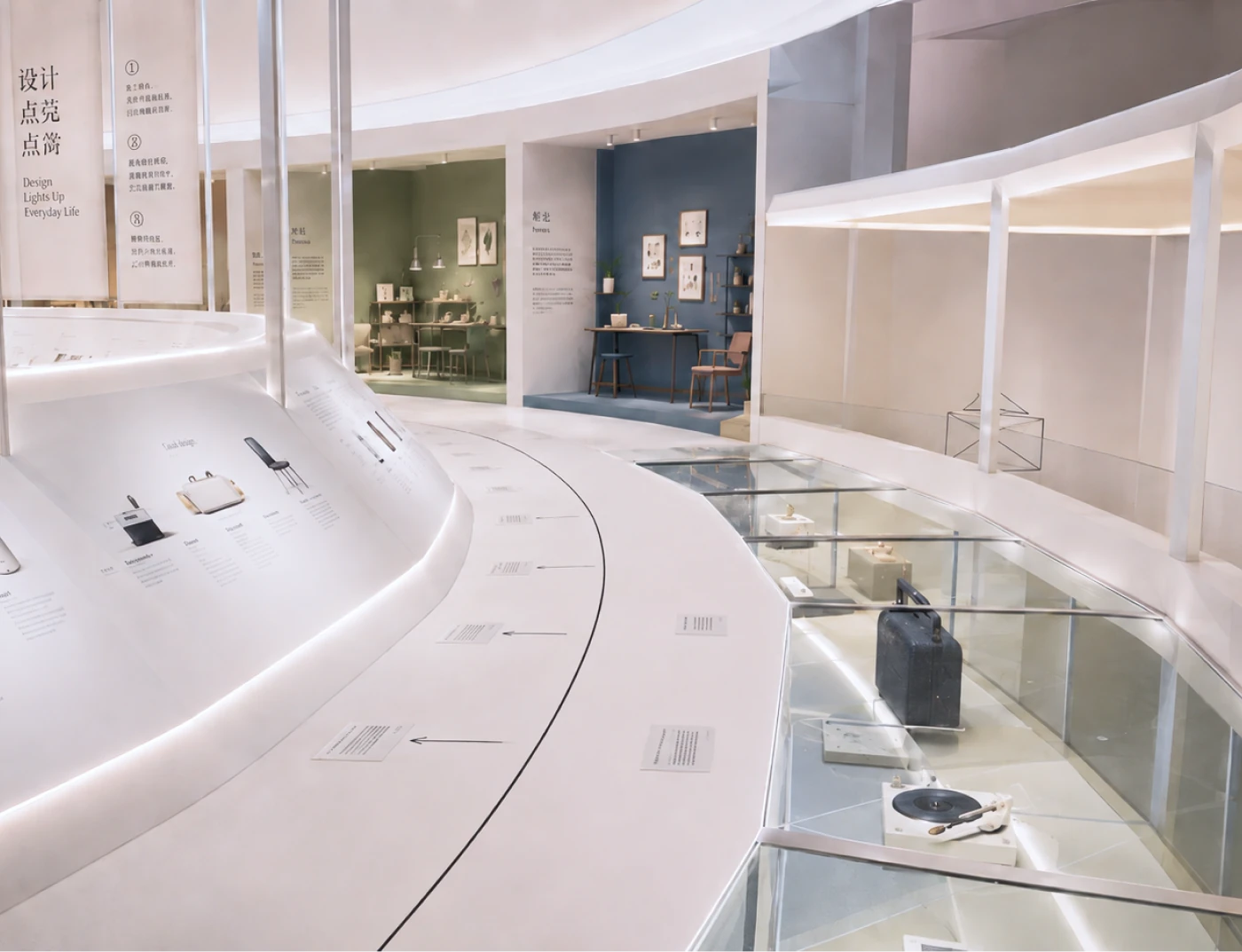
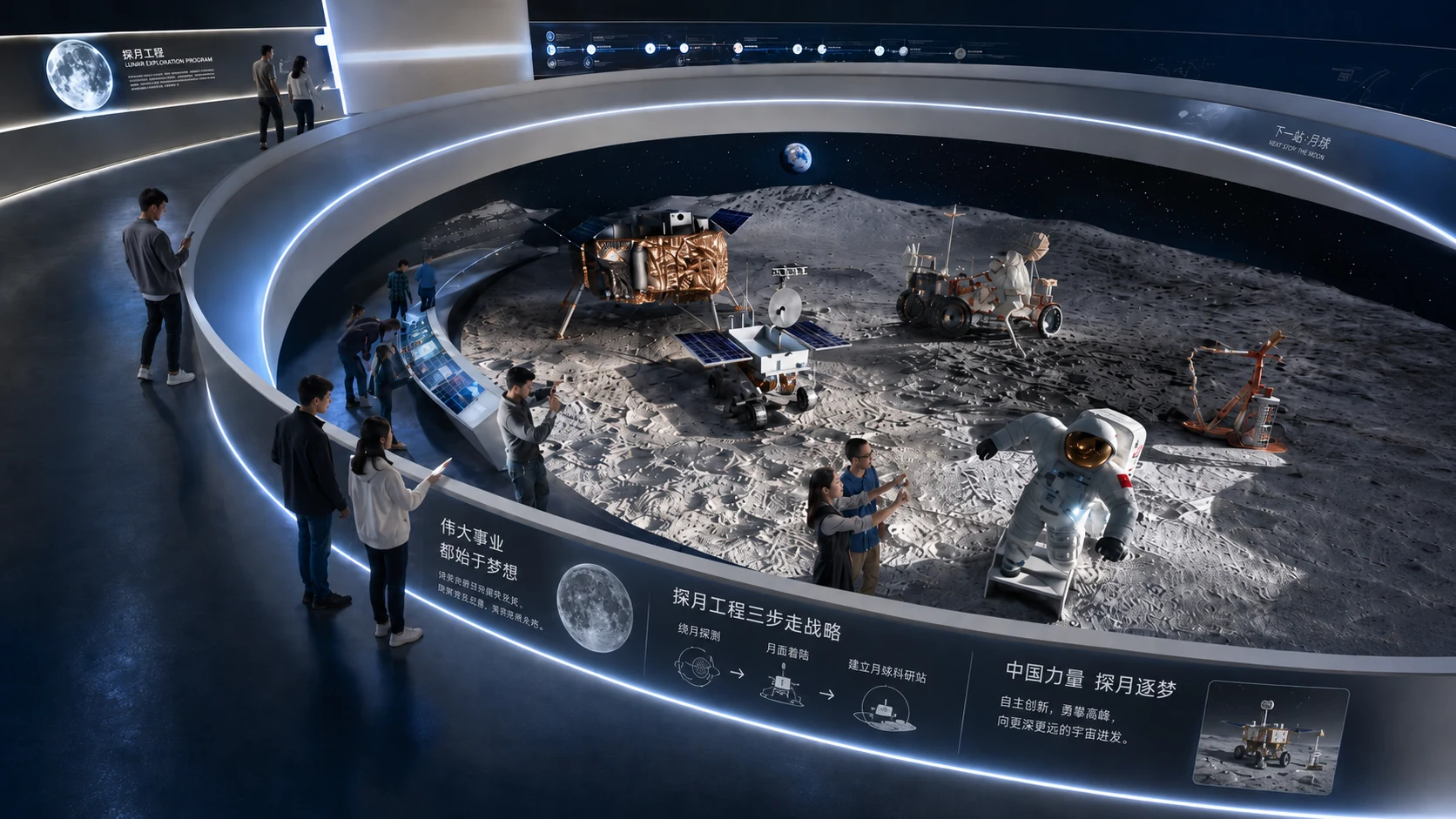
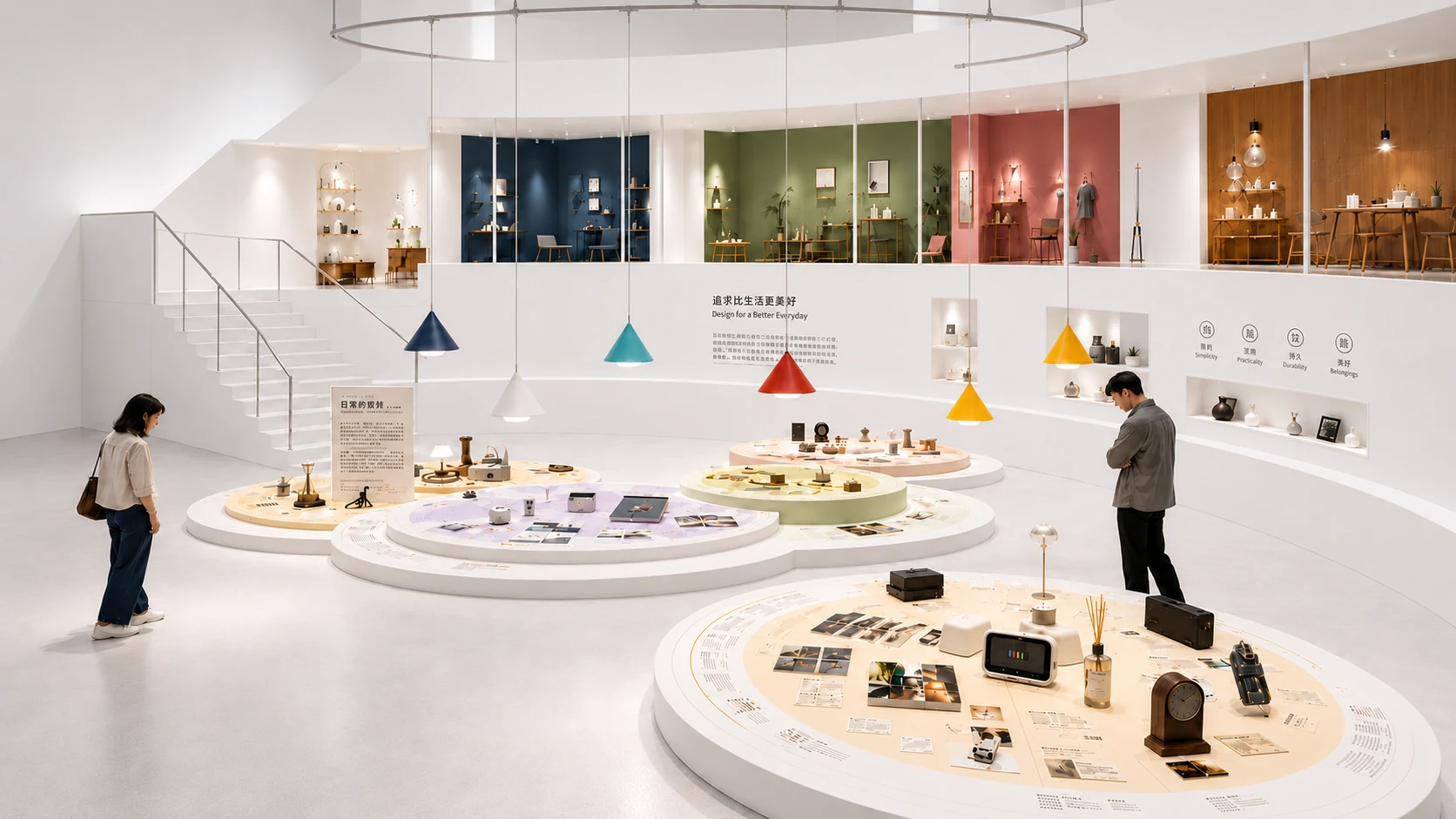
From a single product to a system of an era: a chair, appliance, vehicle or medical device connects to homes, bodies, material circulation, factory algorithms, supply chains, traffic and national capabilities. The prologue introduces this field of relationships.

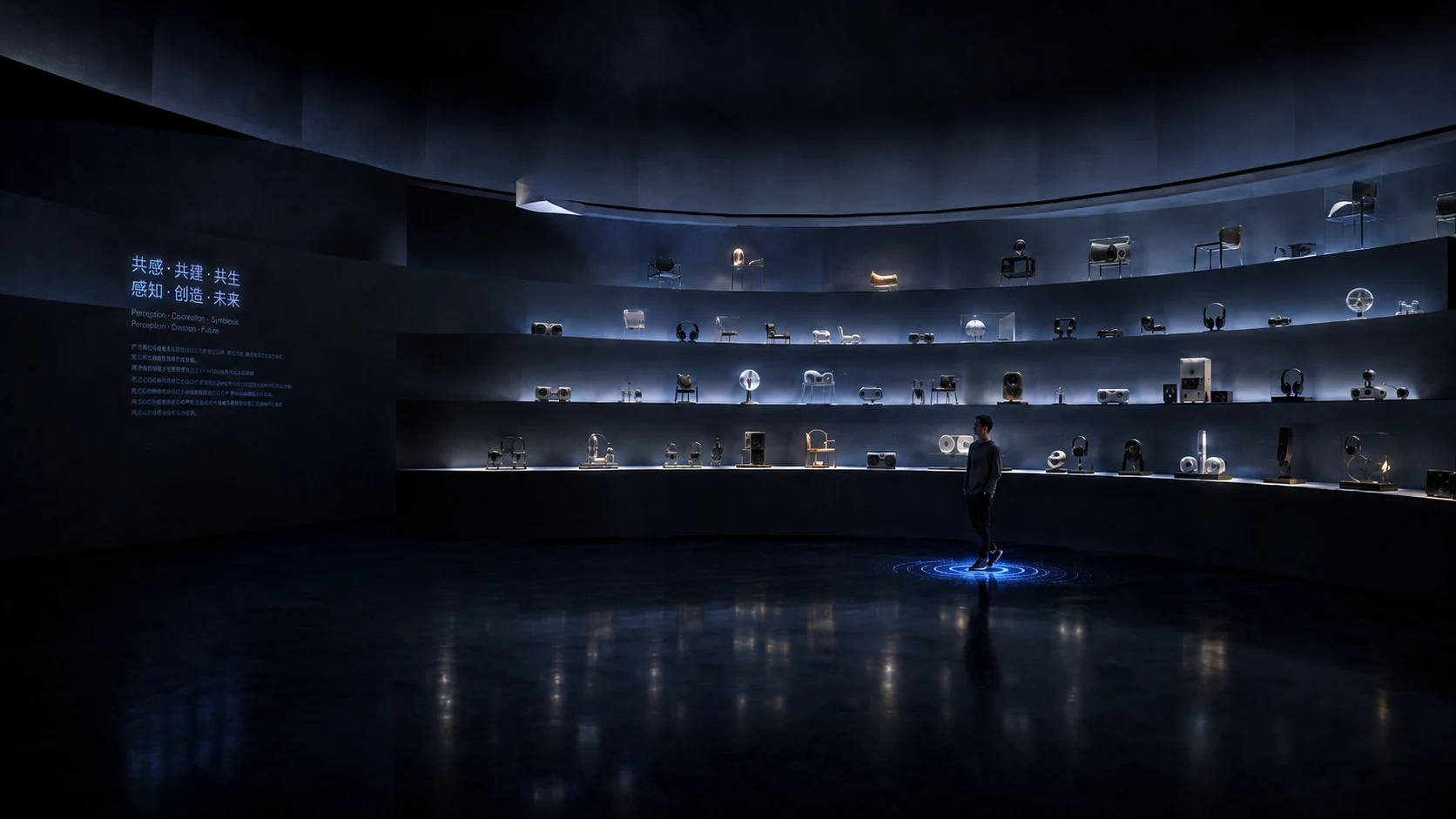
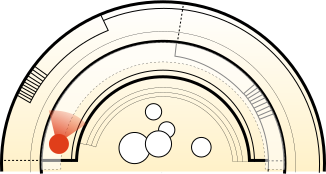
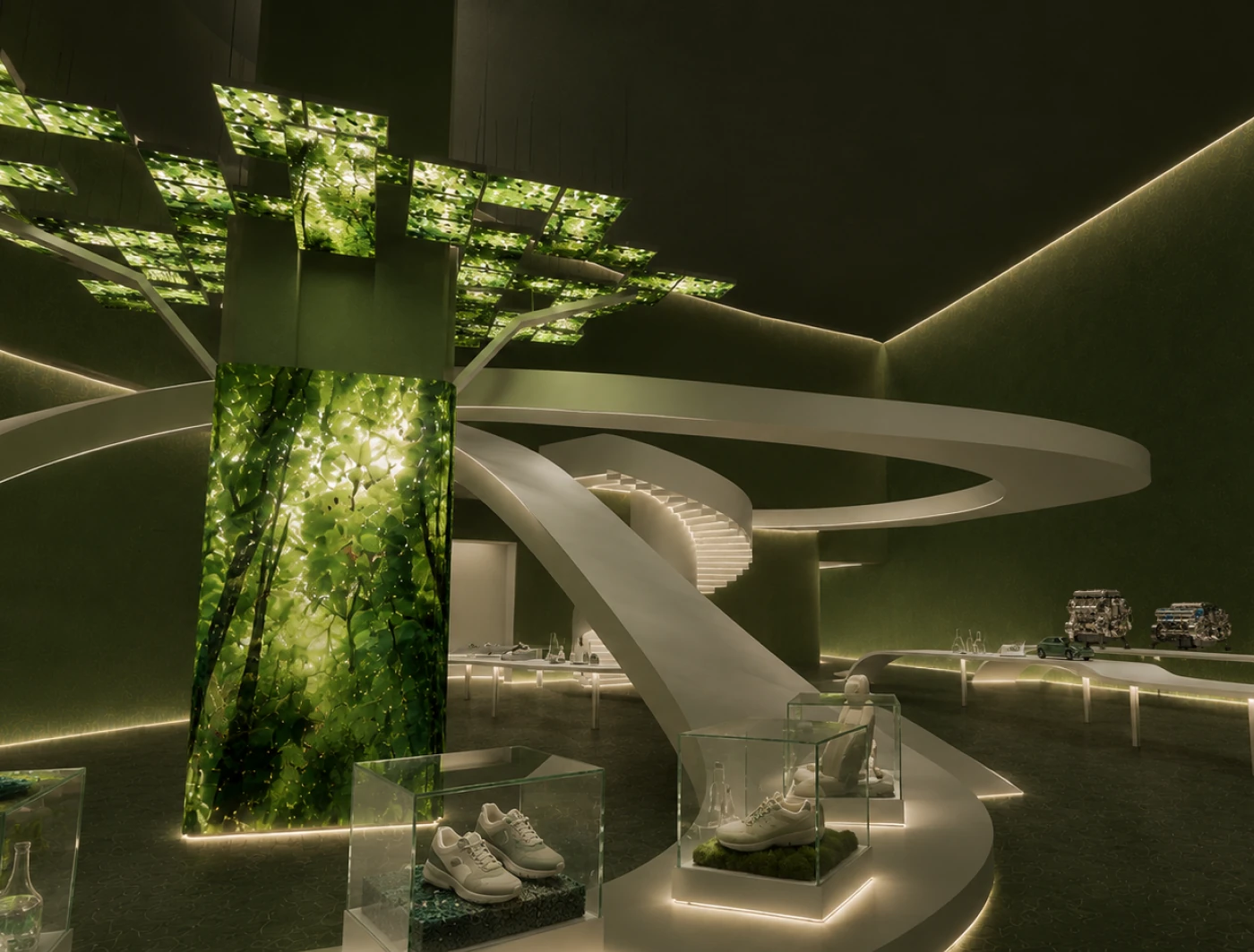
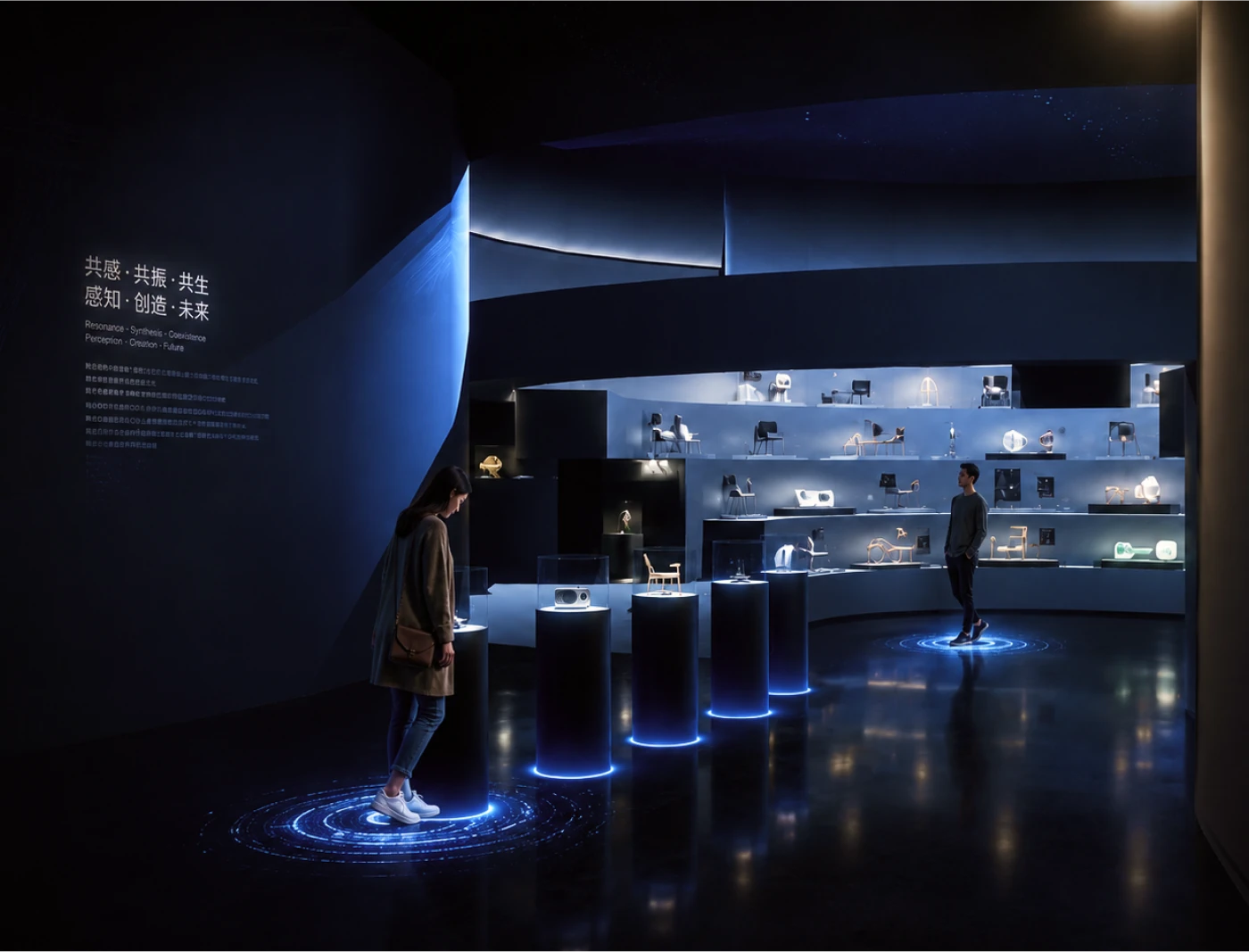
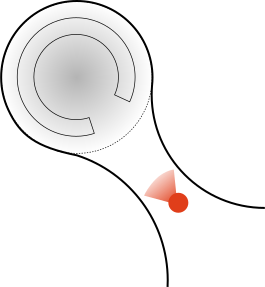
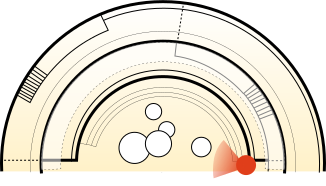
The visitor first passes through a narrow, dim entrance. Low linear light and a mix of machine, heartbeat, appliance, traffic, material-friction and factory sounds establish a low-frequency field. Footsteps trigger ripples of resonance across the floor.

An enclosing spatial language inspired by performance halls draws visitors into a vibrating system before they examine individual design outcomes. The relationship between design, life, technology and industry is the subject of the opening space.
Design & development

Prologue overviewClick to enlarge
Prologue referencesClick to enlarge

Showing Prologue.

From resonance to a spatial proposition

Every object or system has its own natural frequency. When an external rhythm approaches that frequency, a response is amplified and energy can be transferred between systems. The tuning-fork example introduces resonance as a relationship between systems.

Industrial design is moving from isolated products towards connected systems: homes, bodies, material cycles, production networks, mobility and national capabilities. Resonance links these different scales through a common rhythm.

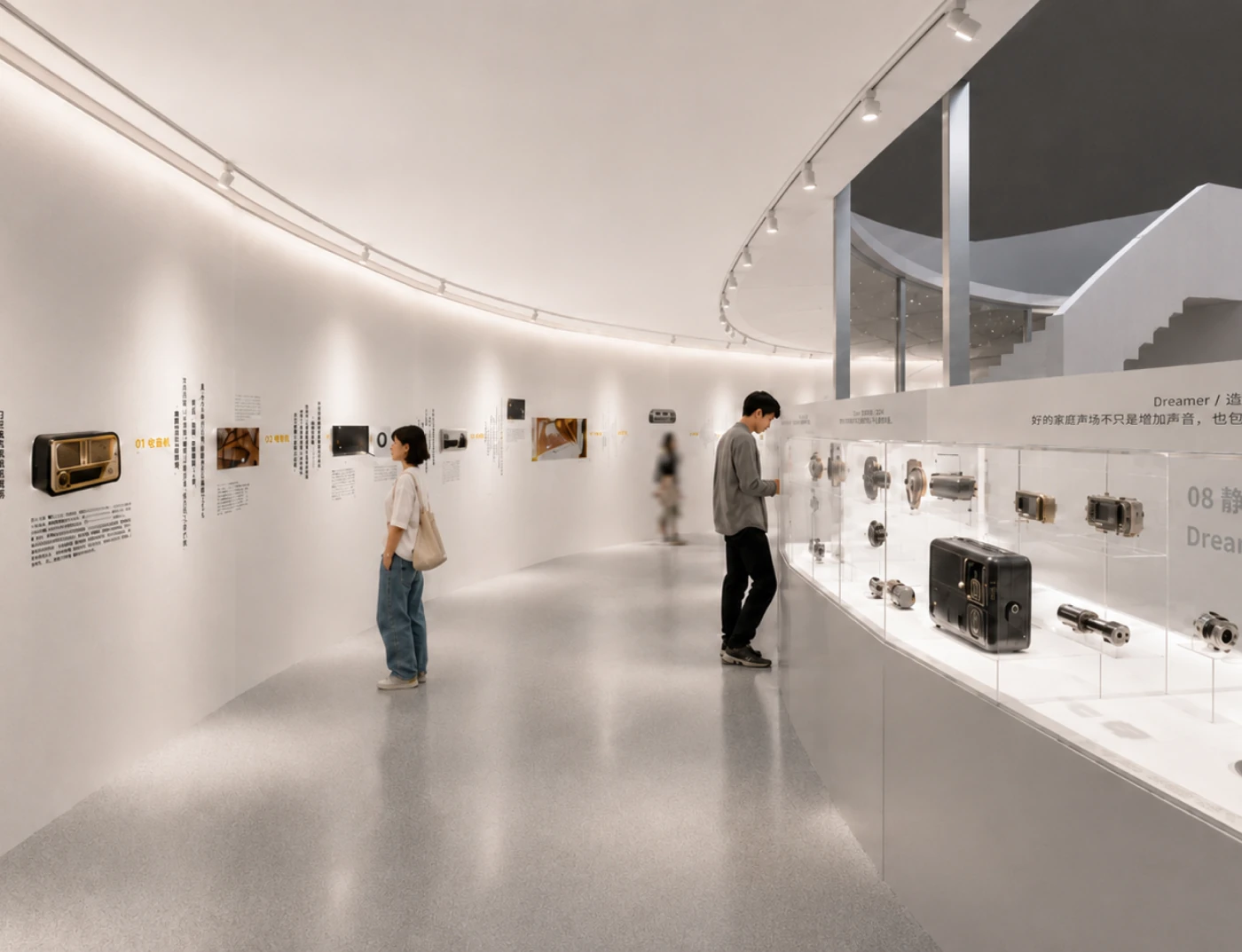
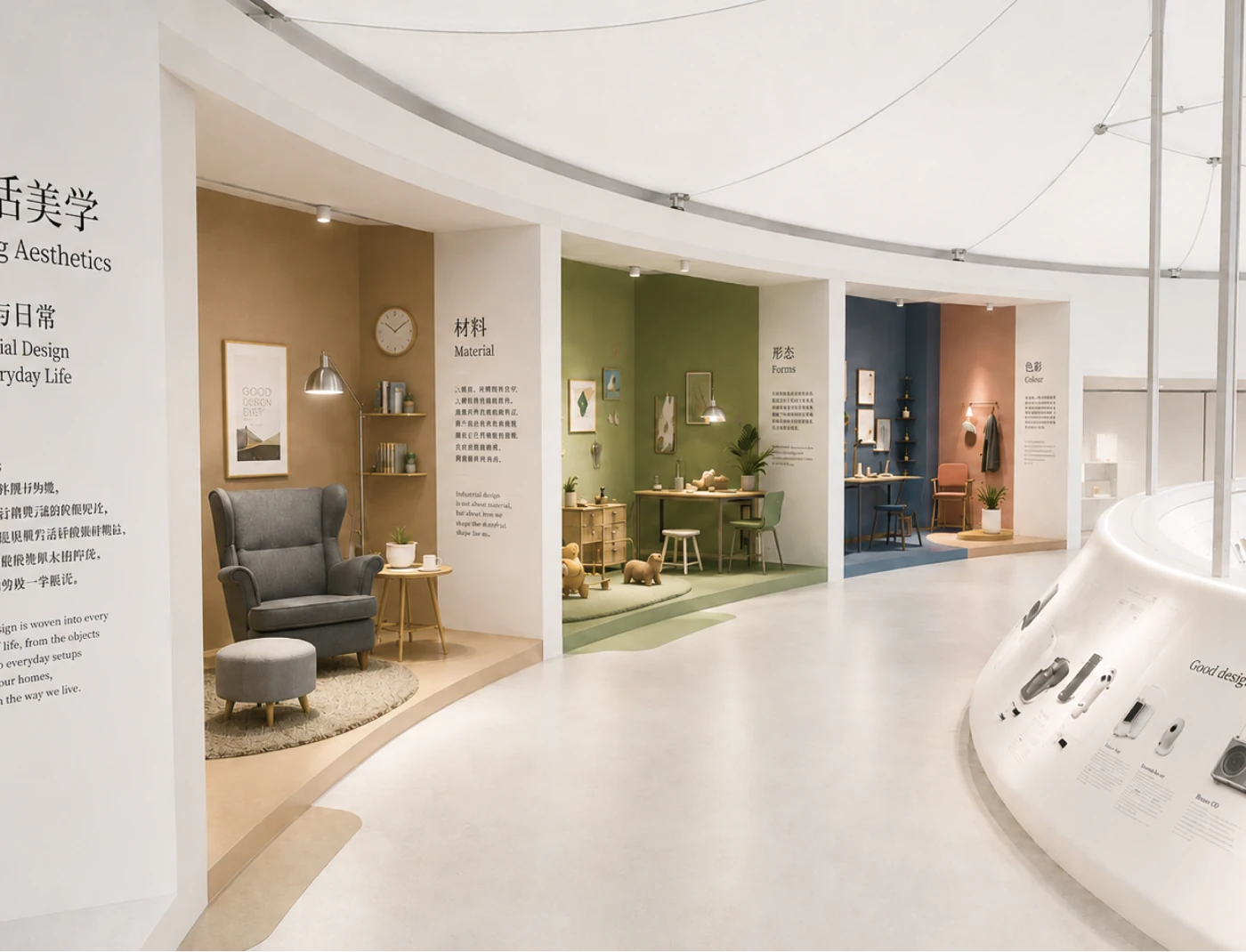
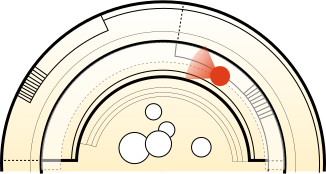
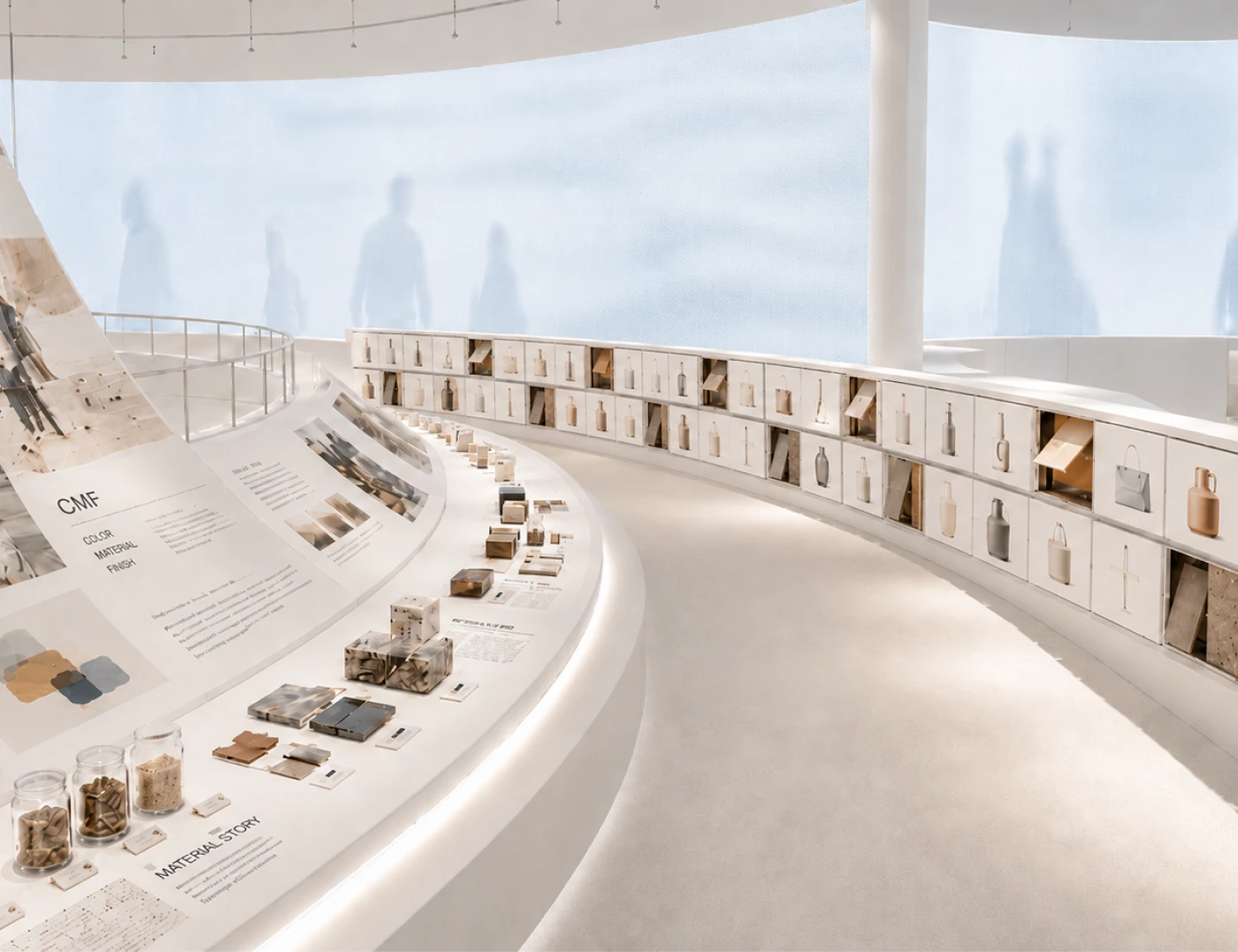
Six frequencies structure the exhibition. Everyday life is soft, low and close to daily experience; healthcare is precise, internal and pulse-like; circularity is continuous and recurrent; manufacturing is dense, repeated and coordinated; mobility is directional and variable in speed; national-scale systems gather the preceding frequencies into a finale.

Tuning translates the concept into spatial decisions: frequency differences create different exhibition rhythms; coupling connects separate zones; changing frequencies shape the route through changes in speed, enclosure, height and concentration.

Why resonance?Original tuning-fork image 1:130 and the two original progression arrows 1:123/1:124. All source copy is native English text.Every object or system has its own natural frequency.1.1 Why resonance?When a periodic external force approaches or matches this naturalfrequency, it excites the system: vibration grows stronger and energytransfers more efficiently between systems. This is resonance.01 | Theme development A vibrating tuning fork can set another fork of the samefrequency into vibration. FrequencyResponseAmplifiedenergyWhen different systems respond to a shared rhythm,their dispersed energy is amplified, creating a strongercollective effect.
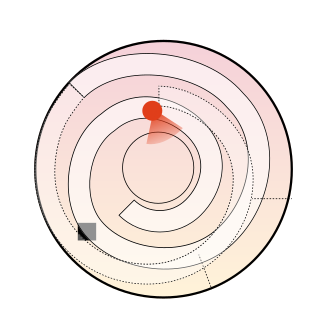
Six frequenciesSix original radial-gradient frequency circles in their source positions and sizes, with original relationships preserved. Chinese labels are translated as live English SVG text.1.3 Translating the six frequencies01 | Theme development New rhythms, shared heritageLife aestheticsPerceptual frequencyGentle · Low frequencyEveryday · A place to pause Life without limitsMedical technologyPhysiological frequencyPrecise · Internal · Breathing rhythmFocused on local detail New forms of coexistenceCircular economyEcological frequencyEnveloping · Cyclical · ContinuousSlowly spreading New engines of progressIntelligent manufacturingProduction frequencyHigh frequency · Dense · RepeatedMechanical coordination New routes, seamless travelSmart mobilityMovement frequencyTraversal · Direction · SpeedChanging paths New visions, shared ambitionsNational capabilityMacro frequencyConvergence · Scale · ClimaxA unified conclusion
From resonance to tuningThree original wave-ring diagrams: different frequencies, coupling frequencies and changing frequency. All sixteen source ellipse/vector layers retain exact geometry.1.4 From resonance to tuning01 | Theme development Frequency differencesDifferent rhythms across the zones Frequency couplingConnections between the zones Frequency variationChanges of pace, openness andconvergence along the visitor route
How frequency shapes spaceOriginal connected frequency field, three stages from separated circles to connected forms, and dotted progression arrow. Source black/white graphics are inverted for a black website; geometry stays unchanged.IsolationResonance2.1 How frequency shapes space02 | Master planning
From frequency to spatial parametersOriginal spatial-parameter sequence: the complete resonance field, a selected detail, then wave bands annotated 3 m, 4 m and 5 m. Original band geometry, gold color, width labels and arrows are retained; black-and-white linework is inverted for the dark website.2.2 Translating frequency into spatial parameters02 | Master planning3 m3 m4 m4 m5 m3 mEach gallery has its own frequency and wave-band width.

Frequency, route and narrative

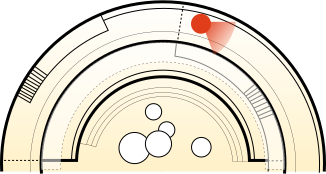
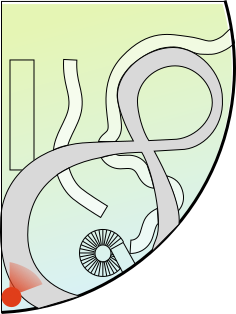
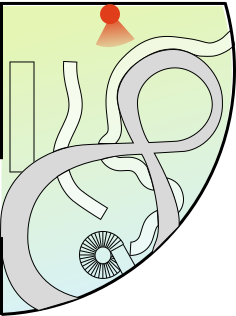
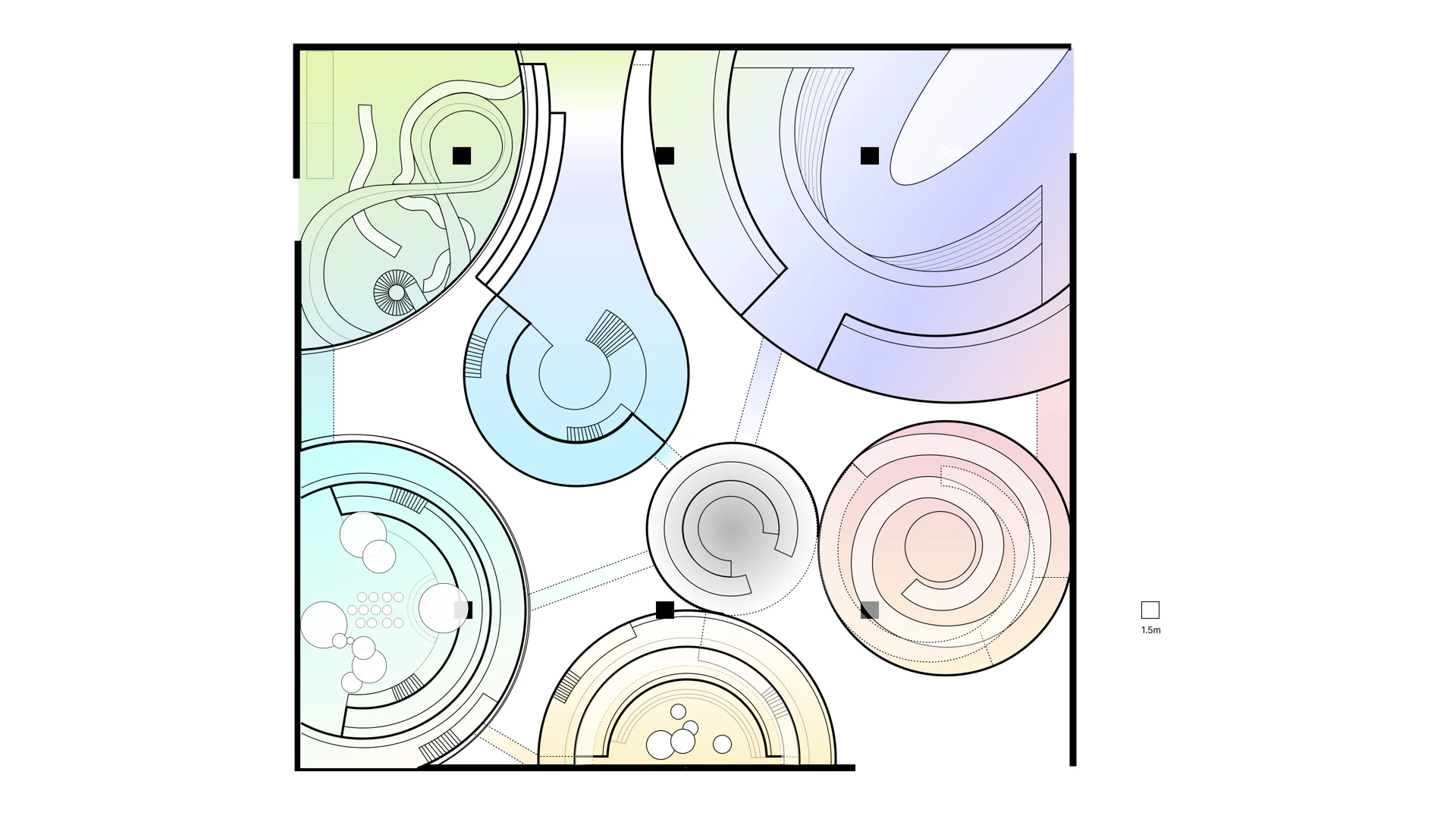
Individual circular fields merge into a connected spatial system. Different frequency bands become different widths in the plan; the plan uses bands of 3, 4 and 5 metres.

A clear narrative spine is paired with limited branches and points of convergence. Visitors can choose their path while the exhibition retains an intelligible progression from everyday experience towards larger industrial systems.

The route is Prologue → Life Aesthetics → Medical Technology → Circular Economy → Future Manufacturing → Smart Mobility → National-scale Systems. Underground passages and an upper platform connect the sequence. Decision points, merging points and narrative beats organise the route.

The sequence establishes a tone, enters human-centred life, turns towards systems, and moves into future technology before a final convergence. Thematic, cognitive and emotional changes shape the journey.

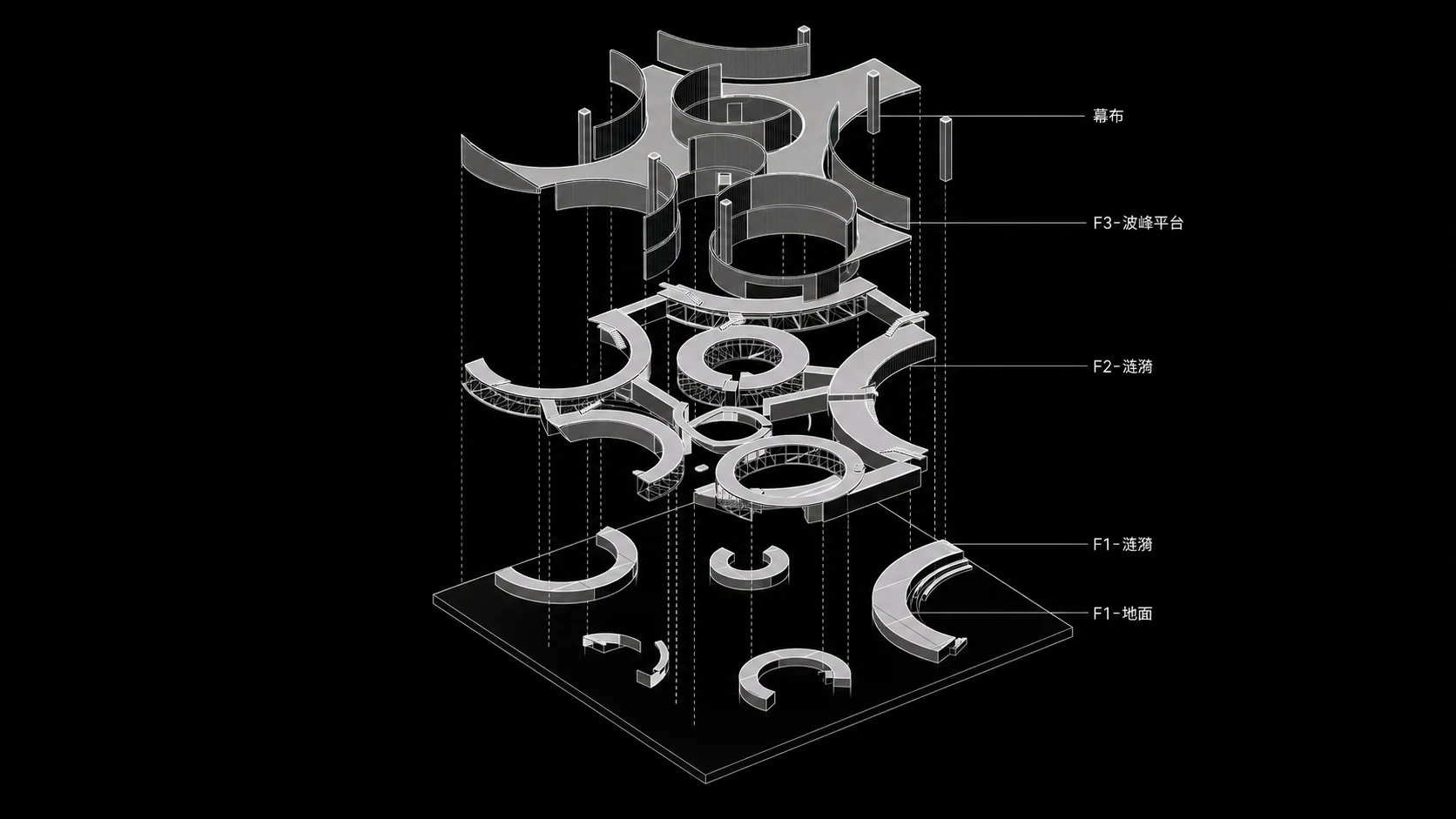
Wave-crest platforms, passages, stairs and ramps make the route spatial. Separate 0–1F and 2F circulation diagrams and a sectional study explain how changes in height connect the exhibits to the larger resonance theme.

Plan main routeClick to enlarge
Route overviewClick to enlarge
A narrative spine with choicesClick to enlarge · Explore the + annotations
The complete narrative sequenceClick to enlarge · Explore the + annotations
Visitor circulation · 0–1F and 2FClick to enlarge
Platforms, passages and changes in levelClick to enlarge

An adaptive venue

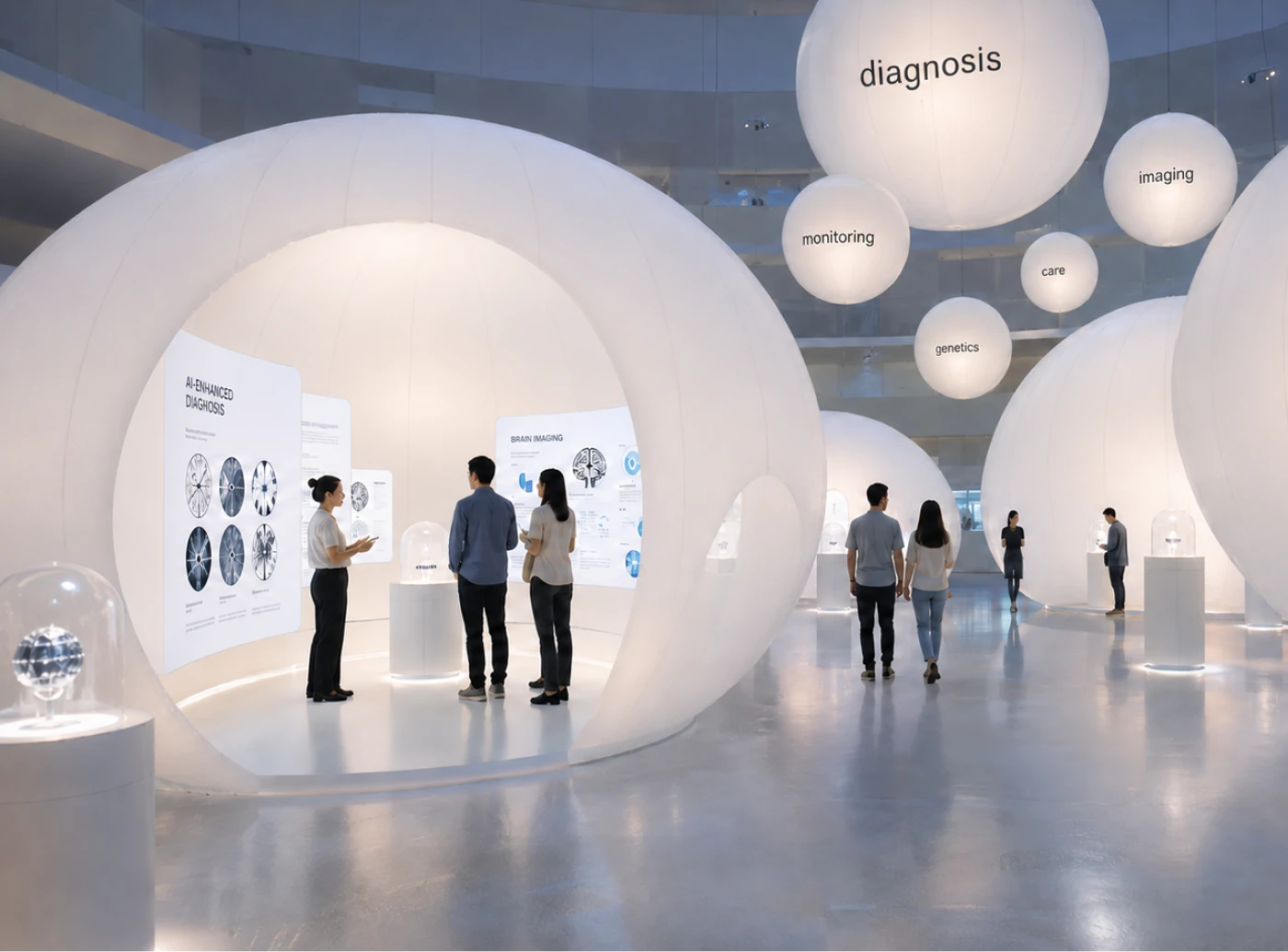
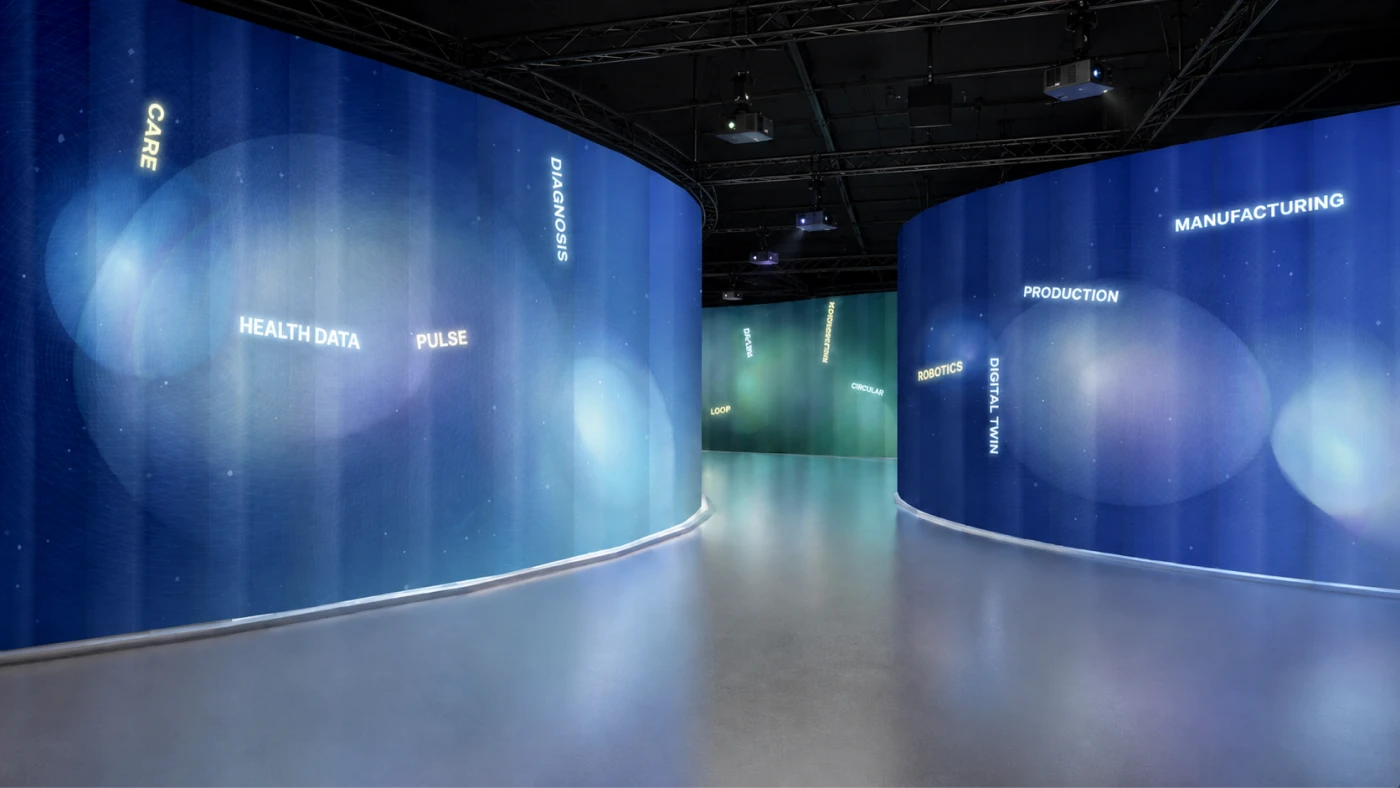
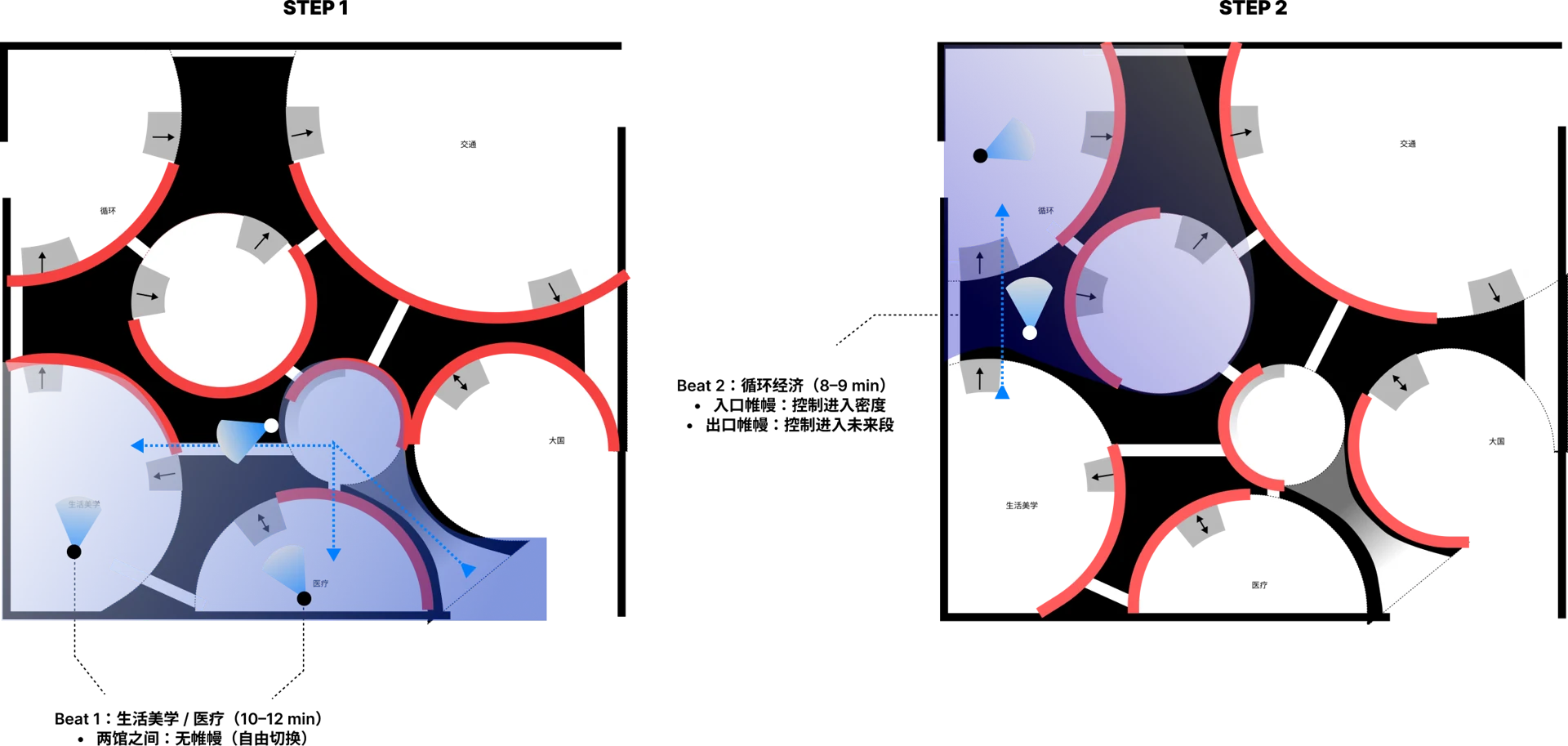
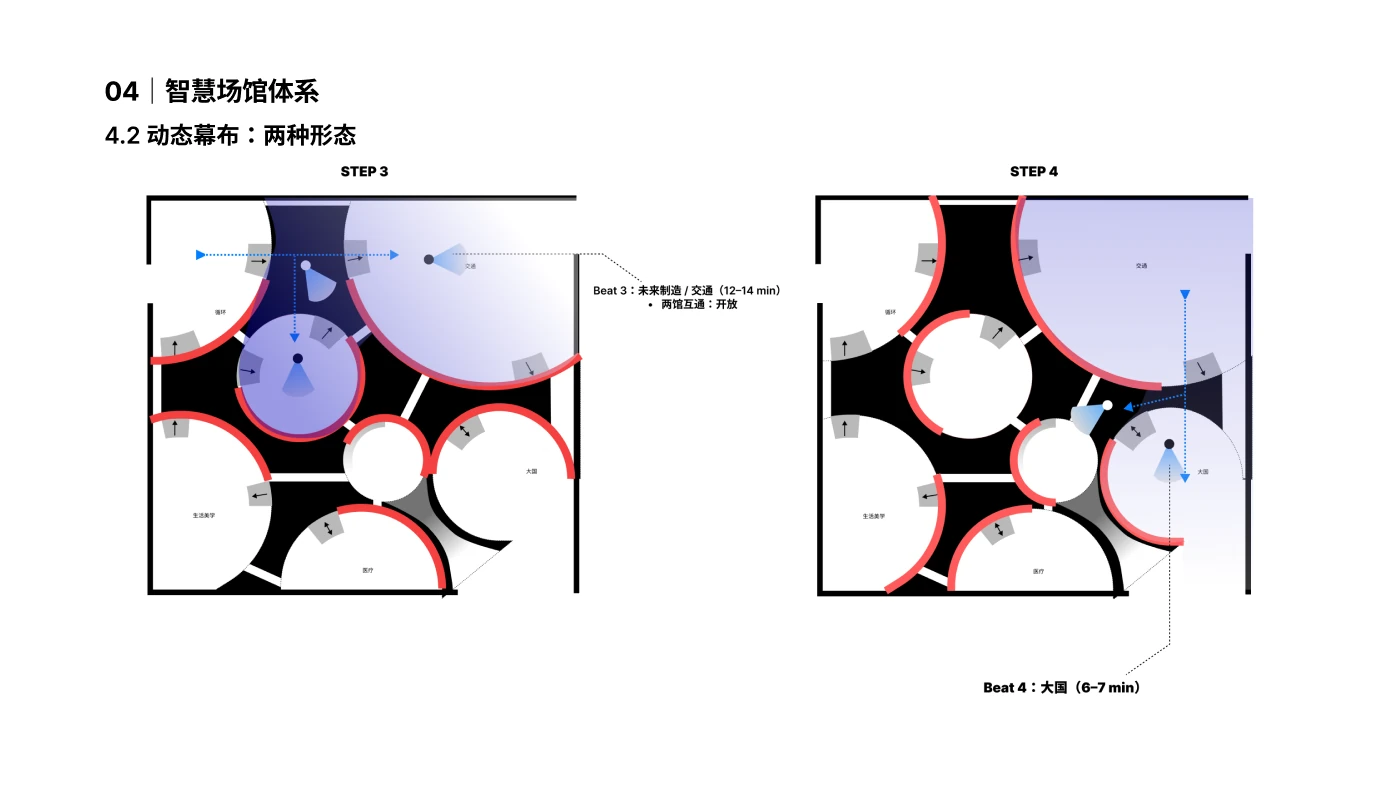
The smart-venue proposal combines curtains, light bands, sound and changes in level to organise visitor movement.

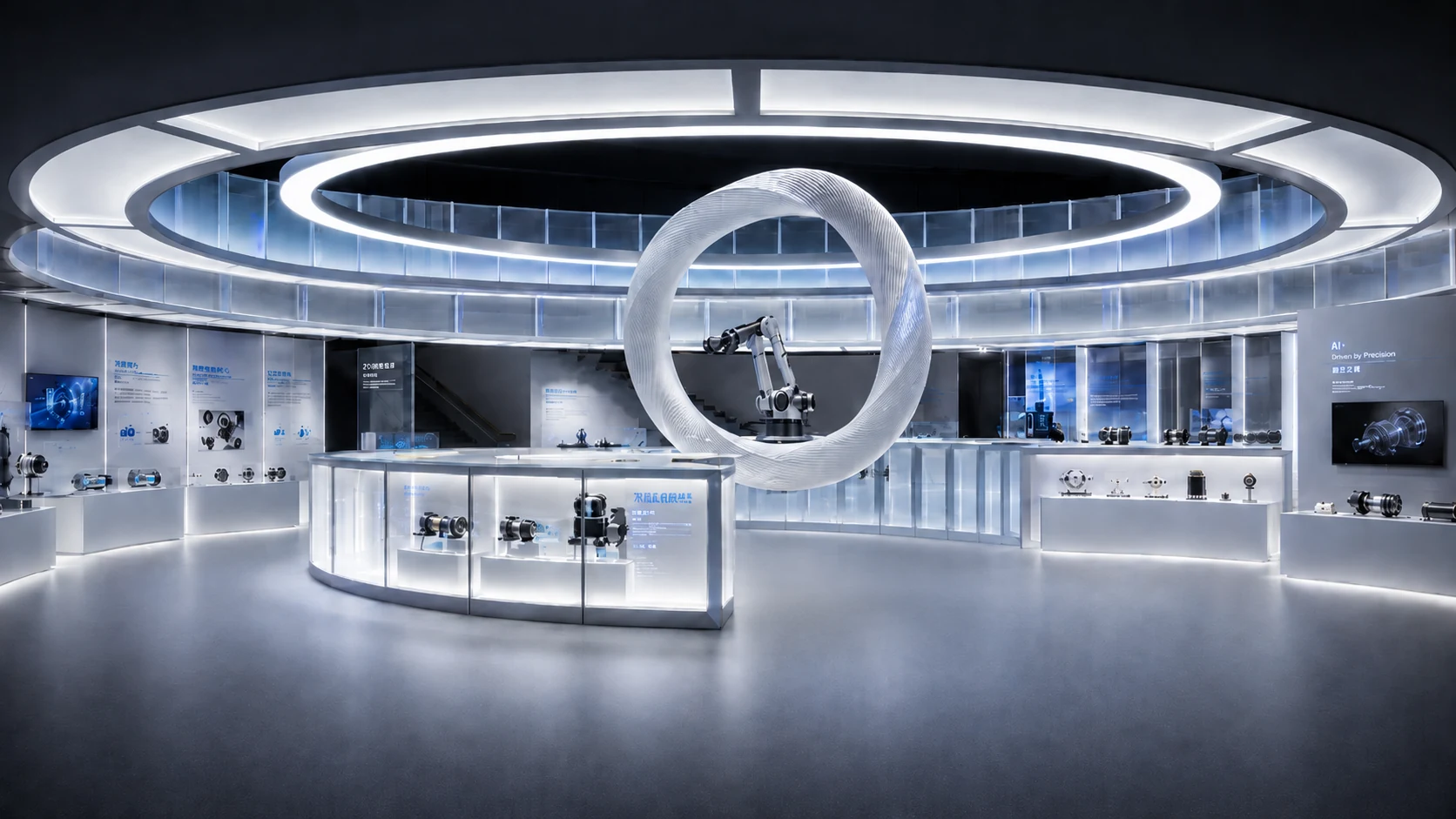
Two curtain configurations change how the circular exhibition fields connect and divide. The paired plans and four spatial views explore how the same venue can support different arrangements.

Curved, illuminated translucent curtains provide a technical reference for changing the venue’s visual and spatial character.

Visitor circulationClick to enlarge
Two curtain configurationsClick to enlarge
Four spatial statesClick to enlarge
Curtain technical referenceClick to enlarge

A personal exhibition guide

The visitor’s own phone becomes a guide for different audiences, including students, parents and overseas visitors. The service concept combines deeper exhibit information with accessible visiting.

Audience pathways include a recommended route and quick exhibit reading; design analysis, materials, processes and saved inspiration; product and brand information with professional routes; procurement lists, enquiries and meeting appointments; and relaxed routes, interactive-exhibit recommendations and cultural-product shopping.

The proposed services also include multimedia storytelling, a personal exhibition game, custom design experiences, shopping, accessibility support, mobile ticketing, multilingual content and wayfinding.

The route flow is keyword selection → a personalised full or quick itinerary → map navigation. At an exhibit, QR or NFC opens detailed information, followed by the purchase flow.

Different visitors, different routesClick to enlarge · Explore the + annotations
Personal guide servicesClick to enlarge
Keywords, itinerary and navigationClick to enlarge · Explore the + annotations
Exhibit detail and purchase flowClick to enlarge · Explore the + annotations

A connected visual identity

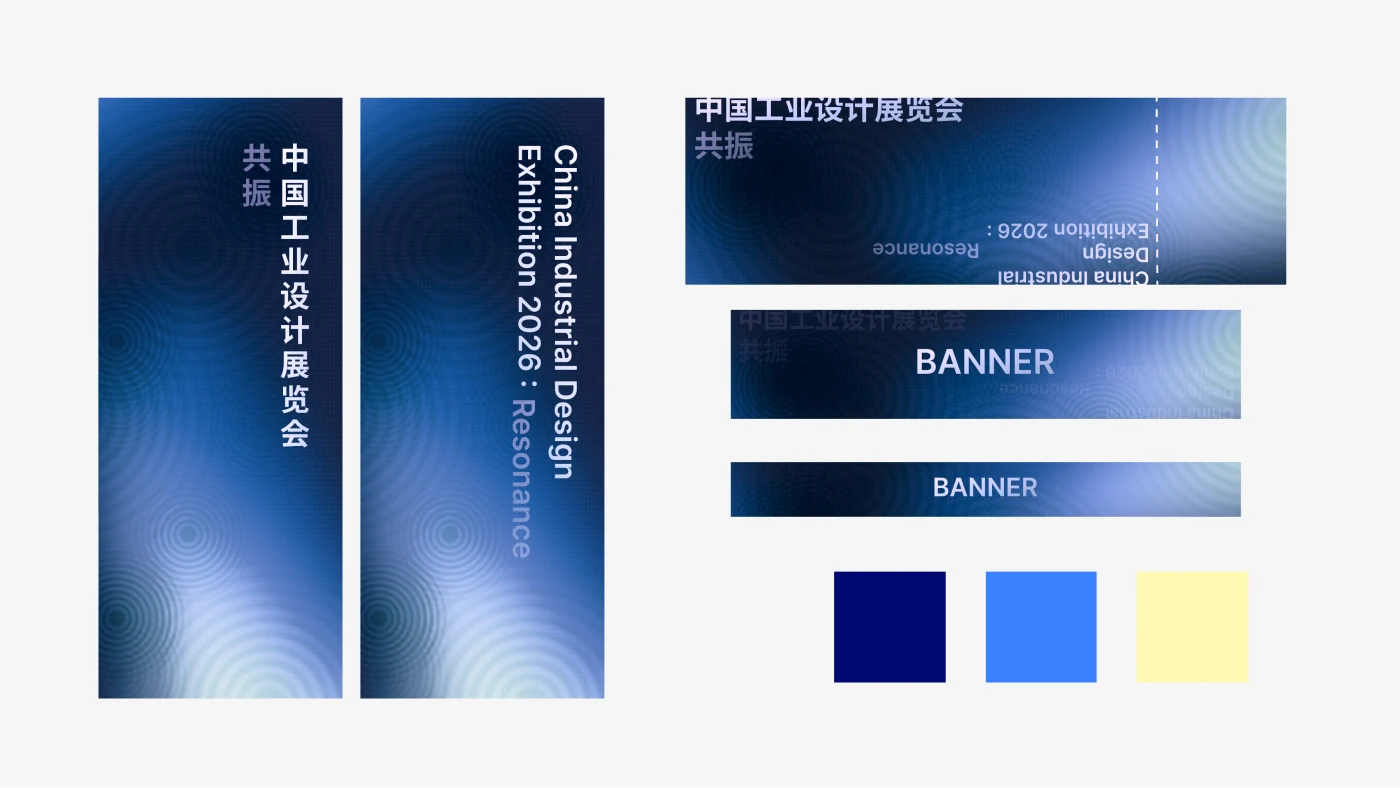
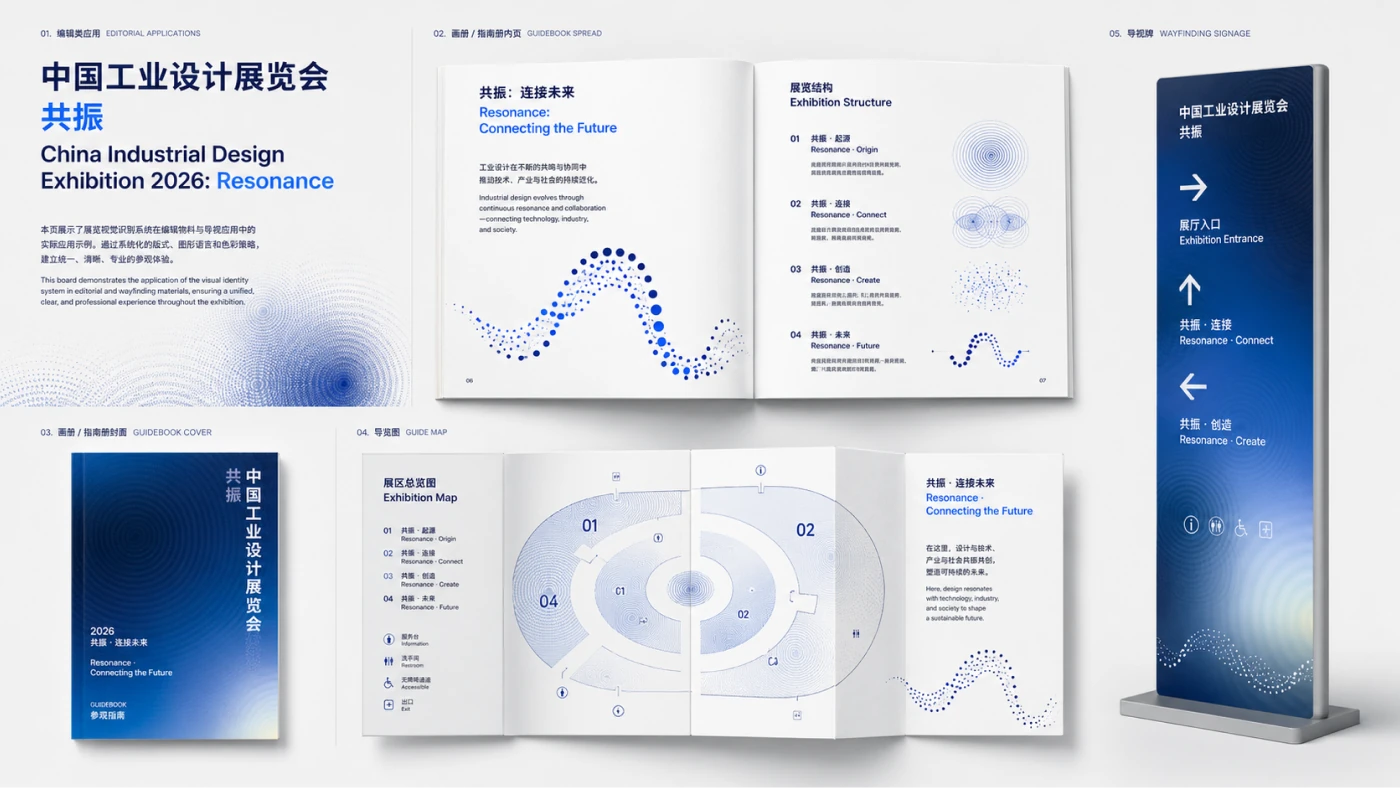
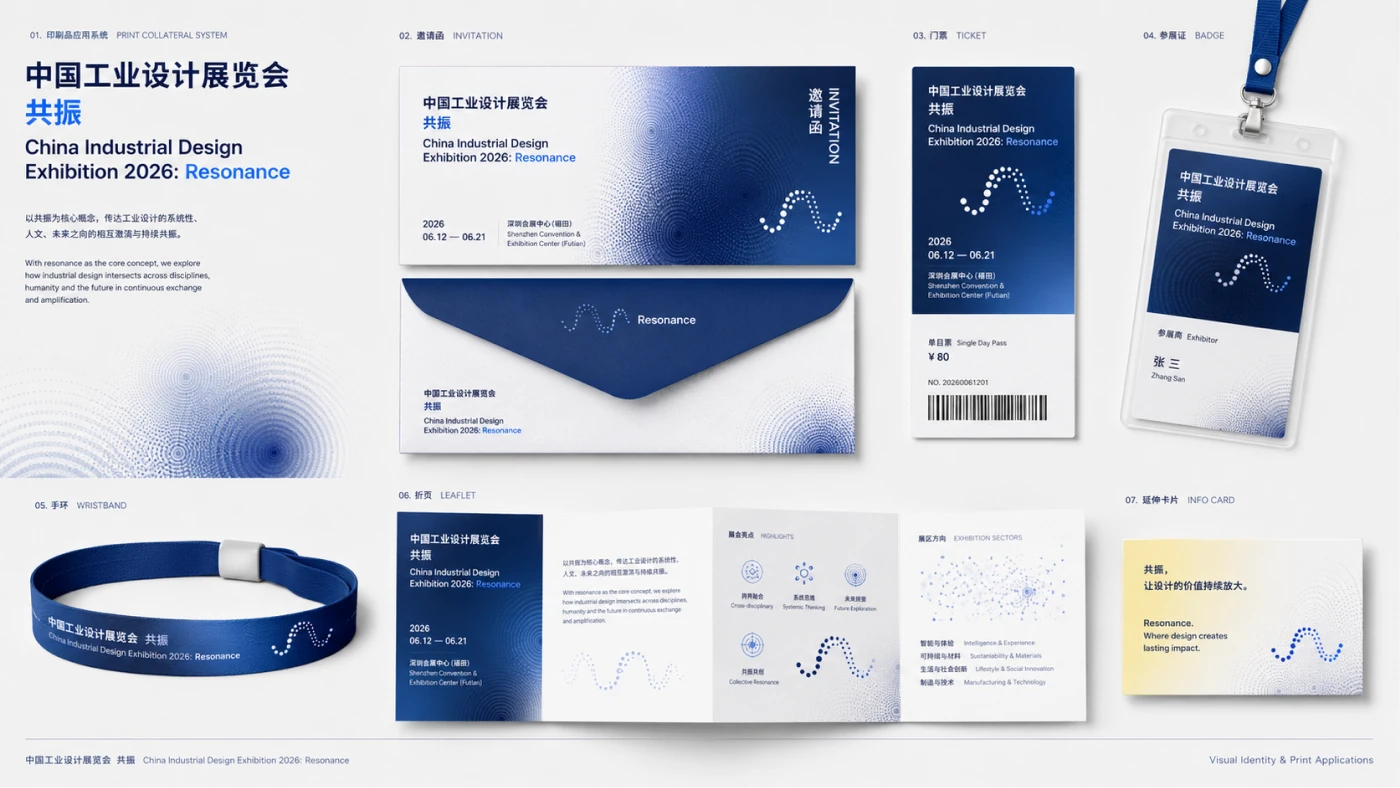
The frequency concept extends into a coordinated identity: deep blue and white, a wave motif and a compact exhibition wordmark appear across banners, maps, wayfinding and visitor materials.

Standing banners, navigation signage, plan graphics, printed cards and tickets, stationery and badges form a coordinated visual system.

Materials and environmental systems

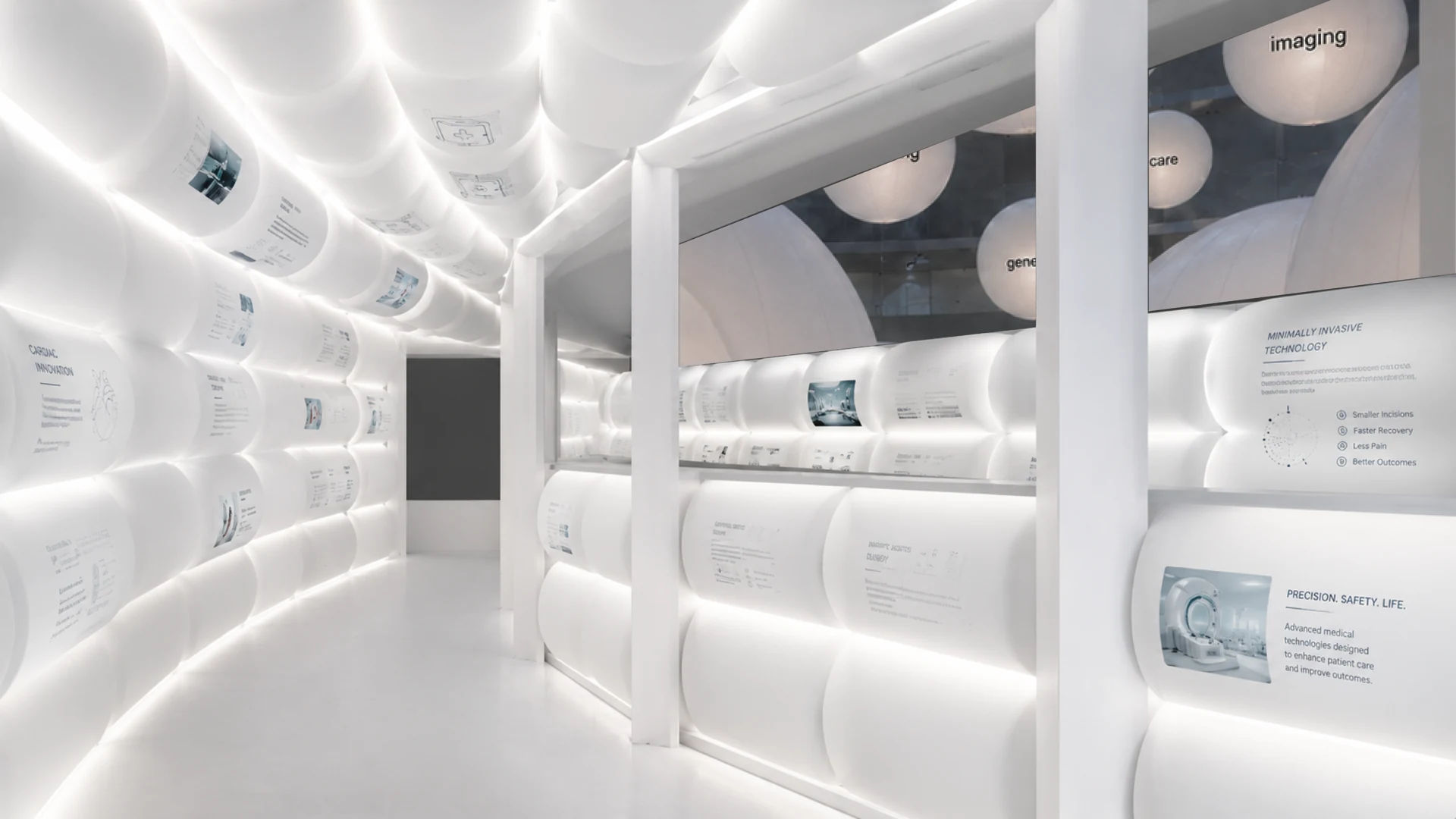
The proposed material palette pairs GRC composite wall panels with GRG glass-fibre-reinforced gypsum and water-based fluorocarbon coatings. The palette supports lightweight prefabrication, shaped interior surfaces and a durable coating system.

Commercial inorganic terrazzo and laminated wood-grain flooring balance a continuous, durable surface with a warmer interior finish. A cement-foam fire-resistant door-core board is also part of the proposed palette.

Coated woven fabric for exhibition light boxes and printed displays provides a fine, flexible surface. It is proposed for soft, stable graphics on curved or framed display systems.

Wall panels and coatingsClick to enlarge
Flooring and board materialsClick to enlarge
Fabric, graphics and light boxesClick to enlarge

Testing the whole system

The physical models test the curved fields, connections and height changes as one exhibition system. The final study brings the six frequencies back together and shows how the tuning concept operates across the whole plan.

Physical spatial modelsClick to enlarge
Six frequencies as one systemClick to enlarge