
Yiran Long
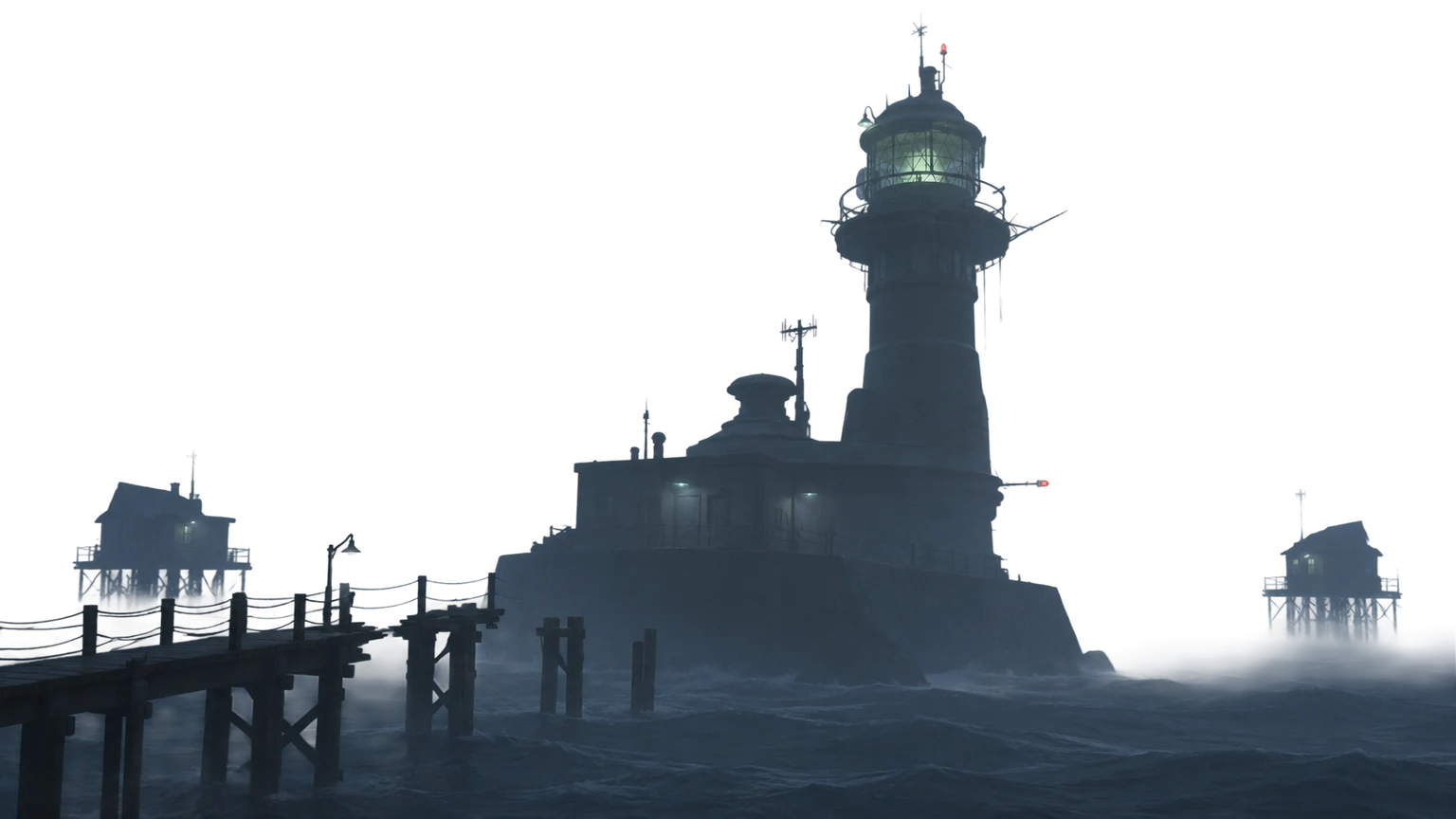
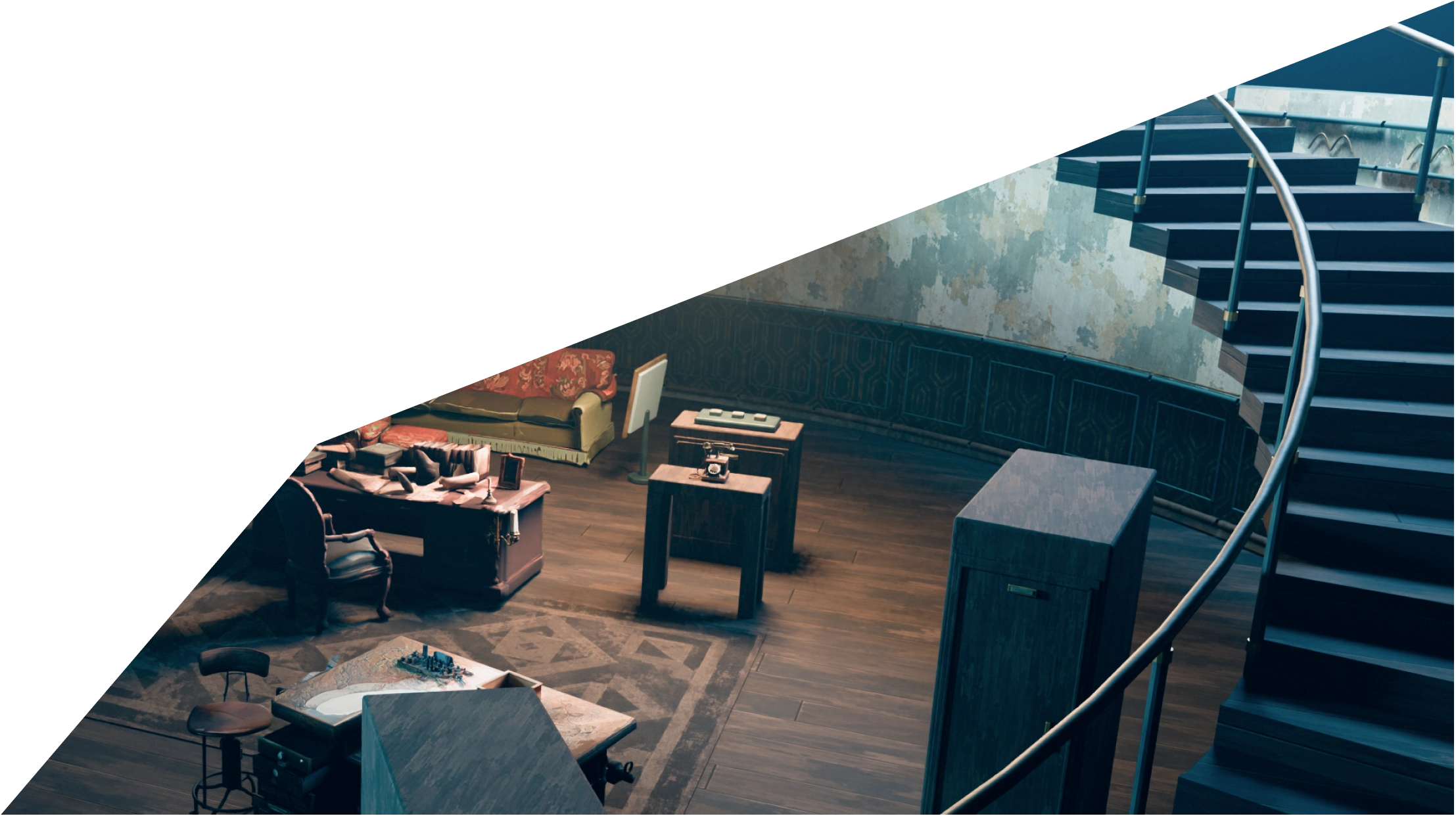
False Dawn lighthouse, future era

False Dawn

01 / 07
Scroll to explore the project

False Dawn

Project Overview

A Dual-Timeline Cooperative Puzzle Adventure

Individual project · Game design · 2026

Two eras. Two perspectives. One shared truth.

False Dawn is a two-player cooperative puzzle adventure set in the same lighthouse in 1850 and 2450.

Players take on the roles of a lighthouse keeper and a future navigator, exploring the same space across different centuries. By manipulating light, reflecting beams, and transforming their surroundings, they must collaborate across time to uncover the lighthouse's forgotten secrets.

As the two timelines gradually converge, players discover that light does not always reveal the truth—and darkness may not be the enemy.

Inspiration

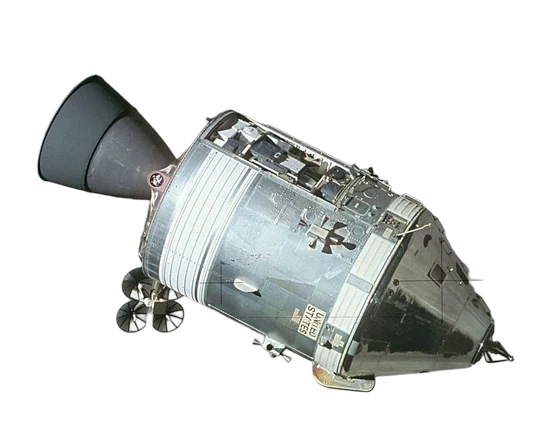
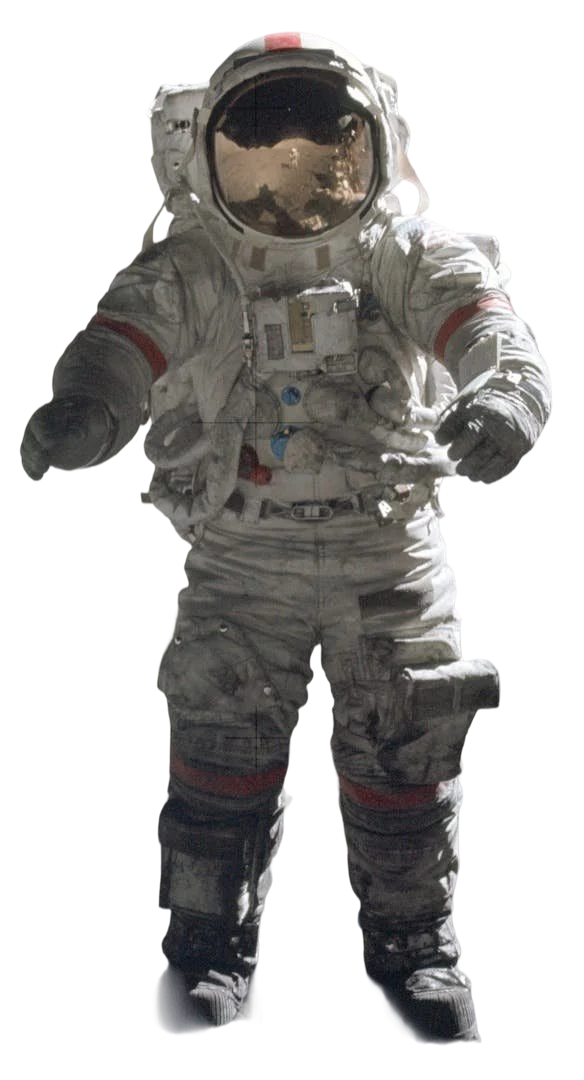
Apollo 13

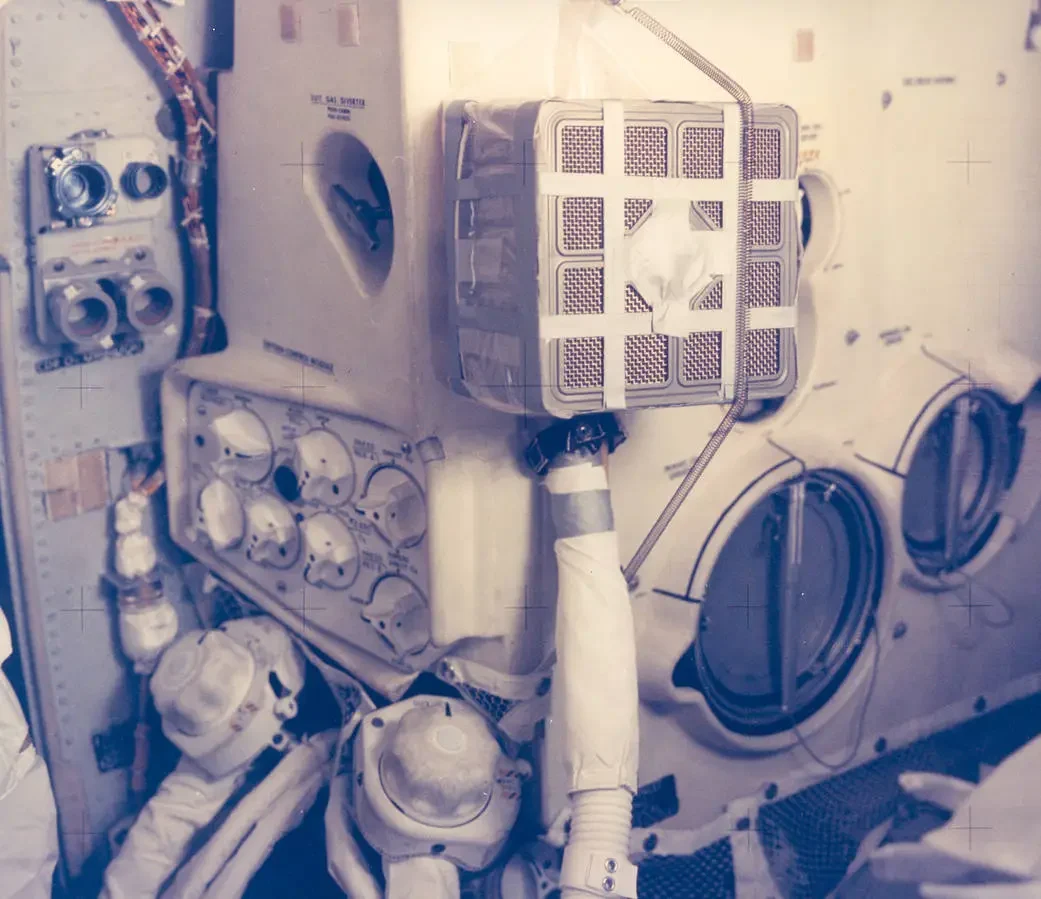
After the Apollo 13 accident, the astronauts used the lunar module as a lifeboat, but encountered a problem with the mismatch of the carbon dioxide absorption tanks. The ground personnel designed and tested the adaptation methods using the available materials on board, and then the astronauts completed the production on-site.

Both sides had different tools and information, and neither side could complete the rescue independently.
Crypt of Civilization

The civilized underground time capsule preserves daily items and audio-visual records, and also includes playback devices, backup power generation equipment, and English teaching equipment. These arrangements not only consider whether the items can be preserved, but also take into account whether future people will know how to use and understand them.

Future generations are still using the old facilities, but they might have forgotten their original purpose.

Background Story

Inspired by Apollo 13 and Crypt of Civilization, I chose a lighthouse as the setting for cooperative puzzles across two timelines.

Its rotating light creates opportunities for time synchronization, while changes to the building over centuries allow players to explore and interact with the same space in different ways. The lighthouse also reflects the game's central theme: the relationship between light and protection.

In 1850, lighthouses in remote sea areas were just completed.

Mechanical clocks, rotating lenses, and power systems kept the beacons running, and the people inside the towers had to ensure that nearby ships could safely navigate through the channels.

humans discovered abnormal solar radiation hazards and deployed atmospheric shielding systems to reduce the radiation received by the surface.

The shielding protected the living environment and plunged the world into long-term darkness. As civilization declined and records were lost, later generations gradually forgot the purpose of the system's protection and regarded the darkness itself as a disaster.

By 2450, many land-based cities were no longer habitable. Humans relied on coastal settlements, floating facilities, and a few highlands for survival.

Artificial lighting and optical navigation supported transportation and production. The navigation network of the settlements broke down, and a maintenance worker came to the ancient lighthouse to try to restore the signal. Six hundred years of coastline changes, building damage, and facility modifications made the positions that could be reached at both ends and the tools that could be used vary.

Game Play

Cooperation Across Time

Players explore their own era, exchange discoveries and use light and mechanisms to open routes for each other.

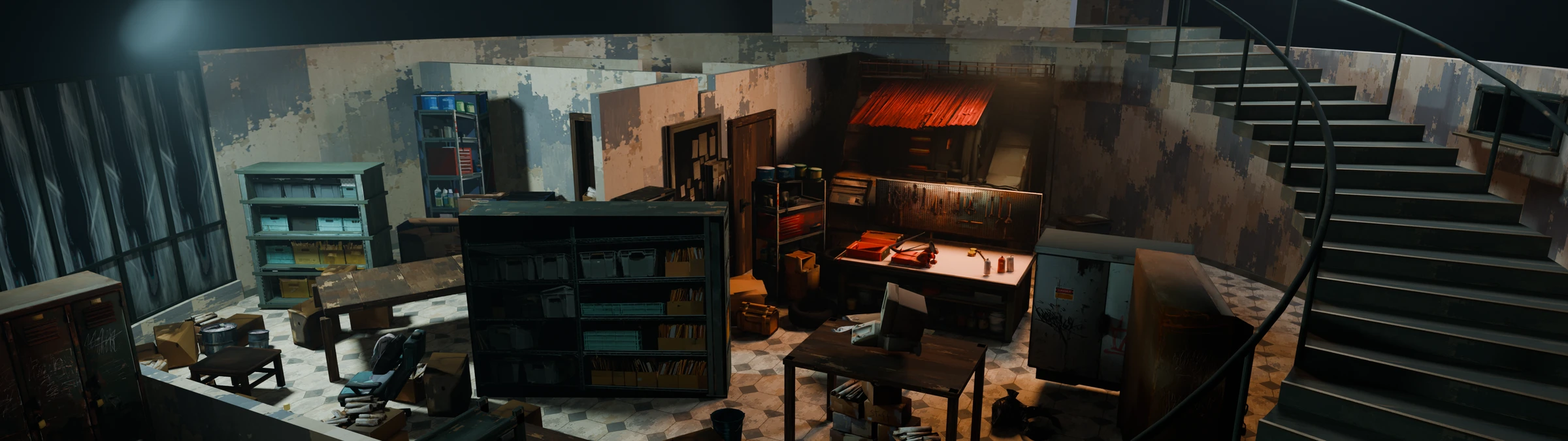
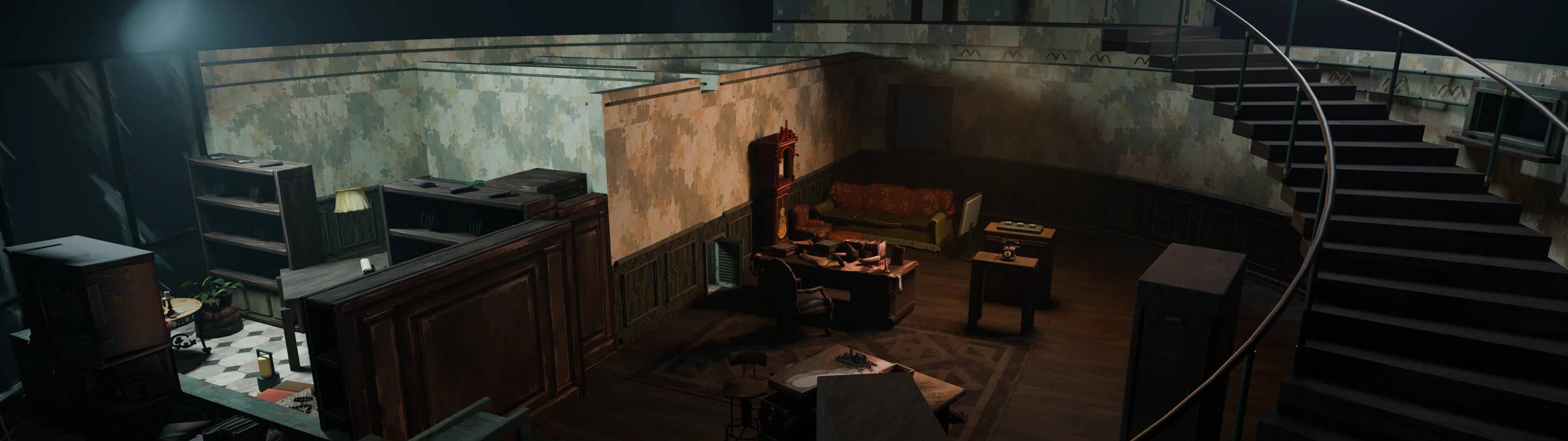
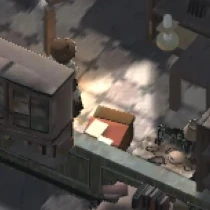
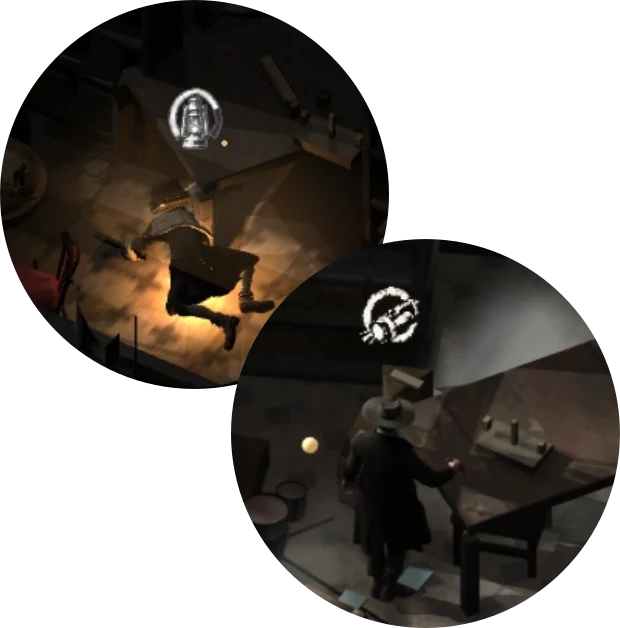
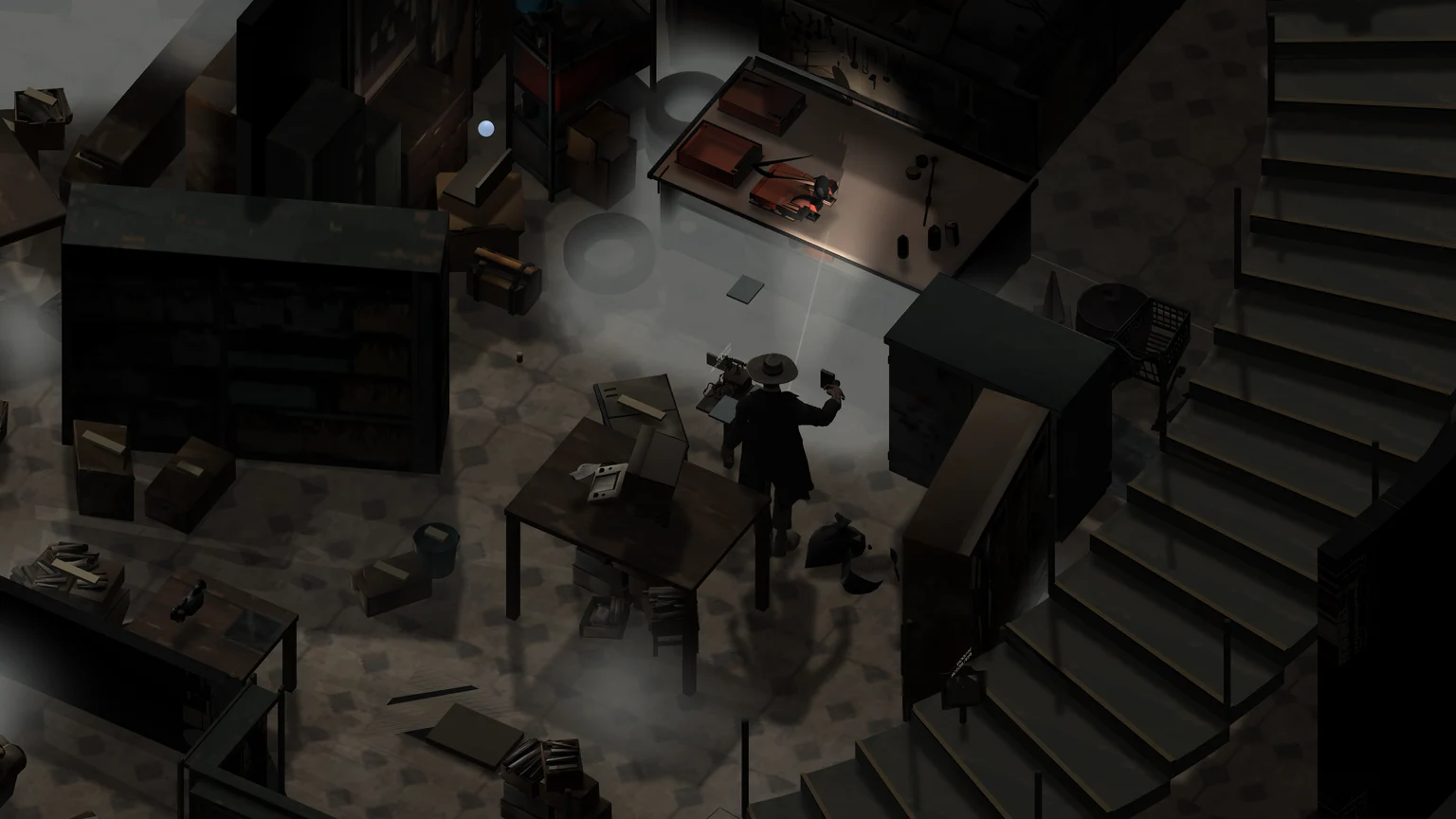
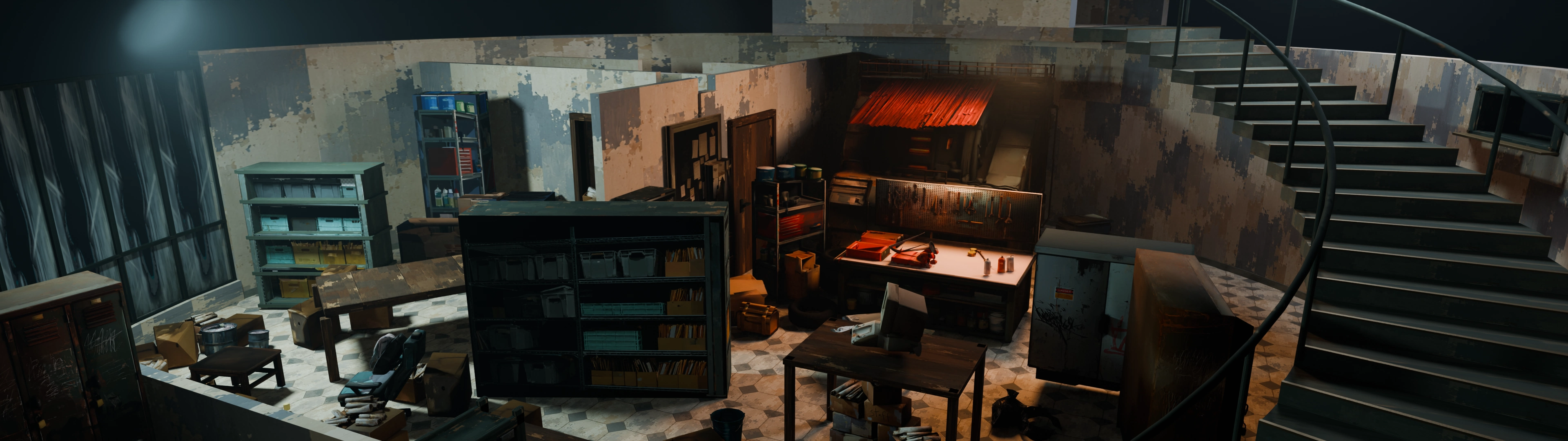
The future lighthouse workshop, with machinery beside the staircase. The keeper’s sitting room in the past, seen from the same viewpoint.
18502450

Two Eras

The lighthouse retains corresponding locations across time, but obstacles, equipment and accessible routes differ. Players use these differences to solve problems that cannot be resolved from one era alone.

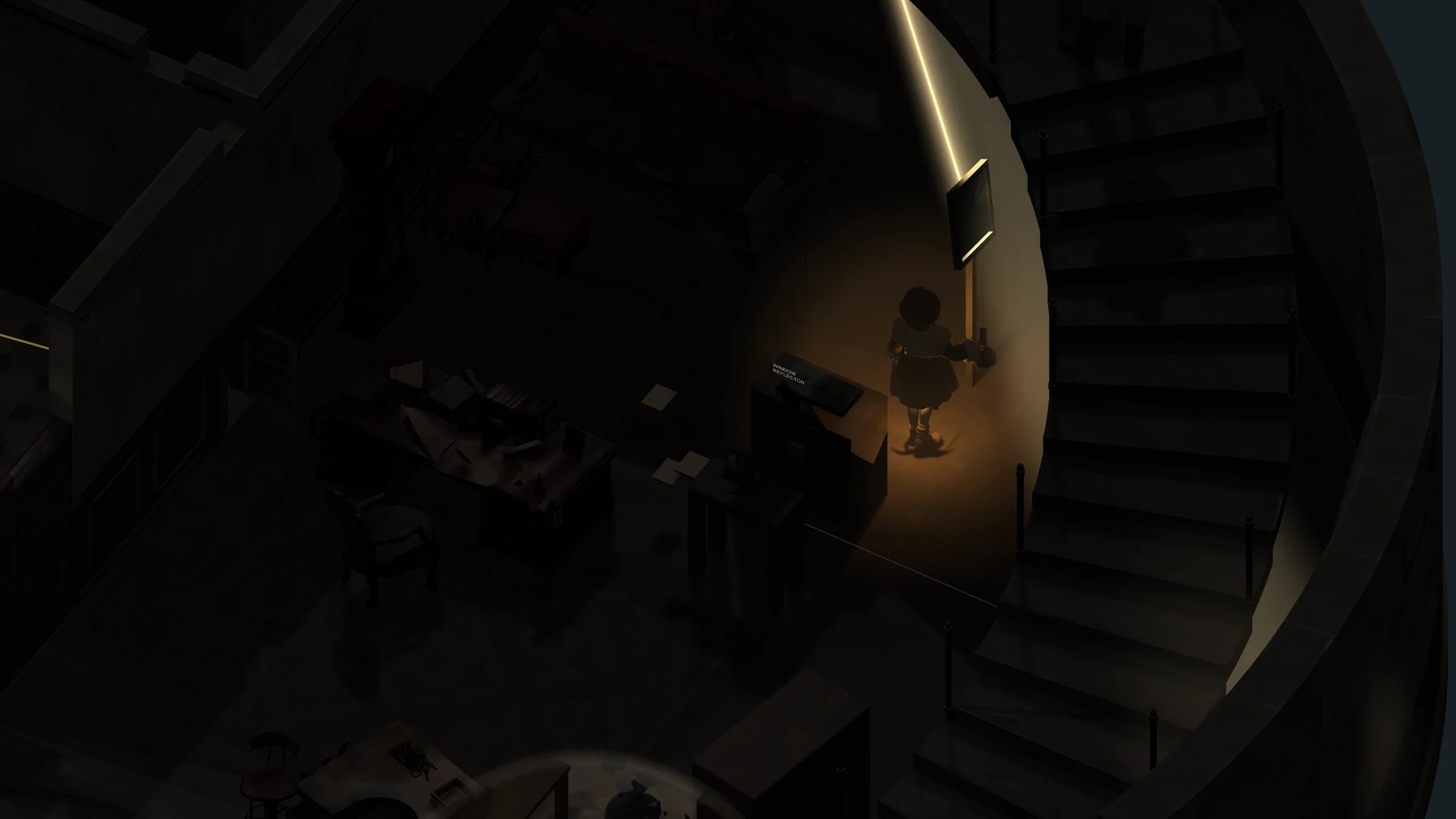
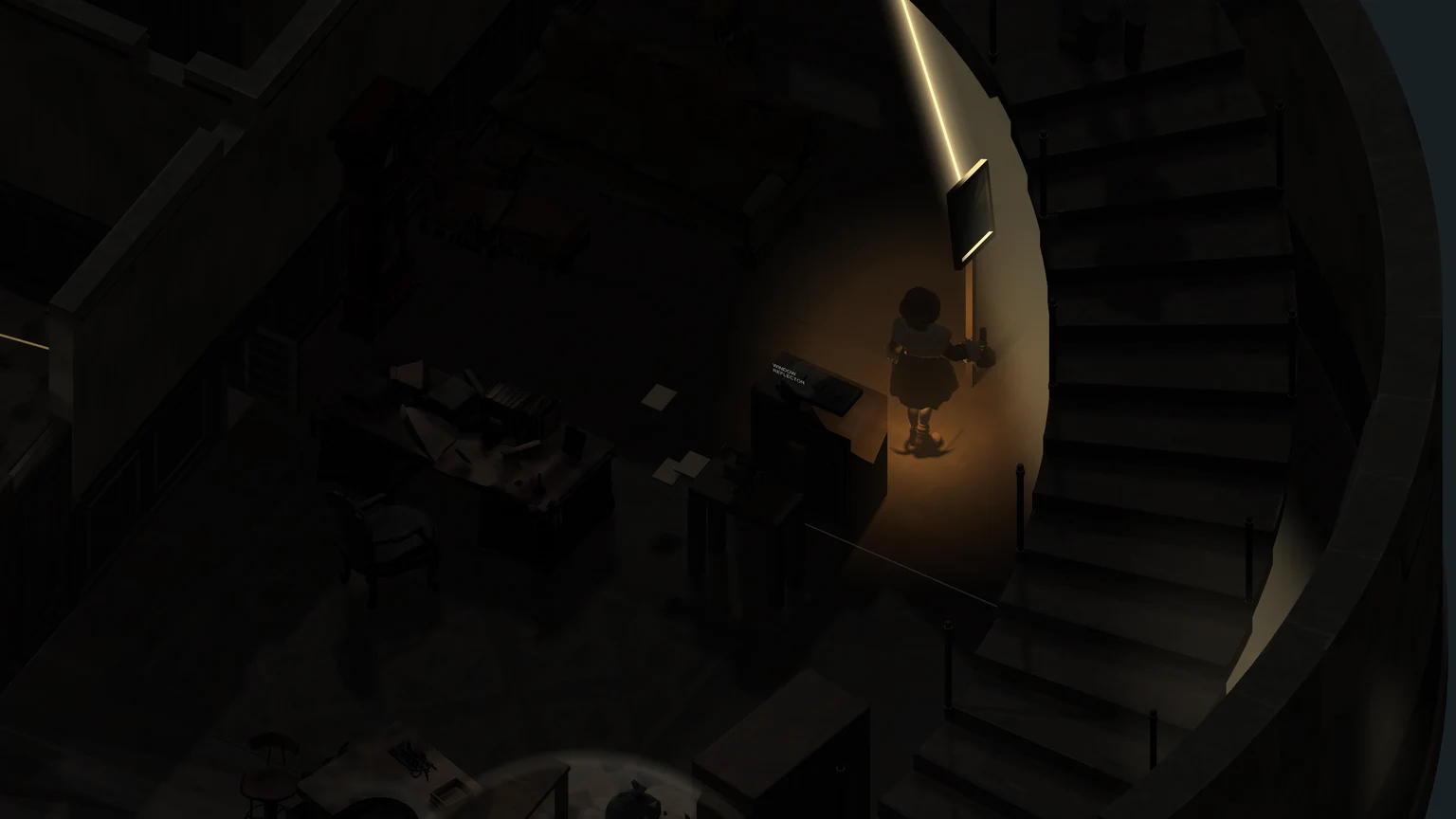
Light reaches the keeper and the foot of the curved staircase.

Light as a Shared Tool

Rooms remain faintly visible in darkness, but key mechanisms require effective illumination. Portable lights, mirrors and designated cross-era light connections let players reveal targets and extend accessible routes.

Game research

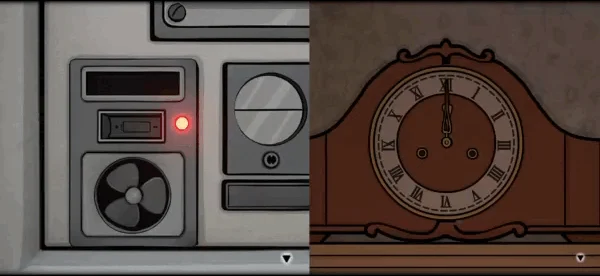
A control panel in the two eras of The Past Within.

The Past Within

Players explore different eras and exchange observations to solve connected puzzles.

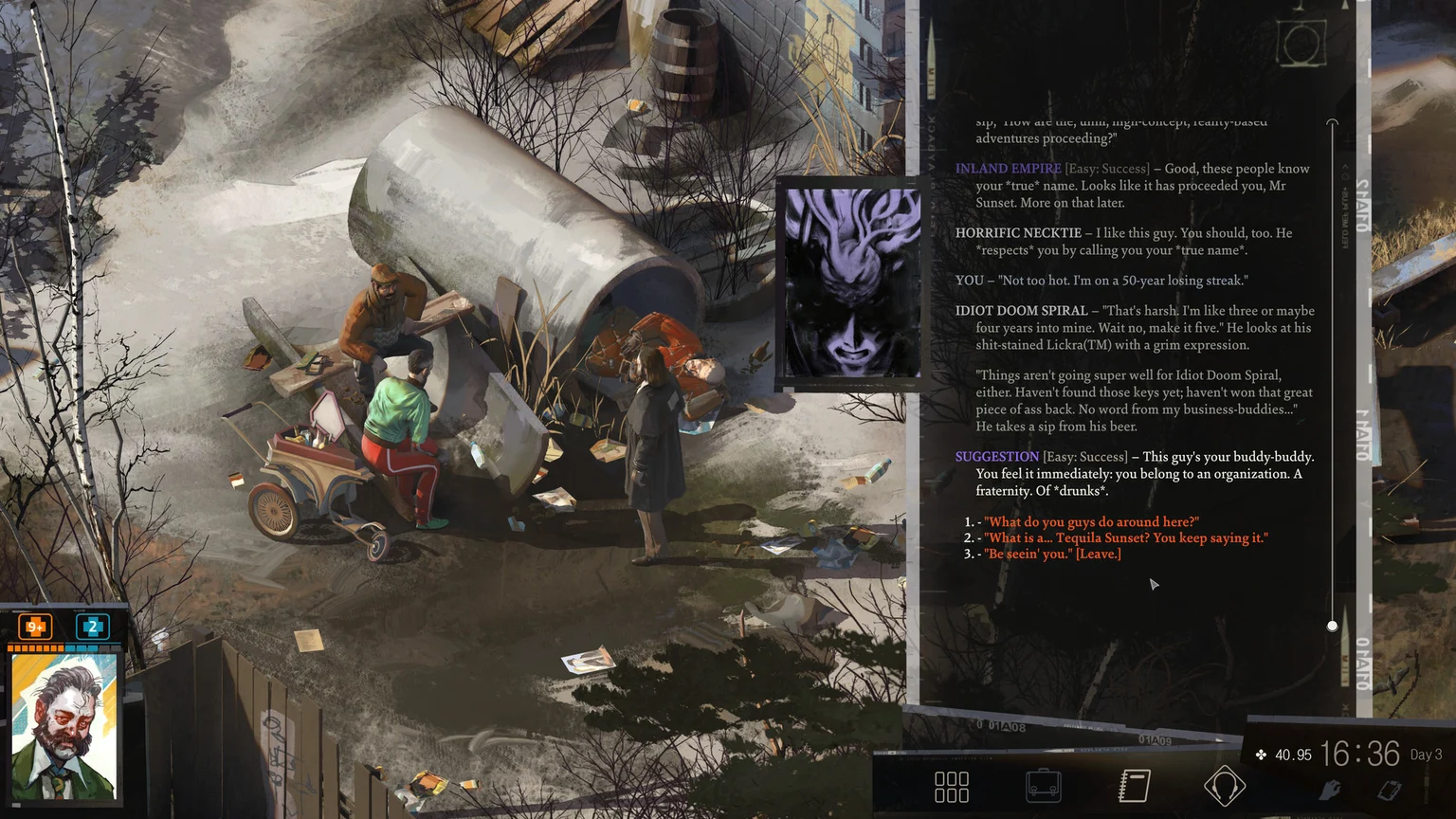
A Disco Elysium investigation with the conversation visible beside the scene.

Disco Elysium - The Final Cut

By integrating the world background through scenes, objects and character dialogues into the player's investigation process, the player gradually collects information during exploration and pieces together scattered clues to form an understanding of the events, allowing the narrative and exploration to mutually drive each other.

A conversation and investigation in Disco Elysium.

Game Flow

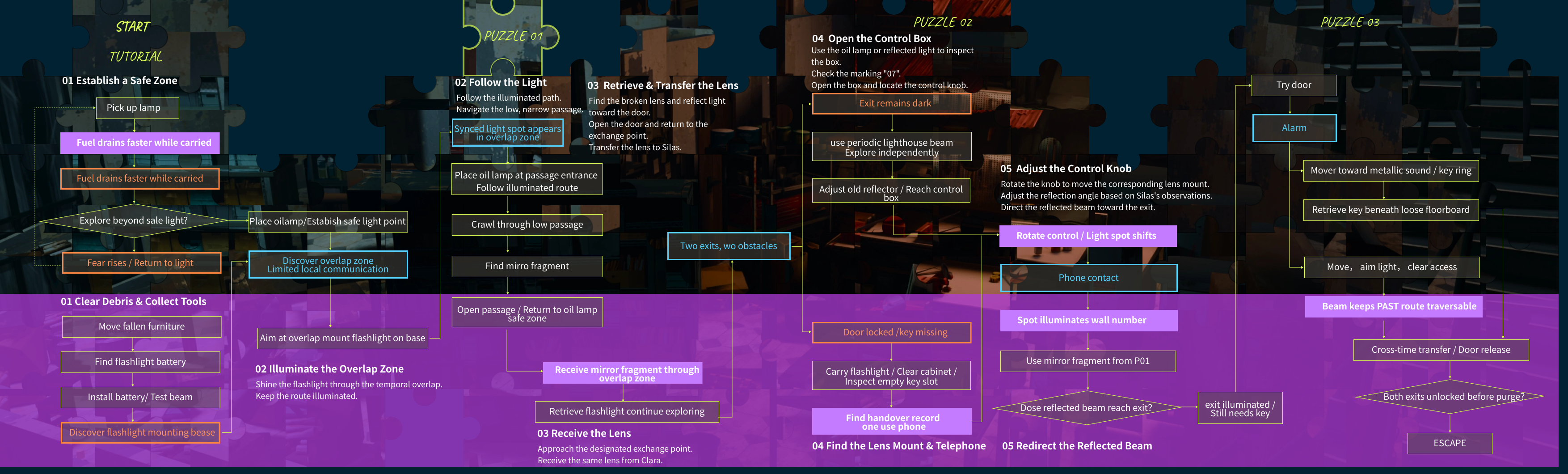
Two players explore the same lighthouse six hundred years apart. Information, light and changes to the environment connect their separate spaces. Cooperation develops from discovering each other to redirecting light together and escaping the darkened lower floor.

Clara’s and Silas’s connected routes from the tutorial to the exit in Puzzle 03.
  1. TUTORIAL

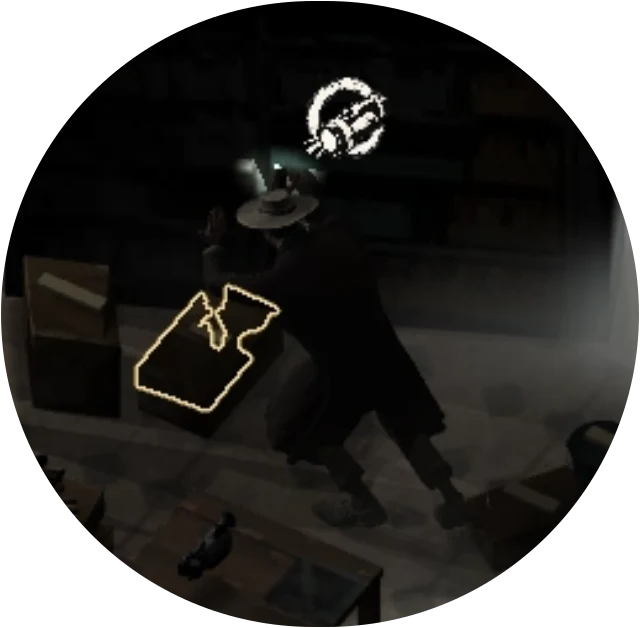
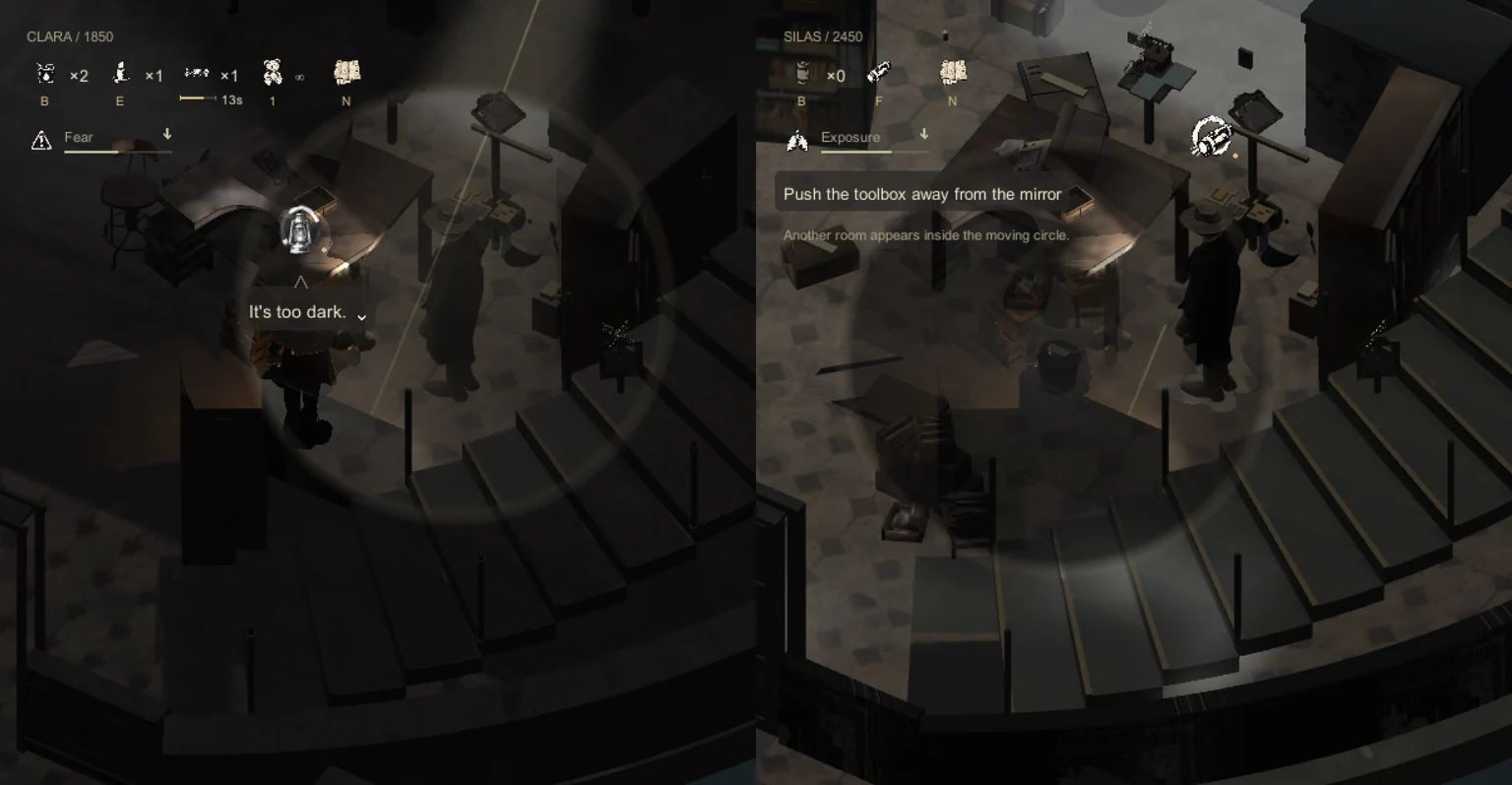
    A sudden blackout interrupts both characters’ work. The past player learns to manage an oil lamp and stay near light, while the future player clears furniture and searches for a flashlight.

  2. PUZZLE 01

    Sounds beneath a table draw the players toward a local connection between eras. The future player lights the narrow passage while the past player crawls inside to retrieve a mirror fragment.

  3. PUZZLE 02

    The players investigate different equipment in each era and exchange their findings by telephone. One adjusts the old controls while the other observes and redirects the reflected beam, working together to illuminate the blocked route.

  4. PUZZLE 03

    An alarm raises the urgency as toxic fog builds in the future. Clearing access, maintaining light and recovering the key become shared tasks as both players work toward their exits.

Character Design

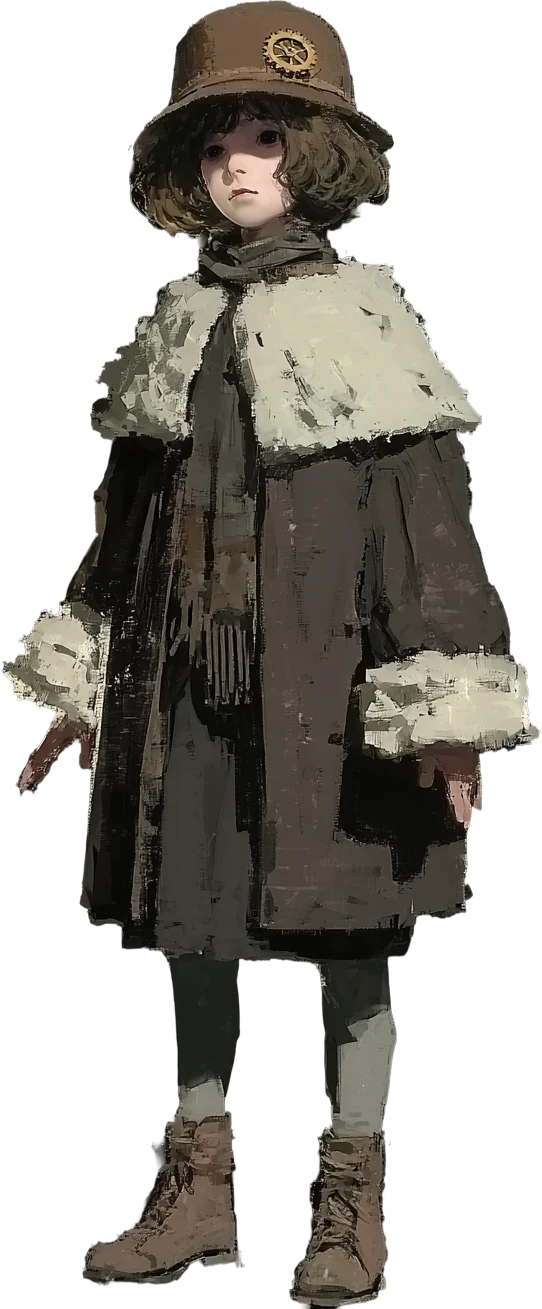
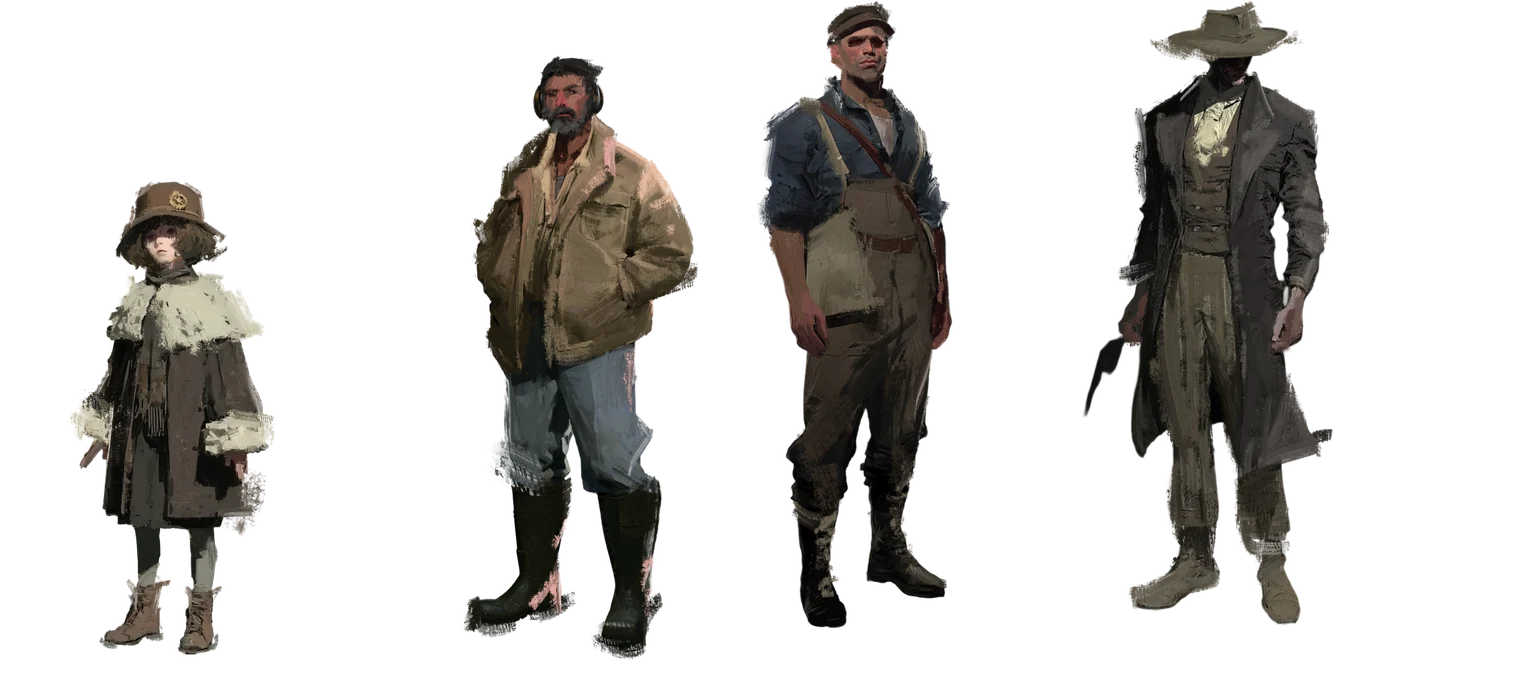
Clara

Living in the lighthouse in 1850, Clara can access confined spaces and operate historical mechanisms. Her small size allows her to explore areas inaccessible to Silas, but her fear of darkness makes her dependent on light.

Clara
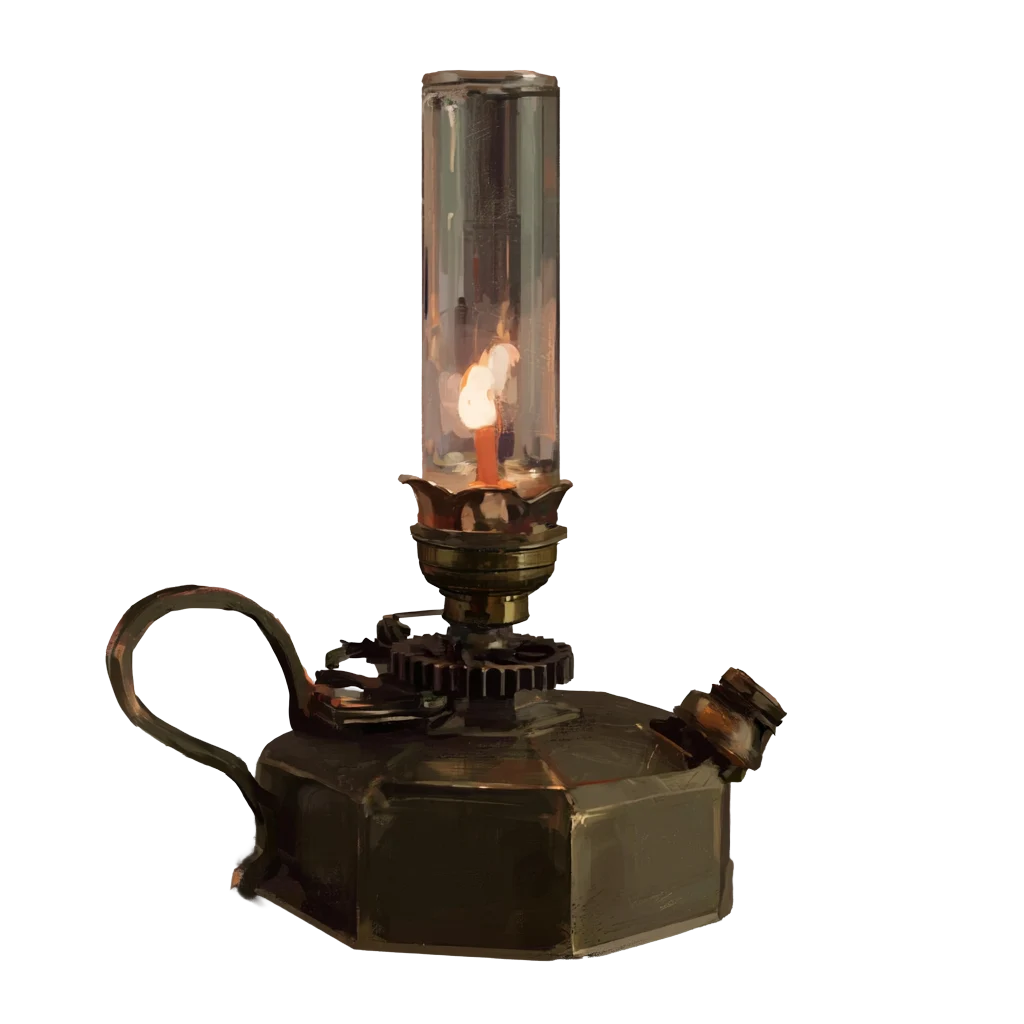
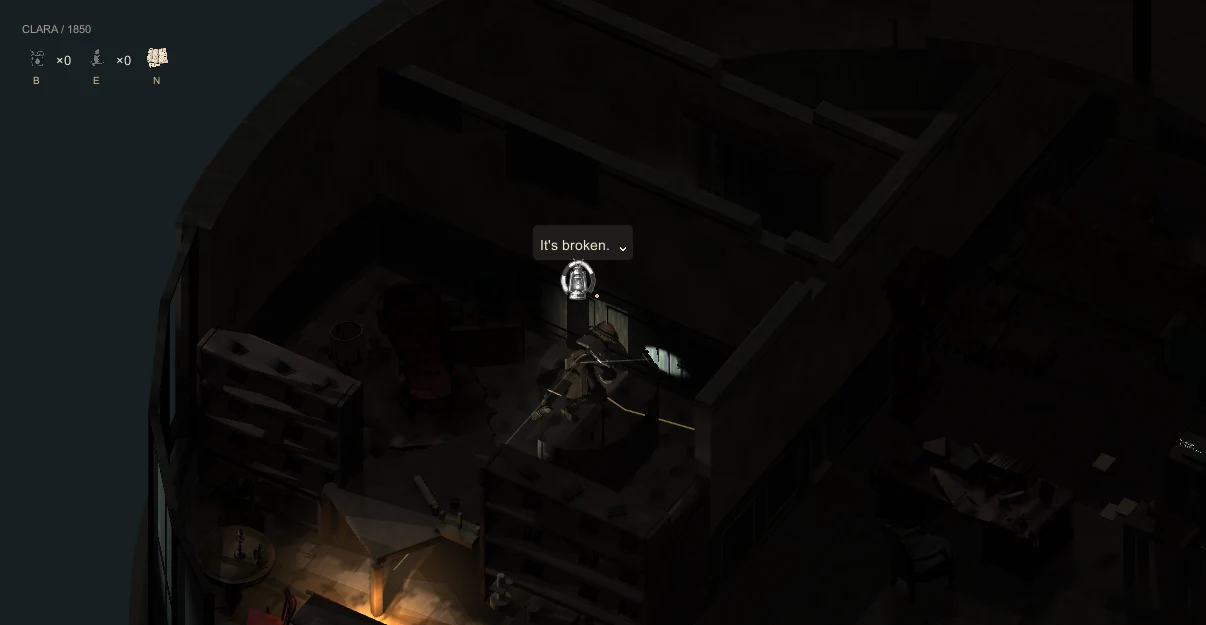
Oil lamp
Crawl & Explore
Crawls through narrow passages, explores hidden spaces, and retrieves objects beyond Silas's reach.
Mechanical Interaction
Operates knobs, levers, mechanical locks, electrical control boxes, and lighthouse reflectors to manipulate the environment and redirect light.

LIMITATIONS

Limited Oil Lamp
The oil lamp provides local illumination but consumes fuel quickly, limiting how long Clara can explore dark areas independently.
Fear of Darkness
Prolonged exposure to darkness gradually narrows her field of vision and causes mild negative effects. Her vision recovers after returning to an illuminated area.
Candy
Bear
Fear

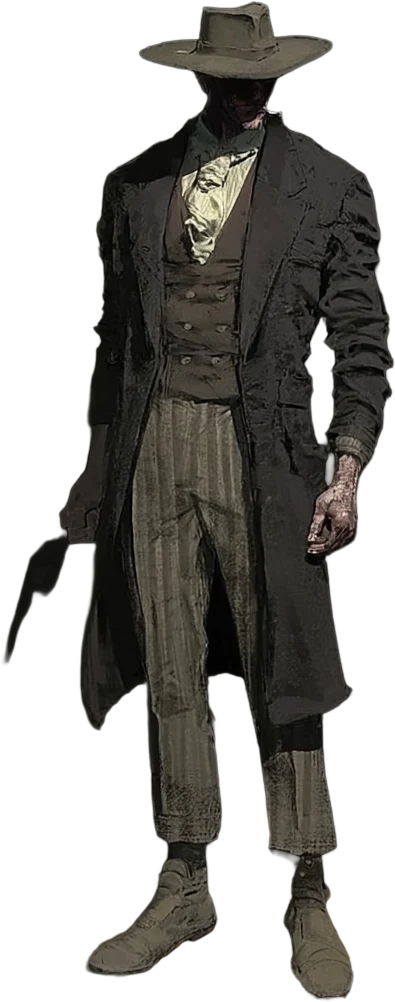
Silas

A navigator from a future maritime settlement, Silas explores the abandoned lighthouse to restore its navigation systems. He specializes in controlling light, manipulating the environment, and supporting Clara across timelines.

Silas
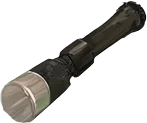
Flashlight
Direct Light
Illuminate dark areas and guide Clara.
Move Obstacles
Rearrange furniture and clear pathways.
Assist Exploration
Support Clara in accessing hidden locations.

LIMITATIONS

Limited Battery
The flashlight consumes battery power during use, requiring careful management of illumination.
Toxic Fog
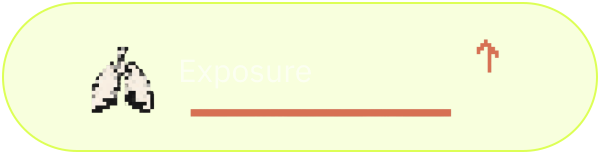
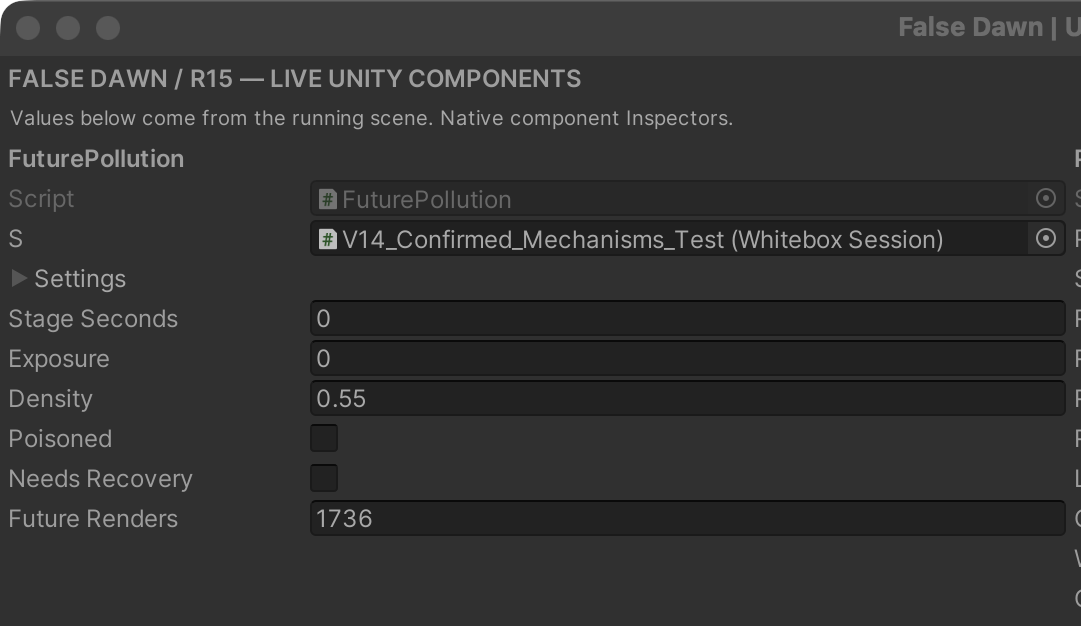
Polluted fog gradually spreads through the future environment. Exposure accumulates inside contaminated areas and slowly decreases after leaving them. Reaching the exposure limit forces a restart from a safe checkpoint.
Silas’s exposure rises in the fog. Silas’s exposure falls in ventilation.

Fear appears from 30%; At critical values, Clara’s edges darken and Silas’s edges pulse red.

MIRROR

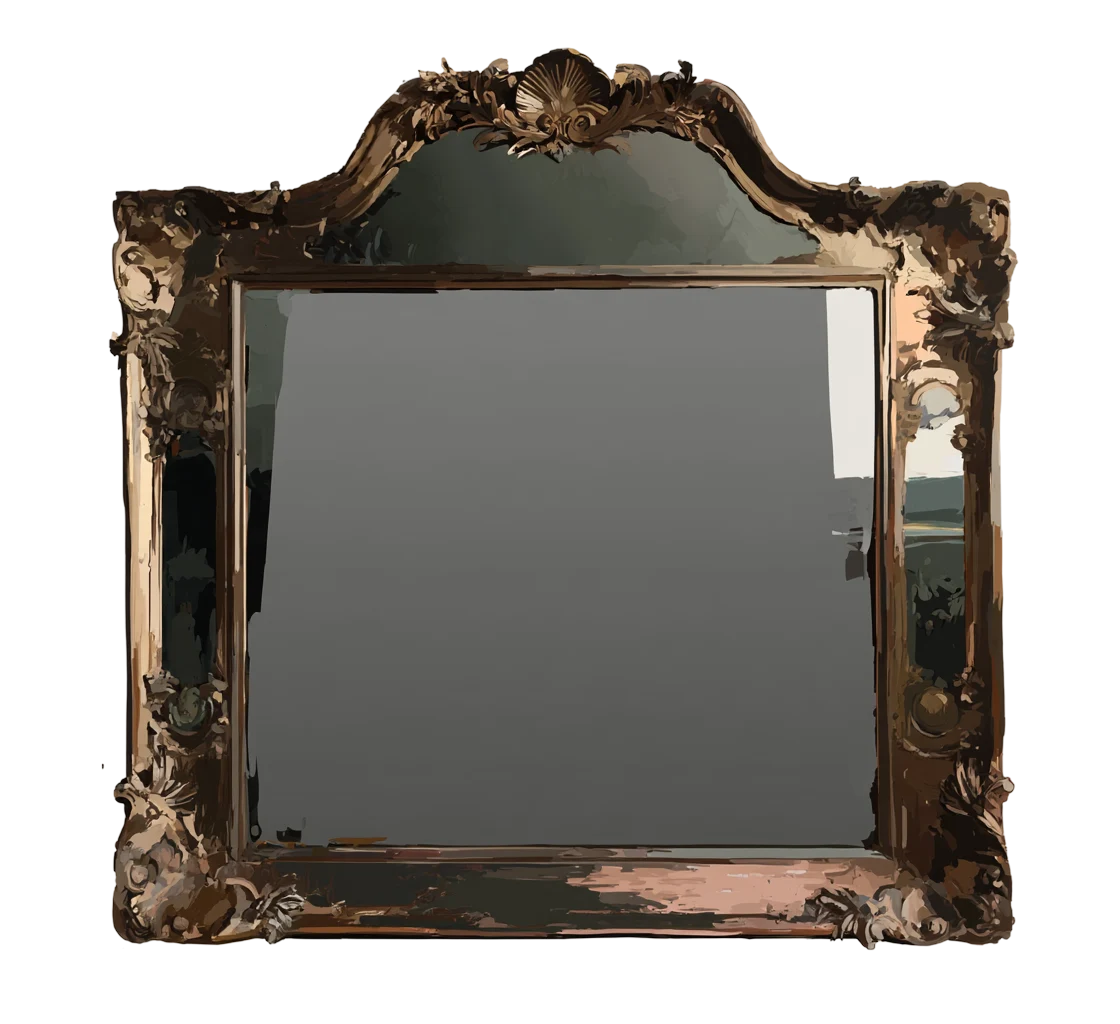
Players can move and rotate mirrors to redirect light across the environment. By adjusting reflection angles, they create new light paths, reveal hidden clues, and solve cross-timeline puzzles.

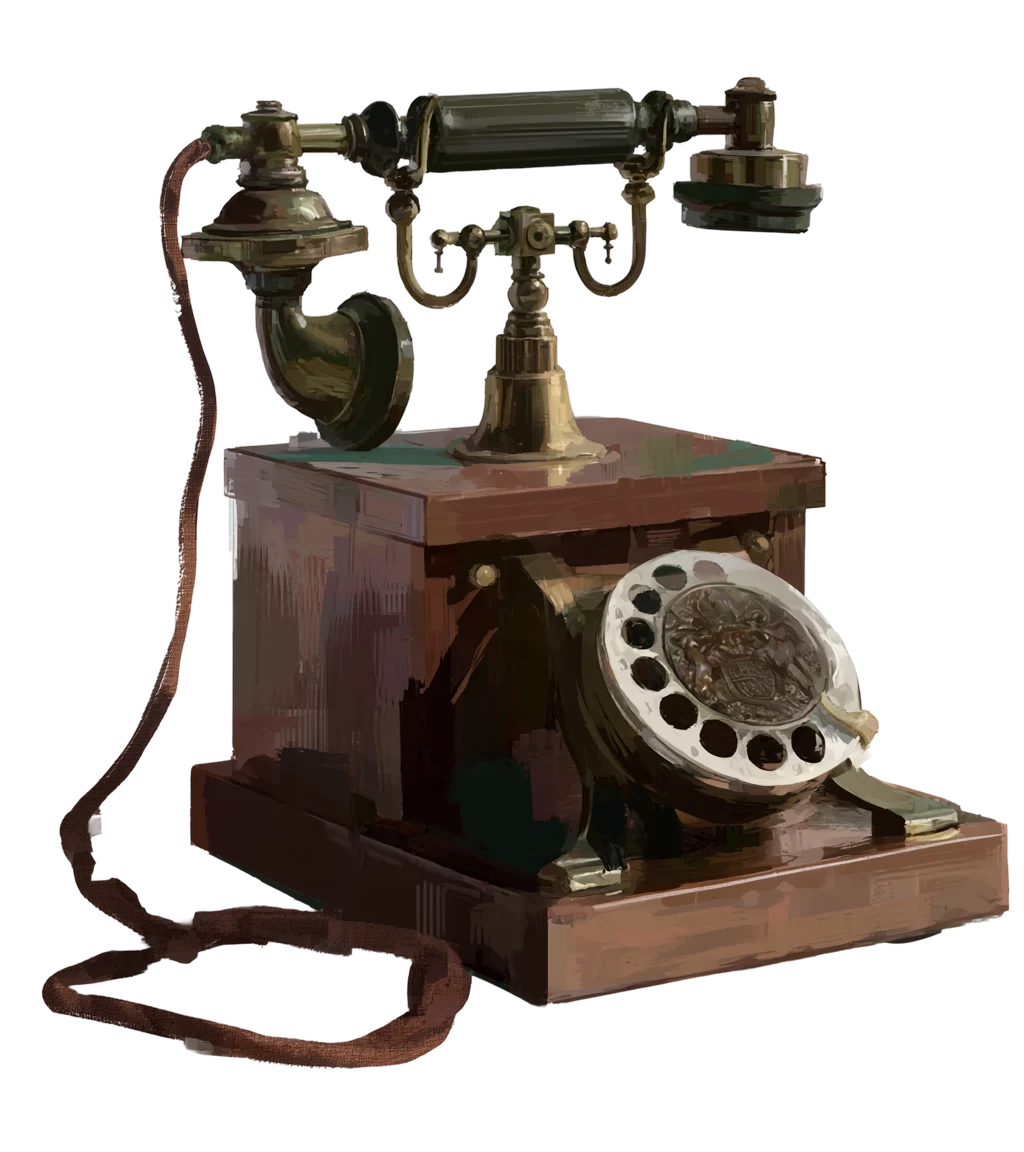
TELEPHONE

A communication device connecting the two protagonists across different eras, allowing them to exchange information and coordinate their actions during cooperative exploration.

UI Design

NNotebook

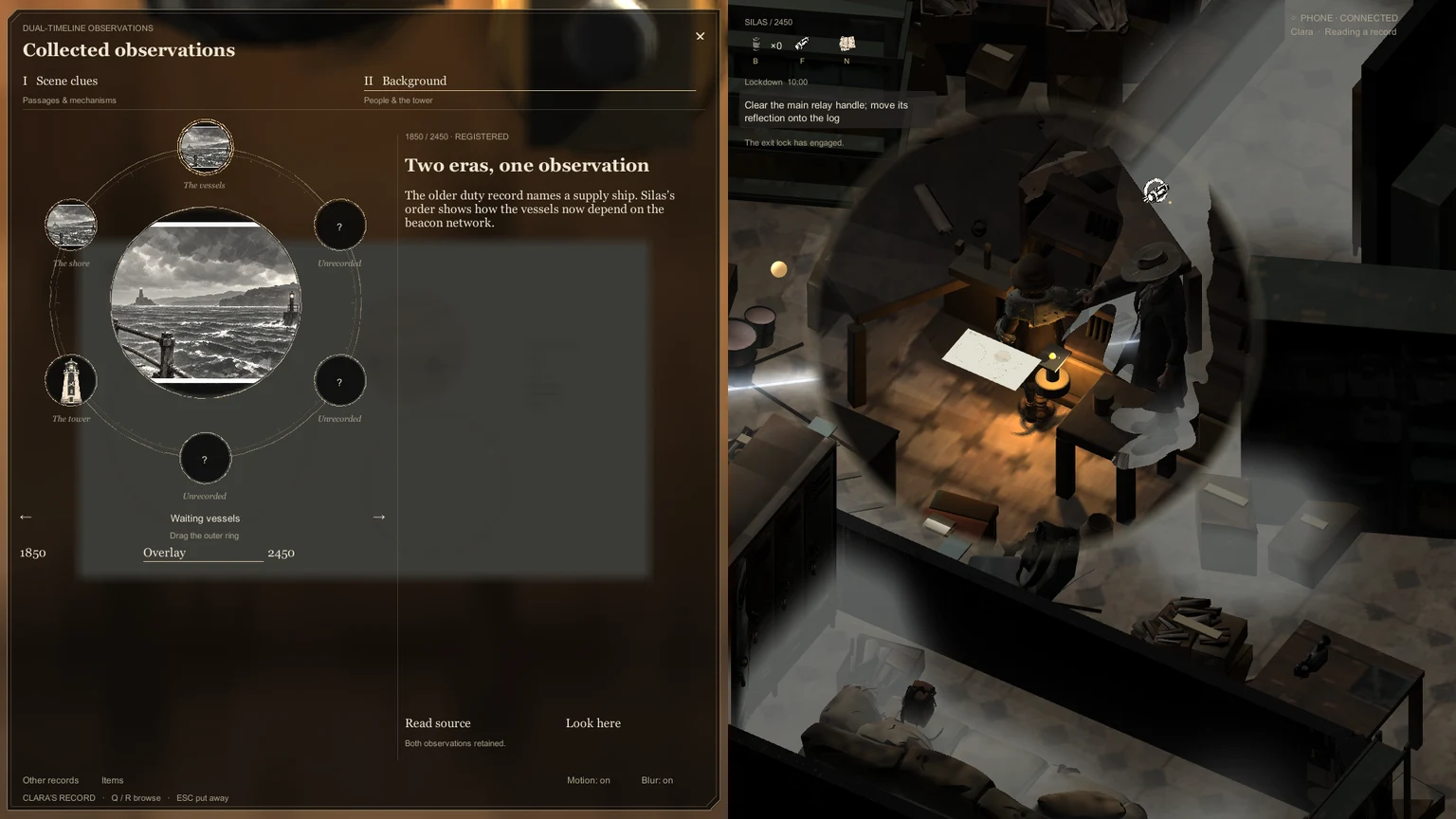
Both of them obtained their own notebooks and separately examined the two original texts of the current group.

Short task: Next step action

Light at floor level
Drag the outer ring
MIRROR FRAGMENT / CLARA
A clean patch of glass

The mirror has a broken, unbound edge. Its centre is still clean.

The fragment can be carried, placed and turned.

Clara’s record Q / R browse
Outer ring: Rotatable, with selection indicators

Combine the clues

Compare information from two different eras

The notebook open beside the matching observation in the lighthouse.
In the Clara scene, it was very dark and Silas had to turn on the flashlight to provide illumination.
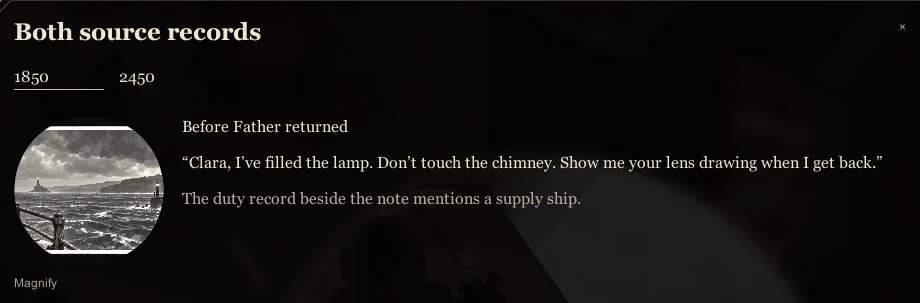
Source record, first observation.
Sender: When in a communicable state, select the recorded observation group and click it.
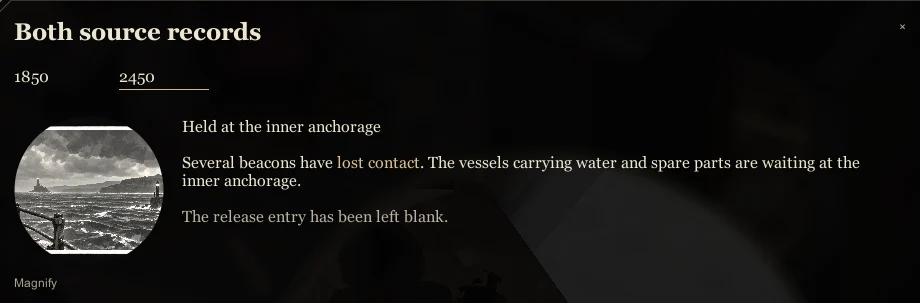
Source record, second observation.
Recipient: Open the record and click "View Mark". The interface will jump to the same group.

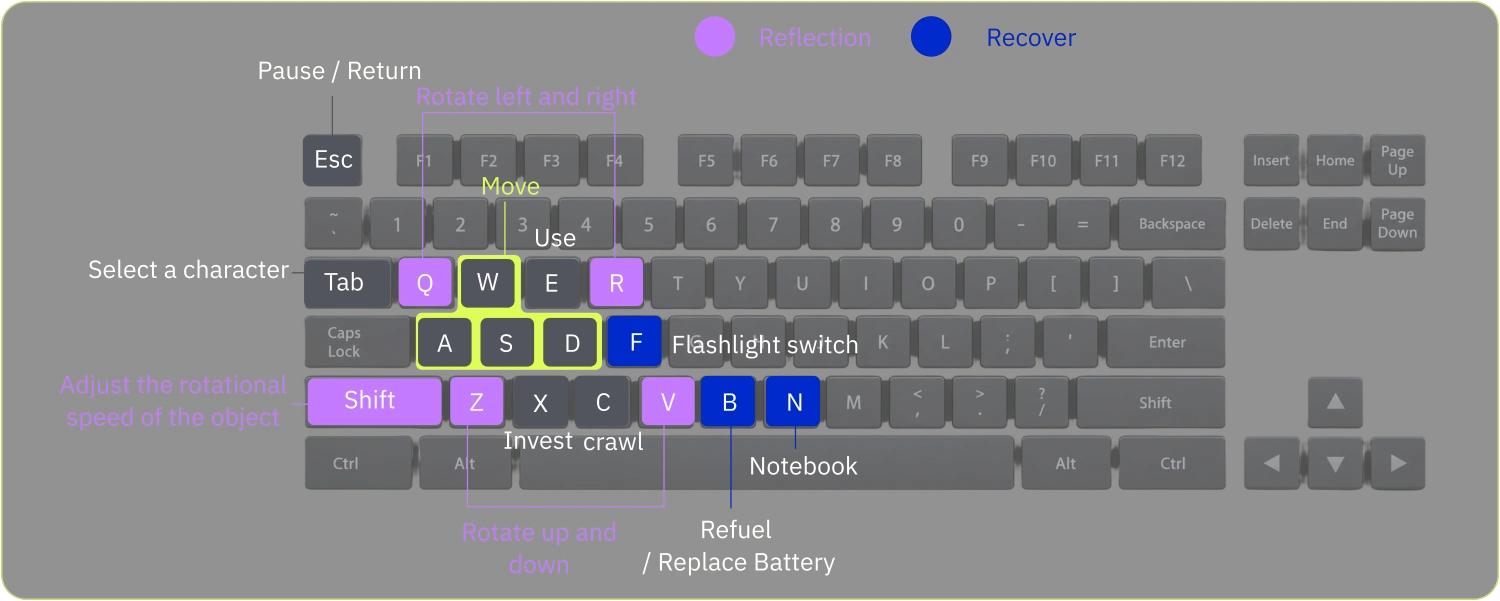
Controls

Esc
Pause / Return
Tab
Select a character
WASD
Move
Shift
Adjust the rotational speed of the object
QR
Rotate left and right
ZV
Rotate up and down
E
Use
X
Invest
C
crawl
F
Flashlight switch
B
Refuel / Replace Battery
N
Notebook

Supporting Characters

NPCs connect storytelling and player guidance through conversations, practical requests and reactions to the blackout. They introduce immediate goals and essential supplies, while optional dialogue reveals everyday life in each era.

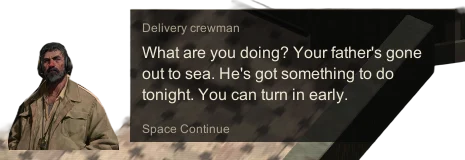
Supply Crewman — 1850

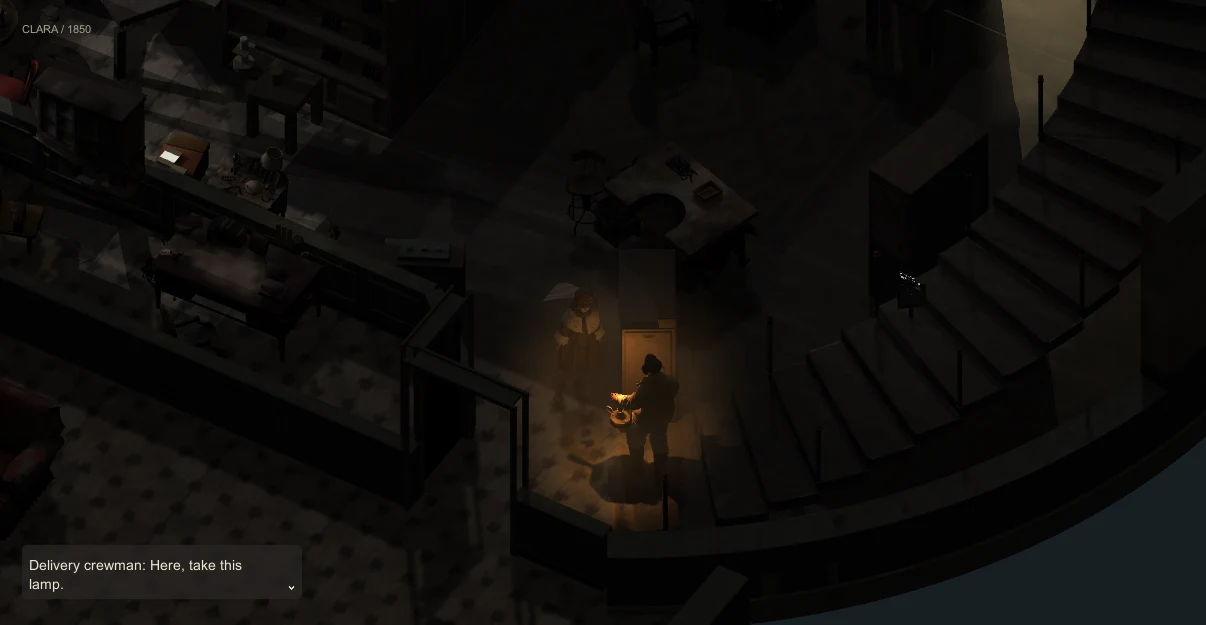
The crewman gives Clara an oil lamp after the blackout, introducing her fear of darkness and the need to maintain a light source.

Optional conversations reveal her father’s observation records

Why did the door make that noise? Clara, are you still down there?

Lighthouse Maintenance Worker — 2450

The maintenance worker explains how the failing navigation light has left supply boats stranded, establishing Silas’s reason for investigating the lighthouse. He directs Silas toward the flashlight, batteries and obstructed wiring, introducing equipment use and furniture clearing. Optional dialogue about unfamiliar cables, missing records and his child’s questions about sunlight adds clues to the future world’s history.

This handle was originally capable of locking. The latch came off and when you released it, it went back into place.

PM Design in Game

Environment Art

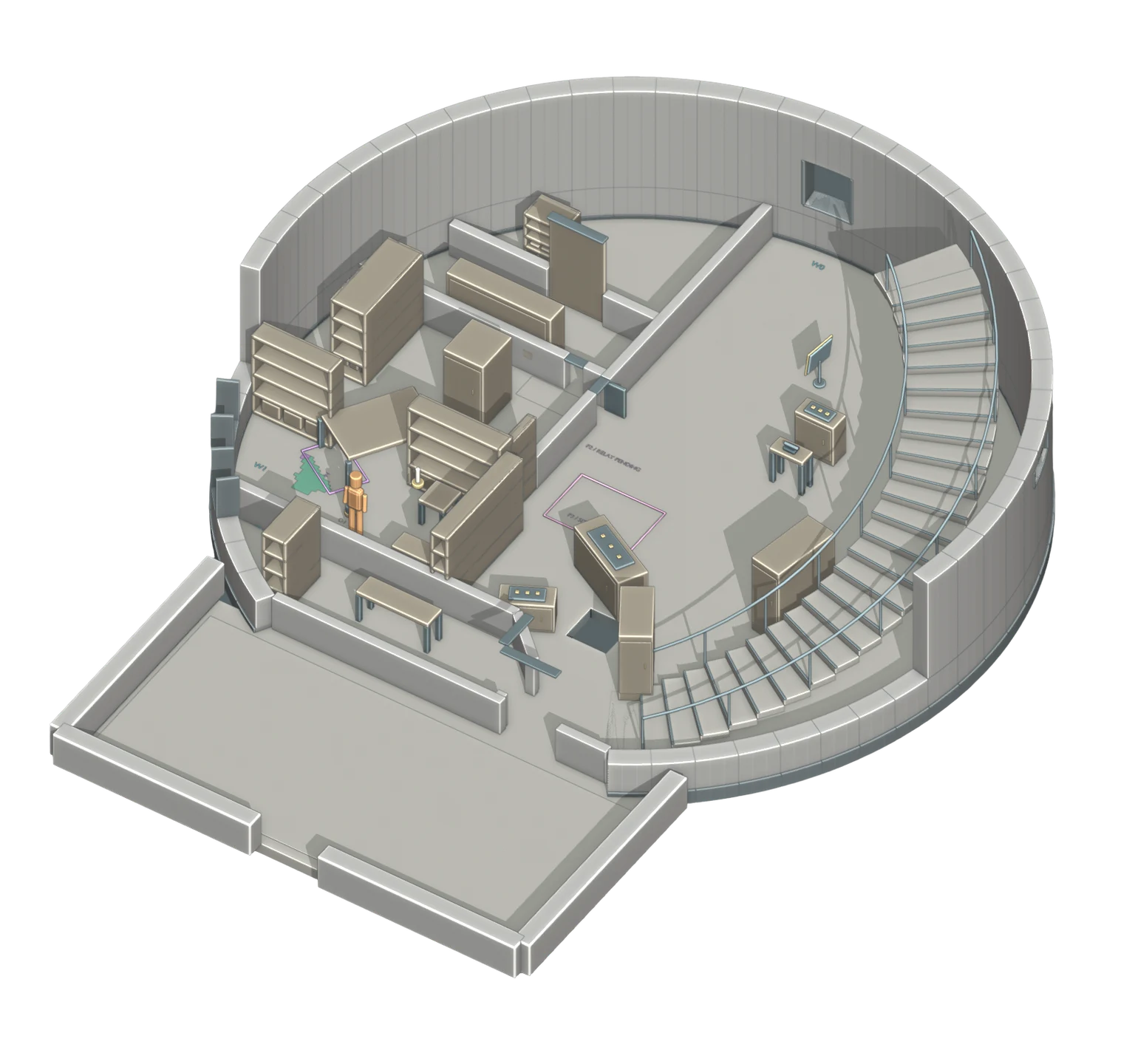
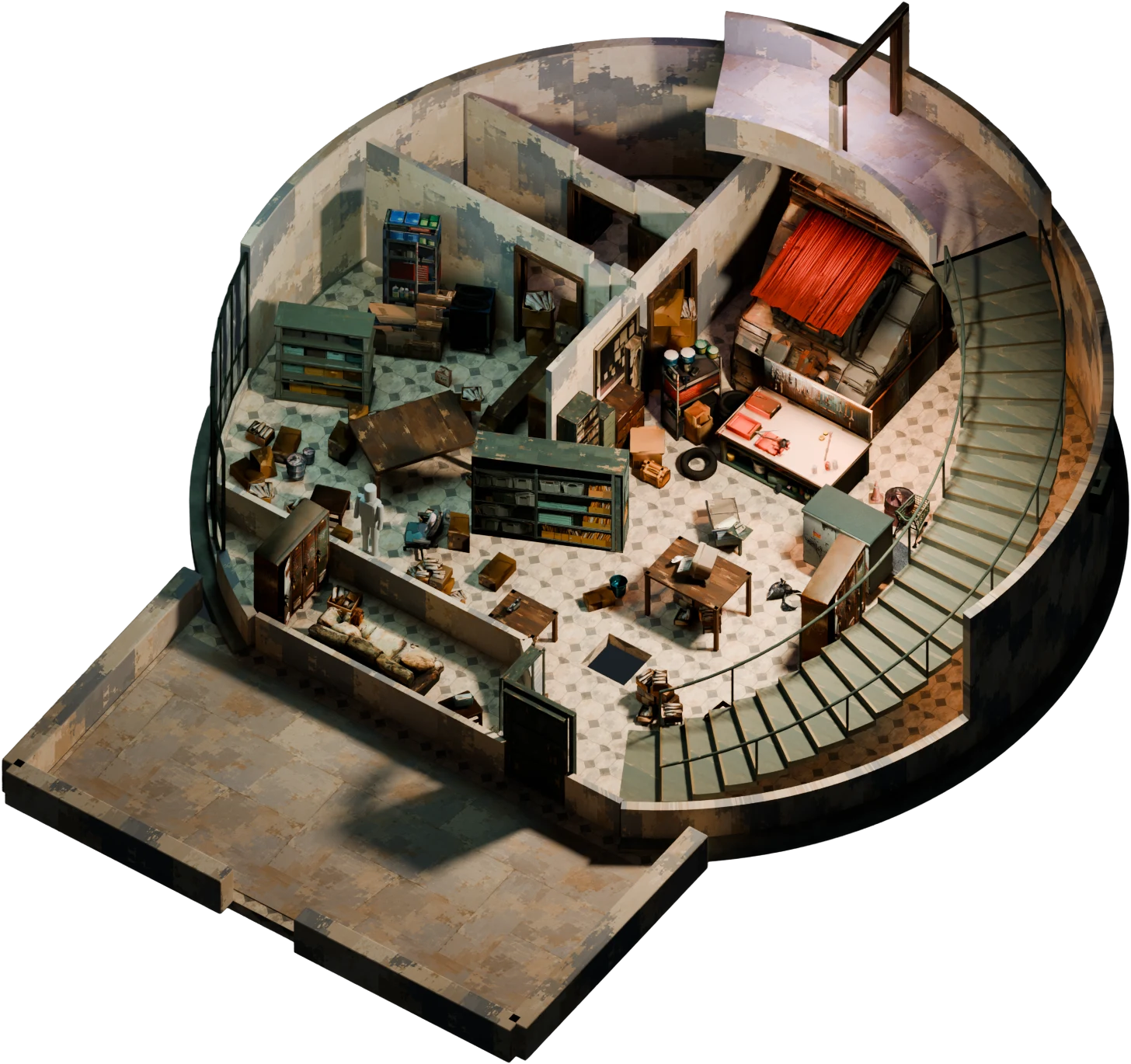
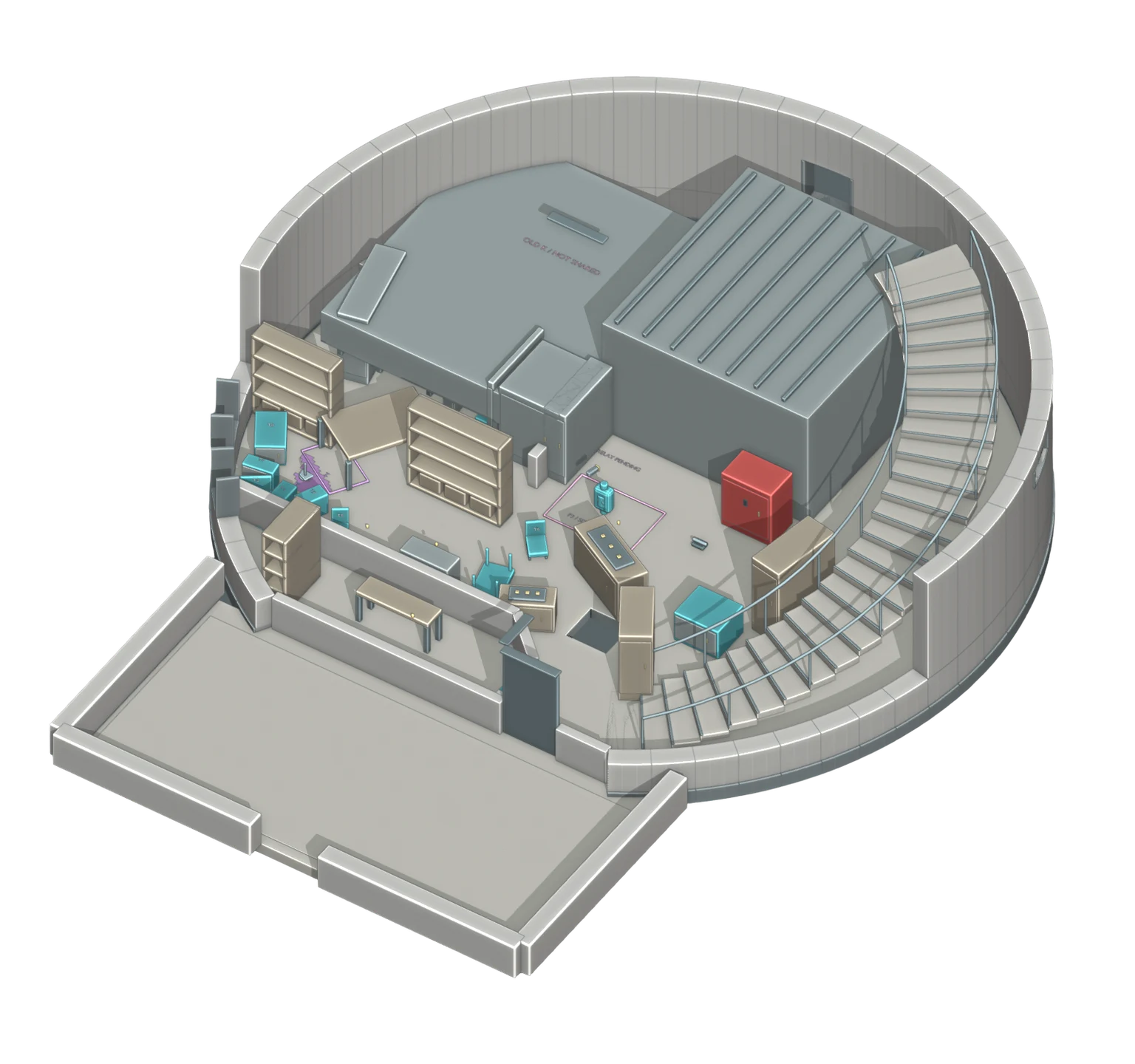
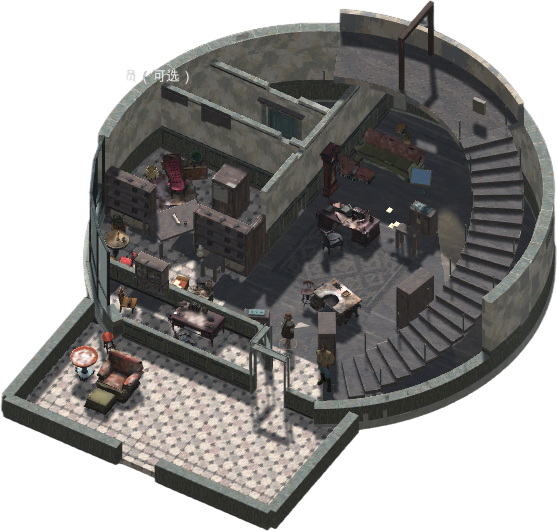
The lighthouse is presented in two versions, six hundred years apart. Shared architectural landmarks connect the spaces

Architectural study, 1850
Architectural study, 2450

Tutorial

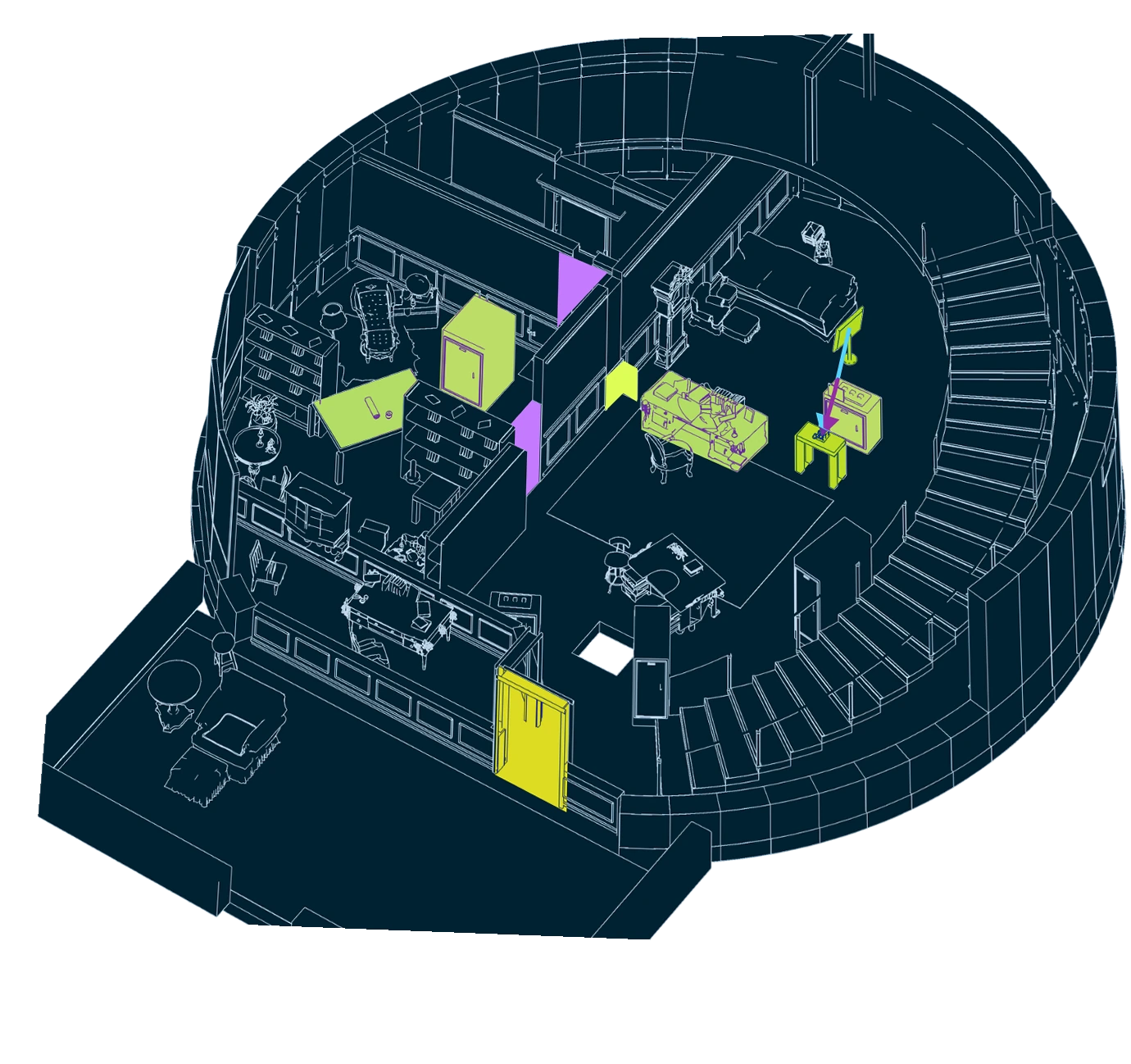
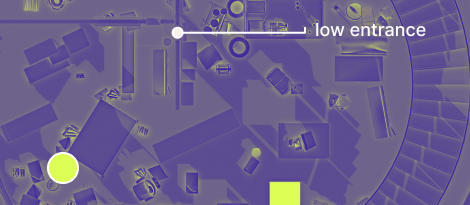
Low entrance in the tutorial

Clara explored the old room with a kerosene lamp; Silas removed the clutter in the future and found a flashlight. The two observed the different states of the same location, first confirming that light could affect the other end.

Puzzle 01

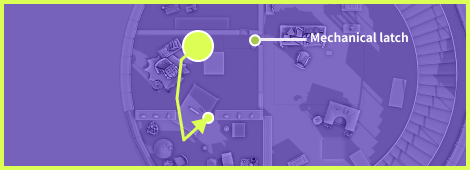
The mechanical latchClara and Silas’s light paths

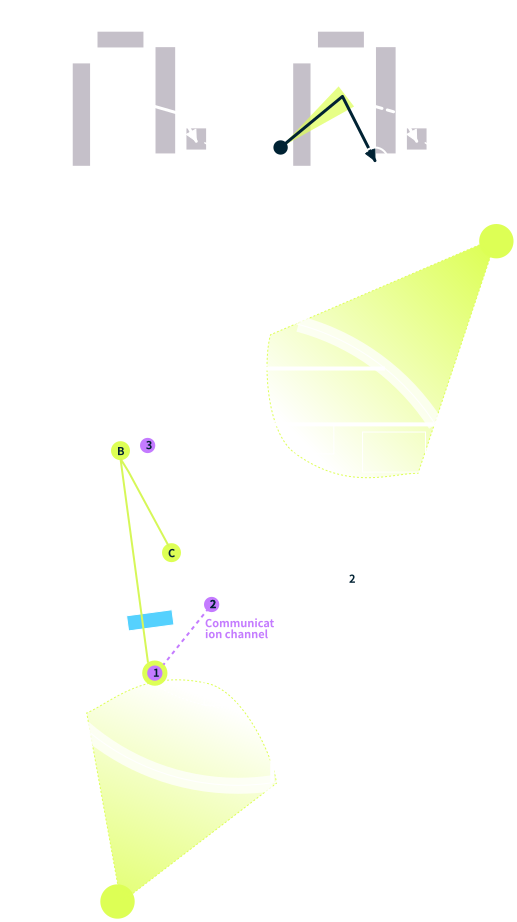
Clara rotated the mirror to see the latch behind the furniture, then pulled the connecting rod to open the door. The mirror lens couldn't pass through the narrow opening; it had to be pushed back into the wide entrance and mounted on the edge of the table.

In the past time, the fixed lenses reflected the moonlight. In the future time, the mirror surface can be removed and moved.

Puzzle 02

Control cabinet, mirrors and timed light path

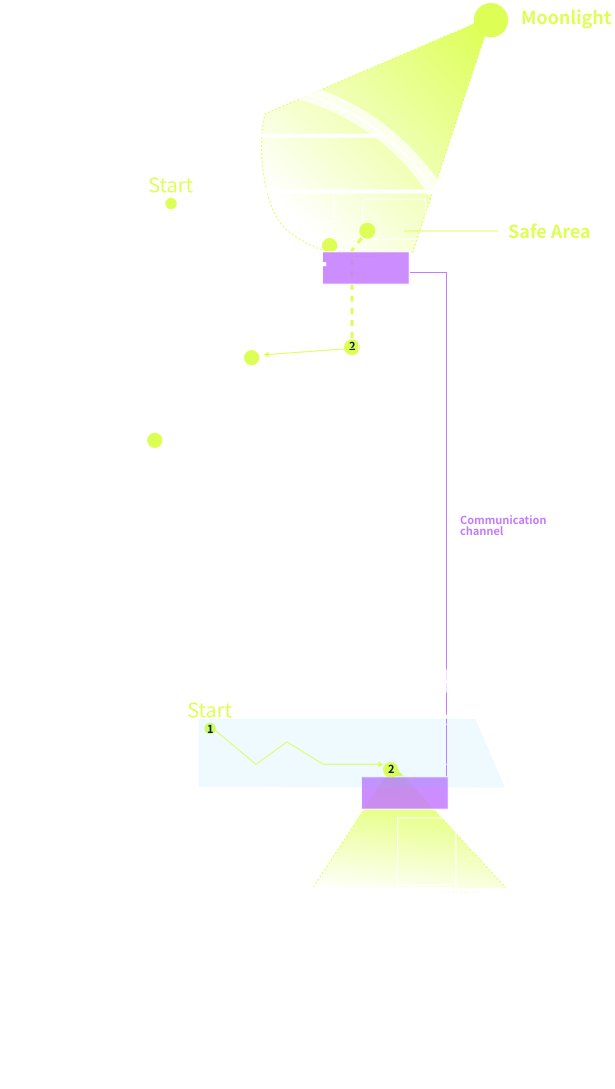
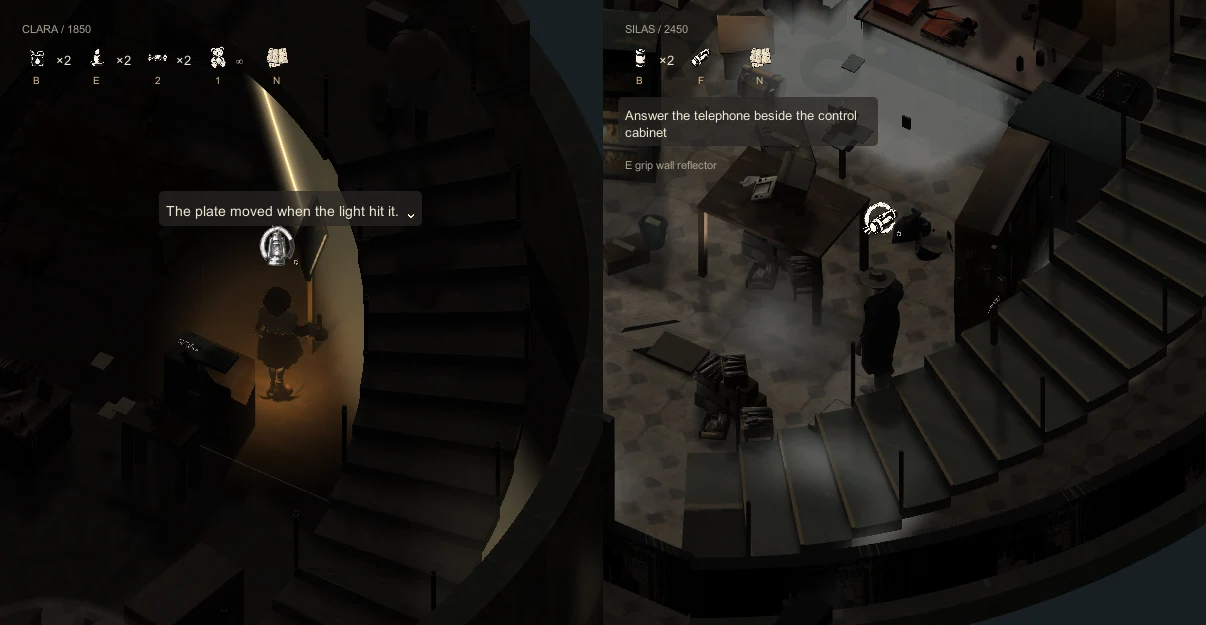
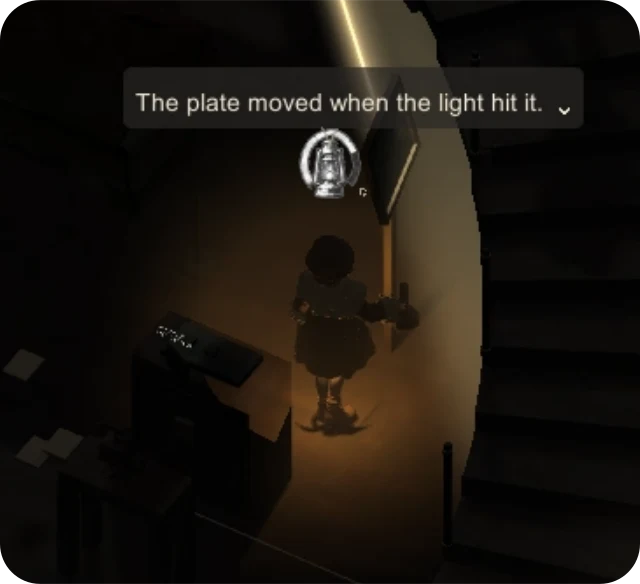
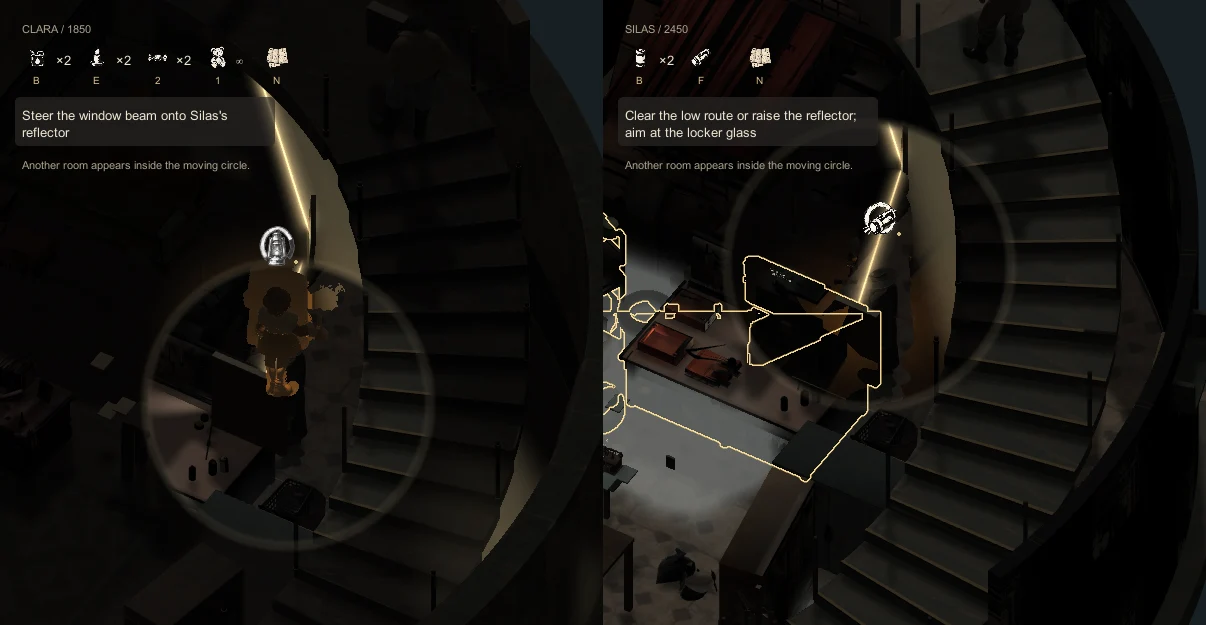
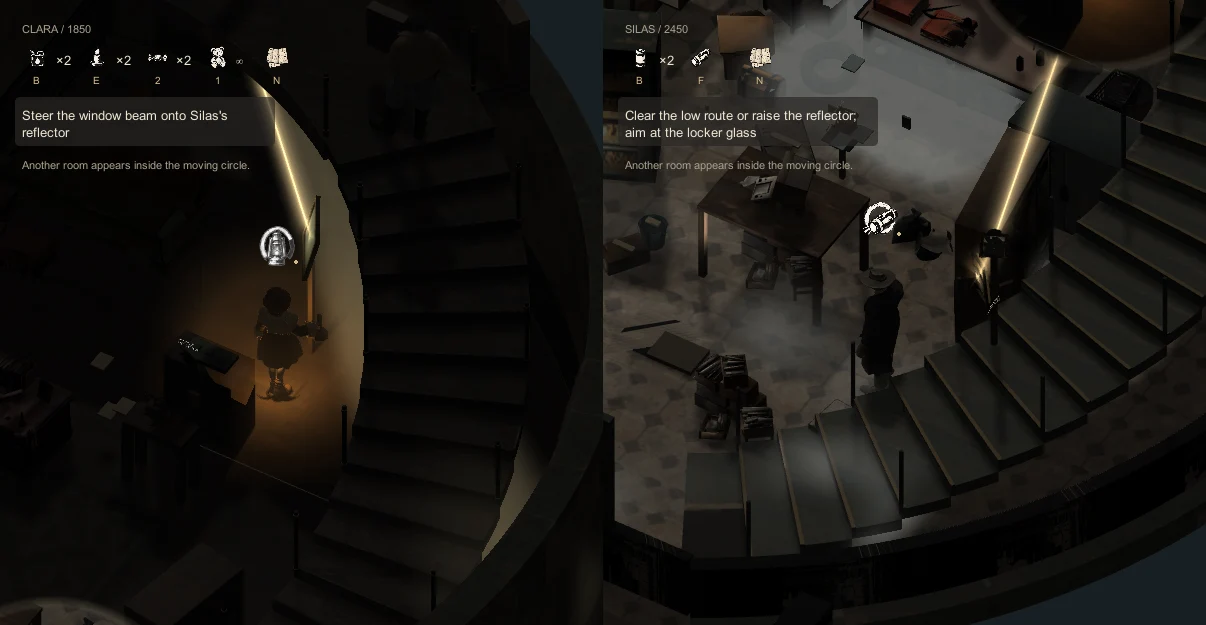
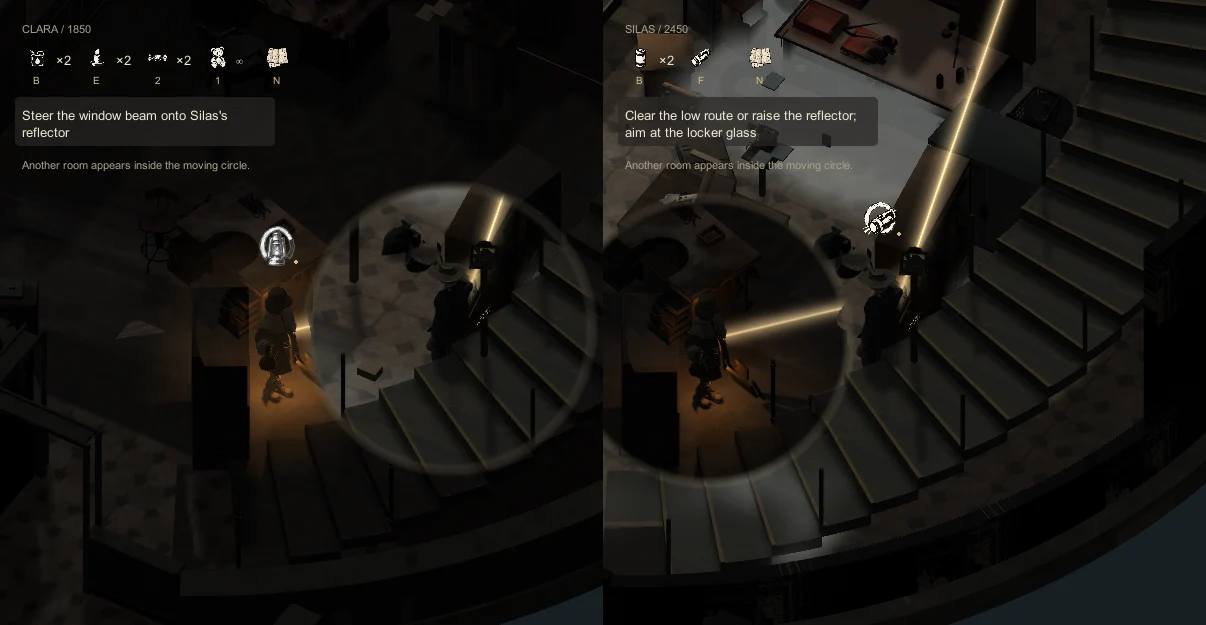
Clara redirected the light path from the window to the wall-mounted reflector.

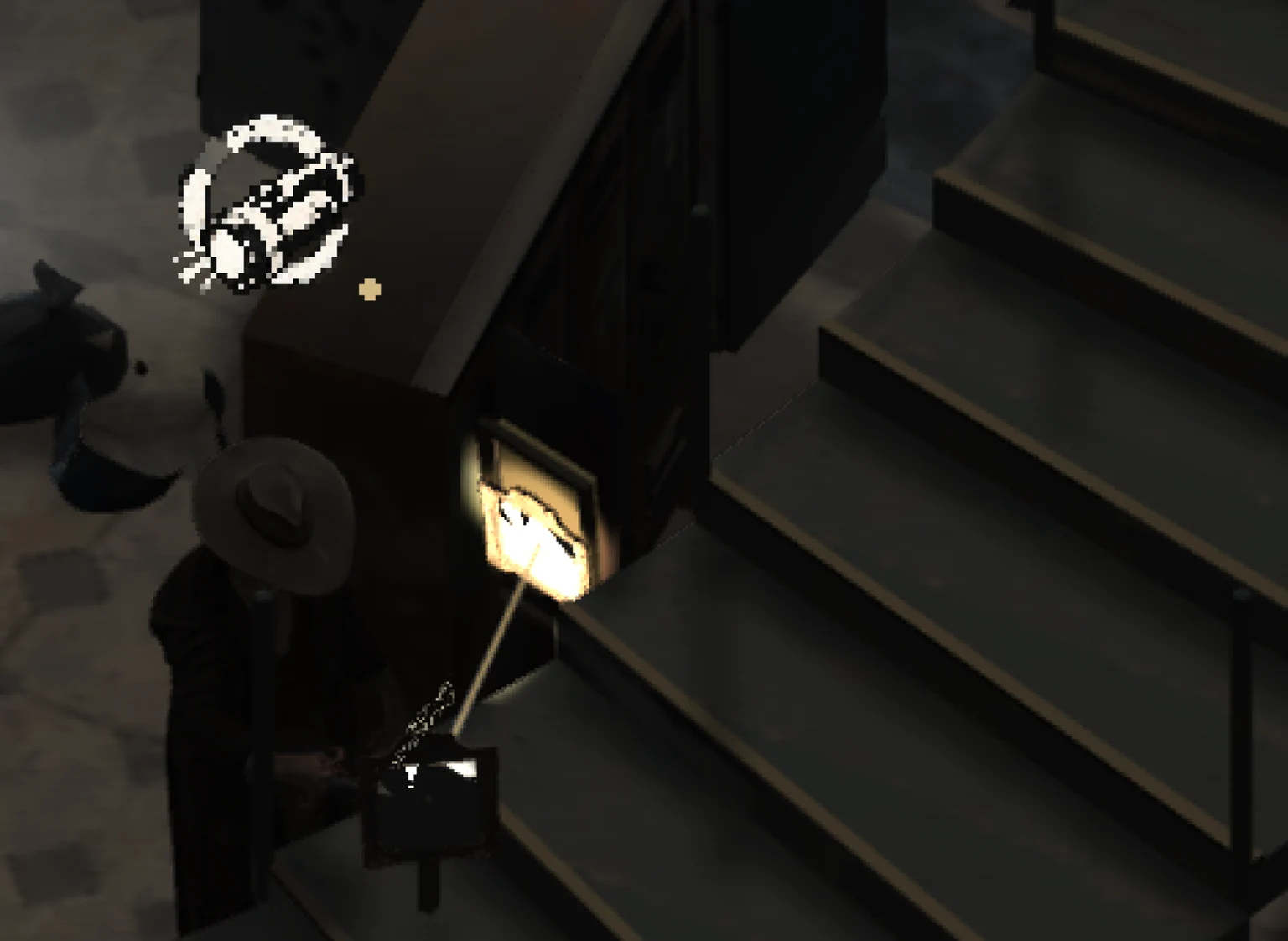
Silas directed the reflection towards the position of the cabinet door.

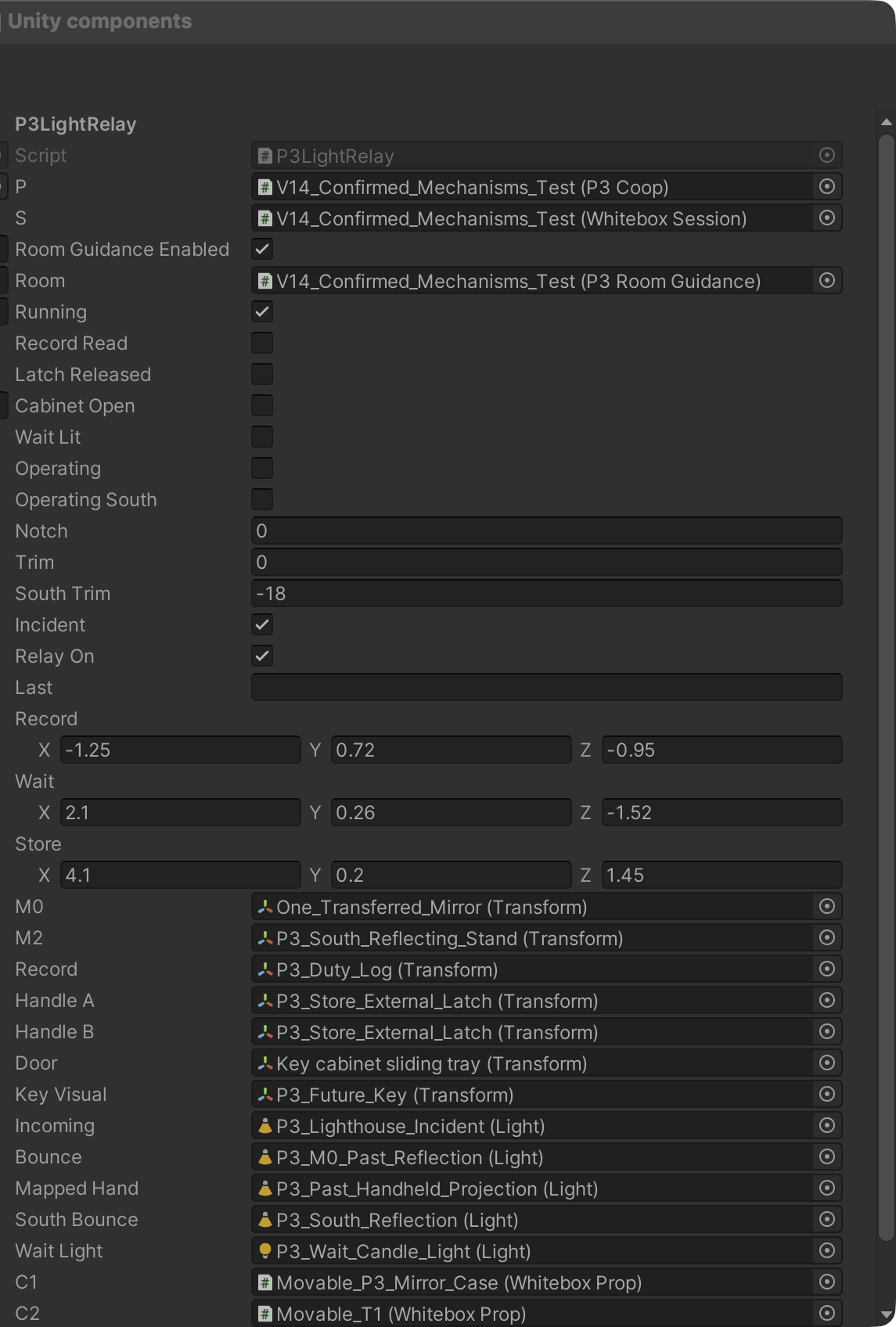
The light from the lighthouse has a time limit and its angle will change due to the rotation of the lighthouse.

Puzzle 03

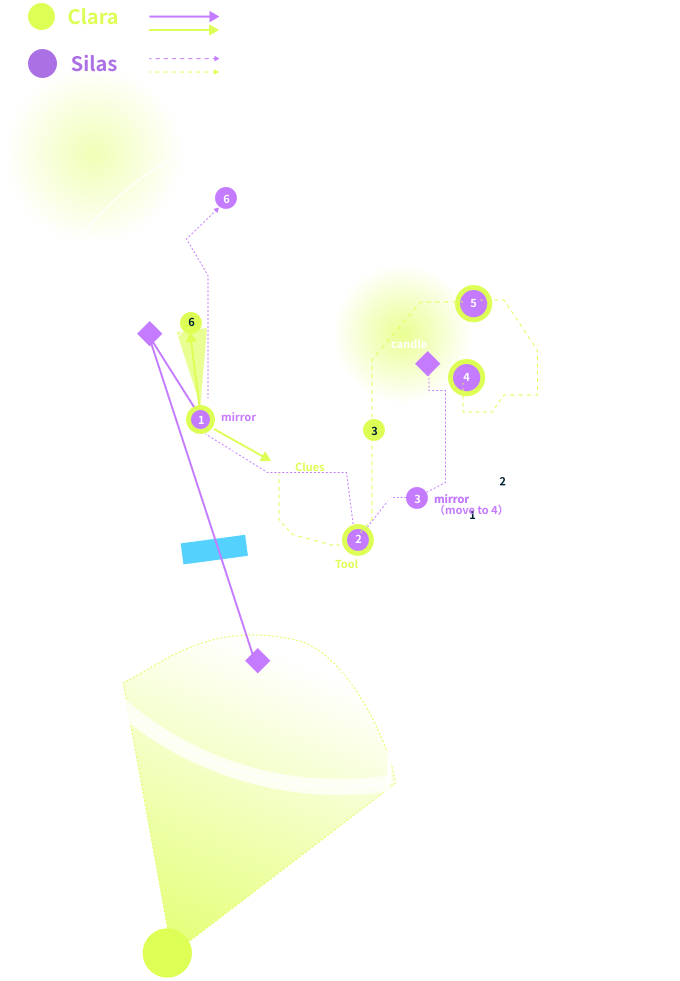
Light and movement paths for Clara and Silas

Puzzle 3 requires two players to work together to adjust the light path, search for the key, and reach the exit separately.
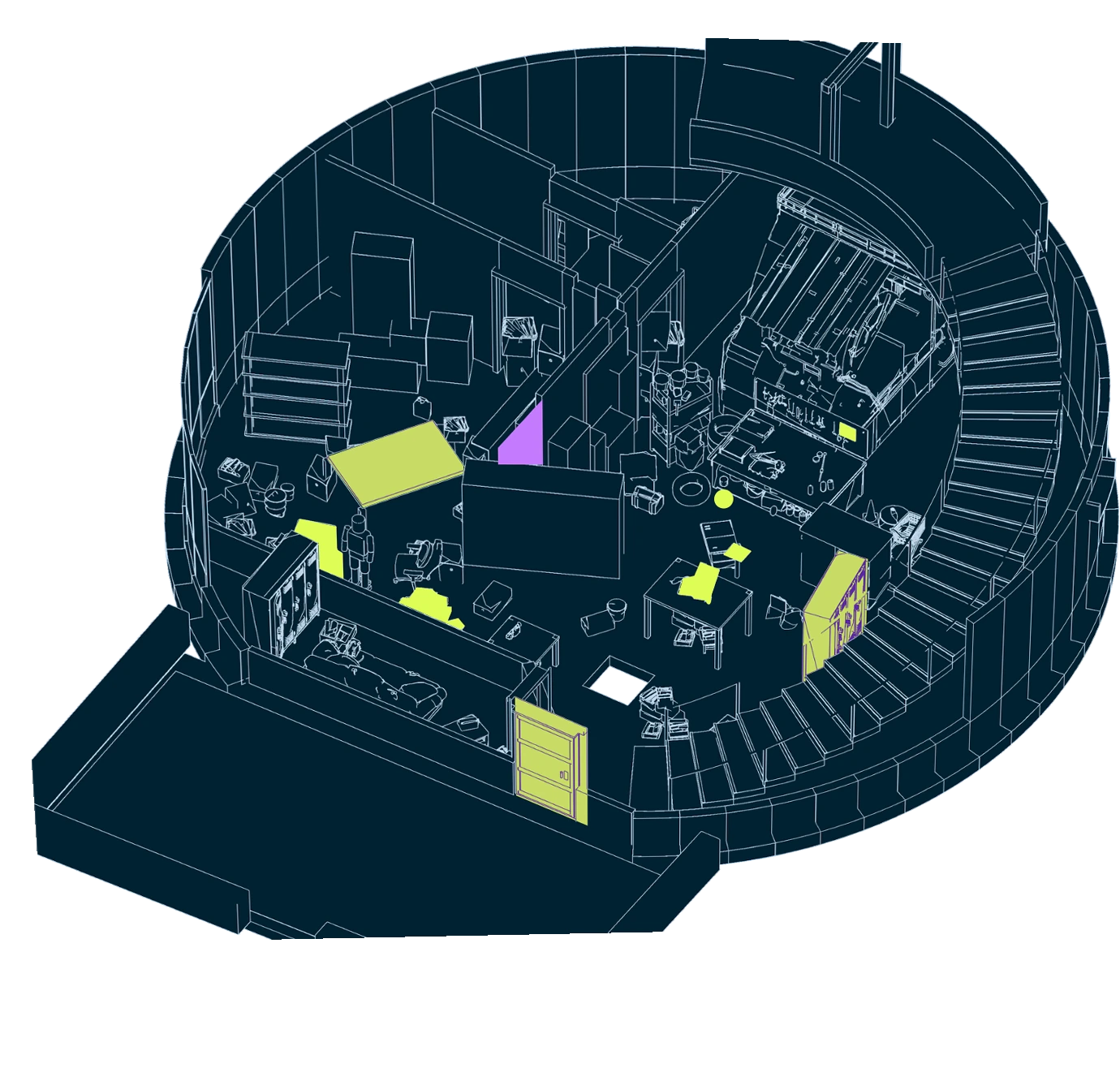
The past character Clara was afraid of the dark and needed to move within a safe lighting range

the future character Silas can provide flashlight illumination, but is restricted by the toxic fog and cannot stay in the contaminated area for a long time.
Tutorial

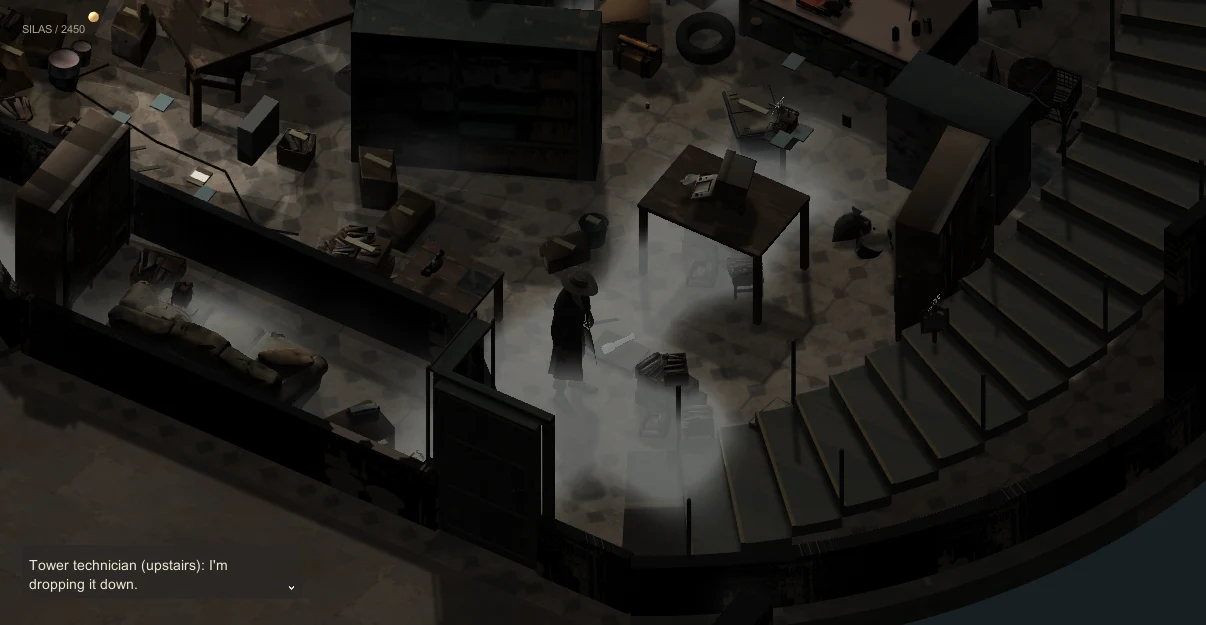
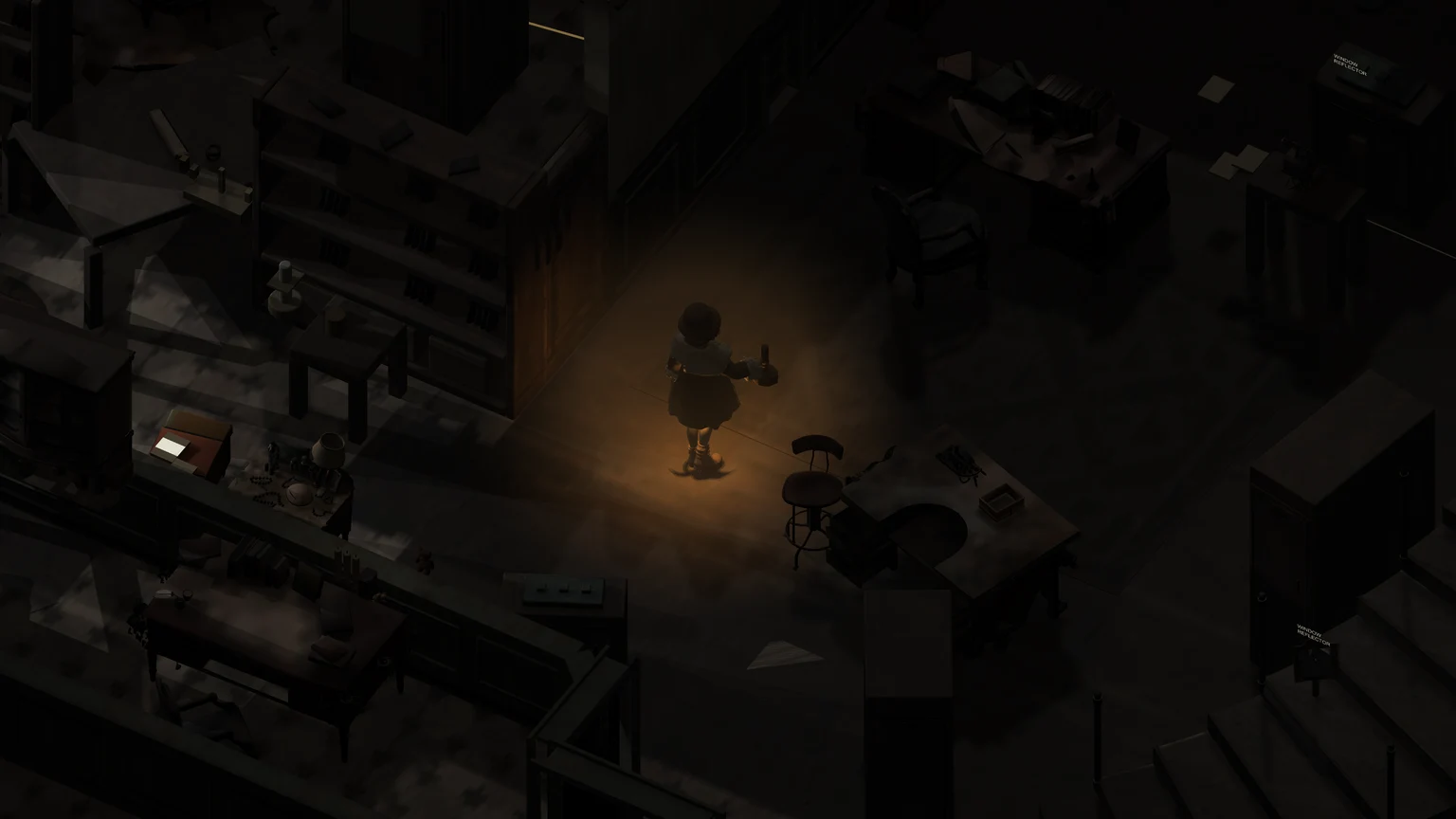
Clara and Silas in the lighthouse workshop before the blackout

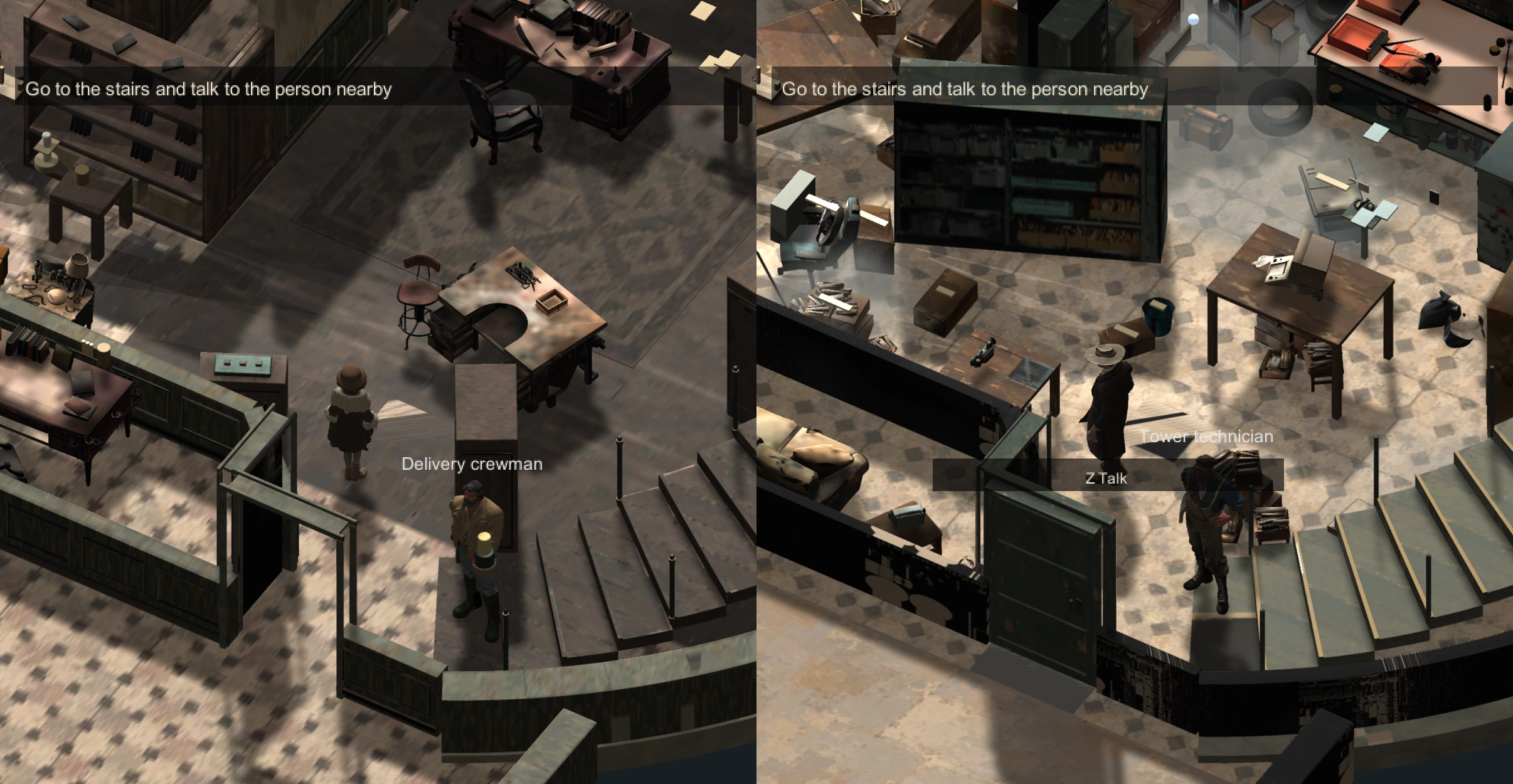
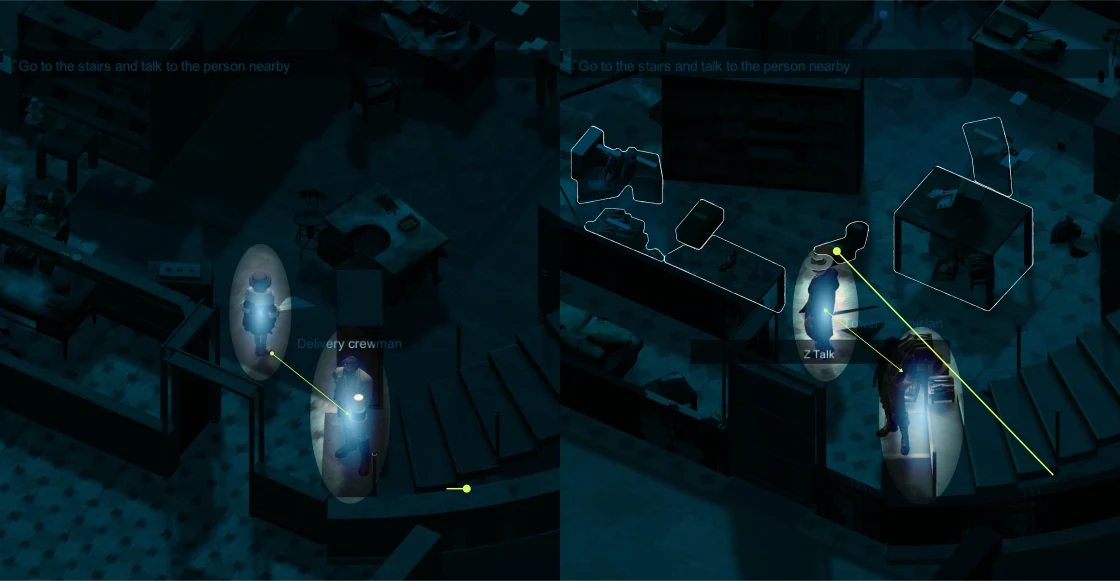
Approach NPC

Walk to the person beside the stairs.

Z starts the conversation; Space advances the dialogue.

Each NPC leaves to work upstairs.

The blackout begins after both opening conversations and departures.

Secure a light after the blackout

E Clara accepts the delivered oil lamp.

E The NPC upstairs threw away the flashlight.

The future room where Silas retrieves the flashlightOil lampFlashlight

Clear a gap rather than the whole room

/ Approach a movable object, click it or cycle

The outlined object is the selected one. If it hits furniture, release, change side and try a clear direction.

Investigate the strange table

The table rattles after Silas obtains the flashlight. Aim low into the gap.

X inspects the seam;

local contact opens only after both investigate. Enter opens the character conversation.

Put the lamp down, then crawl

At the table entrance:

A Fragment + reflection

E sets down the oil lamp.

C lowers Clara; WASD moves her through the narrow space.

She cannot crawl while carrying the lamp, and she cannot stand beneath the furniture.

Wait for the light before leaving the entrance.

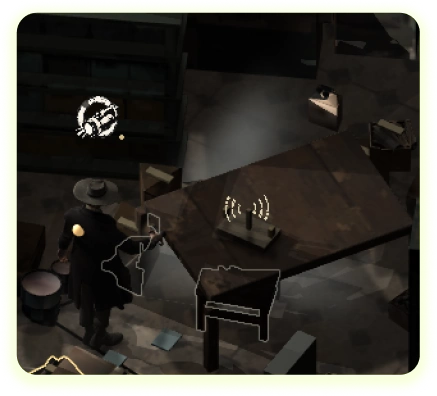
When Clara is crawling, she will occasionally touch the surrounding objects. At this moment, a sound indicator will appear at the corresponding position on Silas' interface, helping players locate Clara's position.

The indicator that points Silas toward Clara as she crawls

Silas must adjust his position

Aim the flashlight low through the table gap. As Clara moves deeper, furniture can cut off the beam. Silas walks along the table edge, clears a blocker if needed and aims again. A visible ray is useful only if it reaches Clara or the target.

B Handheld light

Q R Clara slowly rotated the lens, observing where the reflected light spot moved. She directed the light onto the brass latch behind the furniture, clearly illuminating the end of the connecting rod.

Silas maintained the direction of the light shining on the mirror surface. If the incoming light disappeared, Clara couldn't create the reflection out of thin air.

Clara turns the lens until its reflection hits the latchClose-up of the brass latch and the connecting rod
Walk to the person beside the stairs. Each NPC leaves to work upstairs. The blackout begins after both opening conversations and departures.

Puzzle 1

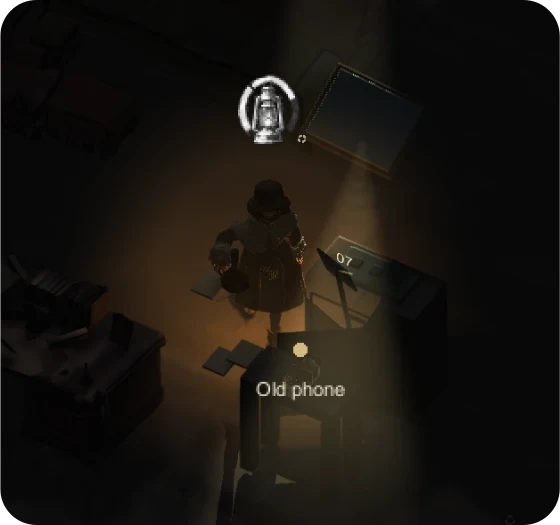
Clara at the reflector and Silas beside the telephone cabinet

Leave the table with your lamp

Clara retraced her steps along the route she had come in, heading back towards the entrance.

Q R Clara remained at the edge of the table, adjusting the installed lenses to direct the moonlight from outside onto the ground beside the candlestick, thus providing Clara with a safe illuminated area that no longer required Silas's light.

E The handle near the window.

Q R Rotate left and right

Z V tilt up and down

Wait until the lighthouse beam enters the window, observe the reflected light spot, and let it fall onto the brass panel of the old control box.

The handle beside the window in Clara’s eraClara adjusts the original window controls for the lighthouse beam

Call, then answer

At this moment, Silas first looked for the phone beside the control panel and the first door of the storage cabinet near the stairs.

Puzzle 2

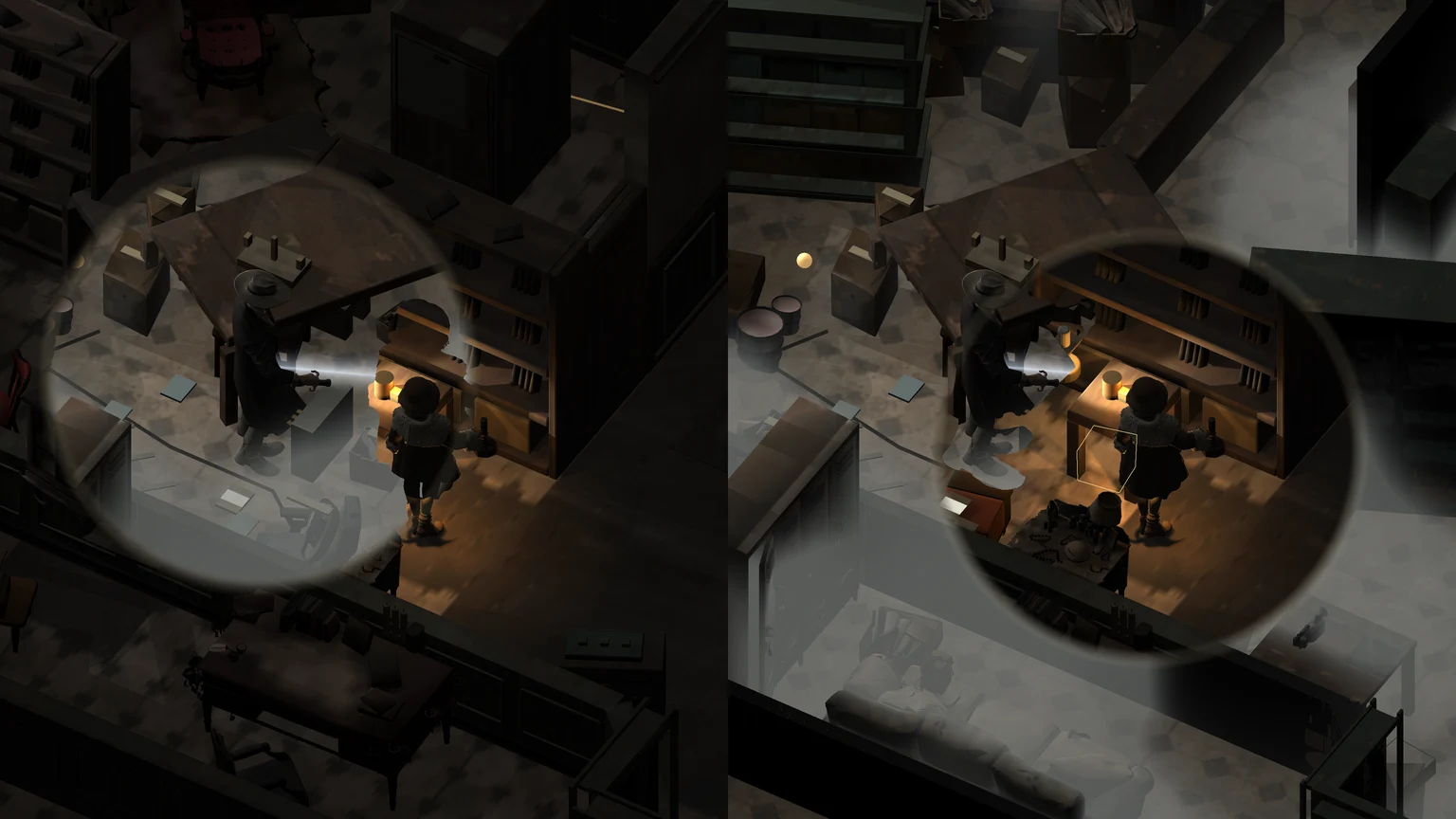
The workbench and reflected light seen through the shared time window

Connecting

E Both parties moved closer to the phone to answer it.

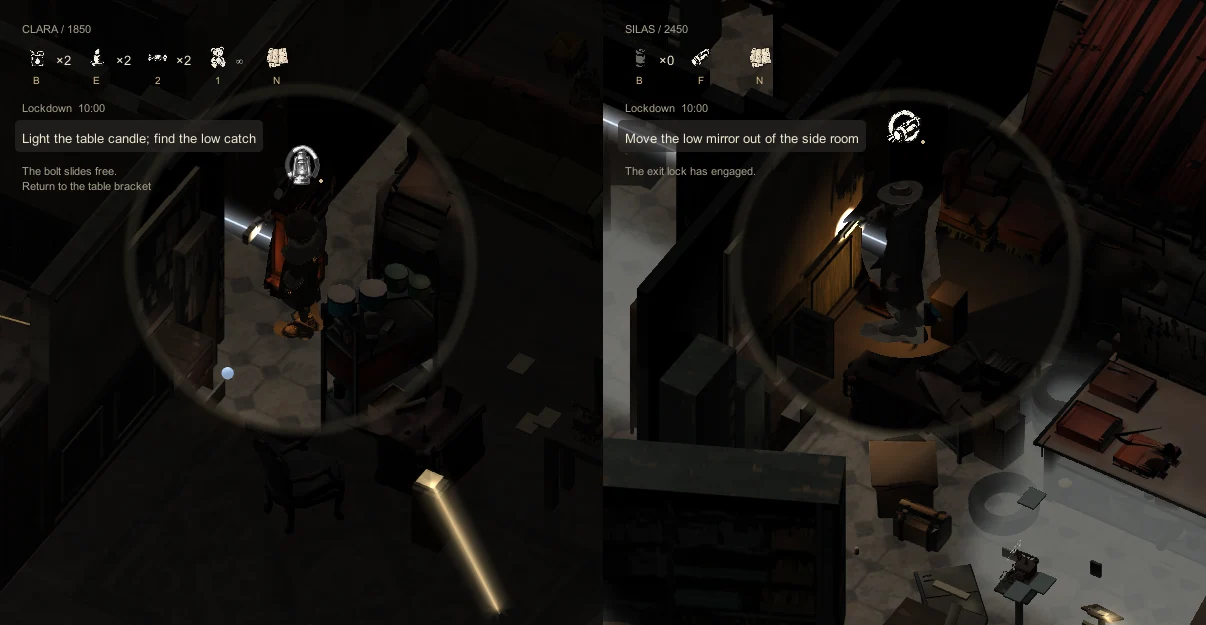
After the control box was first truly illuminated, two separate player screens began to display split-screen mode; circular windows from another era appeared around the companions.

Clara redirected the light path from the window to the wall-mounted reflector.

Silas went to the first storage cabinet by the stairs and opened it, then placed the lens left over from the previous stage inside.

Plan A

E Move around to the outside of the workbench, approach the rear end, and select the workbench. Then slowly push it towards the inner side of the room, moving along the wheel marks on the ground.

Plan B

Clara adjusted the angle of the window mirror and raised the incident light;

Silas moved closer to the crank and adjusted the angle of the mirror.

Silas directed the reflection towards the position of the cabinet door.

The reflected light aimed at the cabinet door
Move around to the outside of the workbench, approach the rear end, and select the workbench. Then slowly push it towards the inner side of the room, moving along the wheel marks on the ground.

Puzzle 3

Both eras of the room with the mirror, stool and lit candle

reflection of the lighthouse

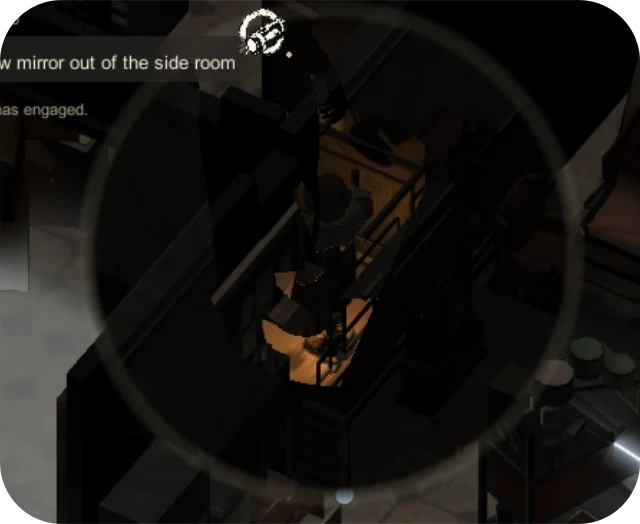
After Silas cleared the surrounding items, he approached the handle of the mirror and pressed E

Q R Z V he moved the reflection of the main mirror onto the recording page.

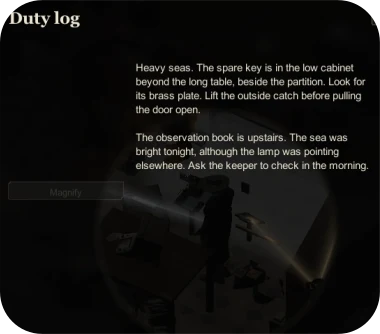
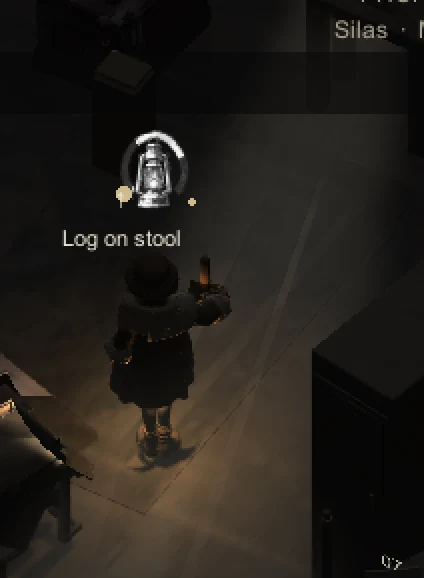
Clara went to the low stool and read when the reflection of the lighthouse appeared on the paper page.

The recording page beside the illuminated mirror

short crowbar

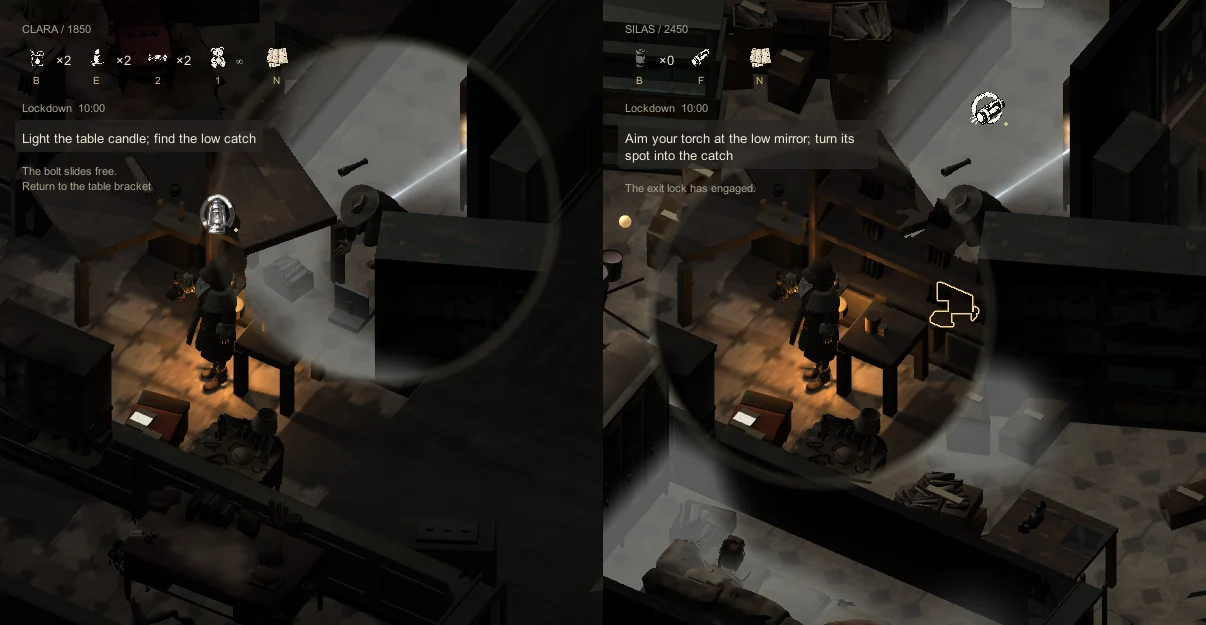
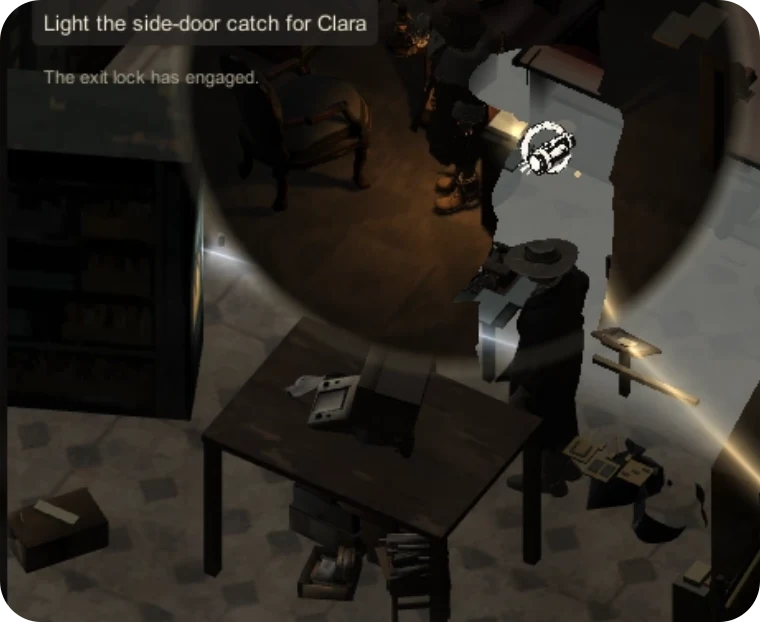
Clara retrieved the short crowbar from the low stool beside the door. Silas aimed the flashlight at the lock on the side of the door at the same position in his own era and kept shining it.

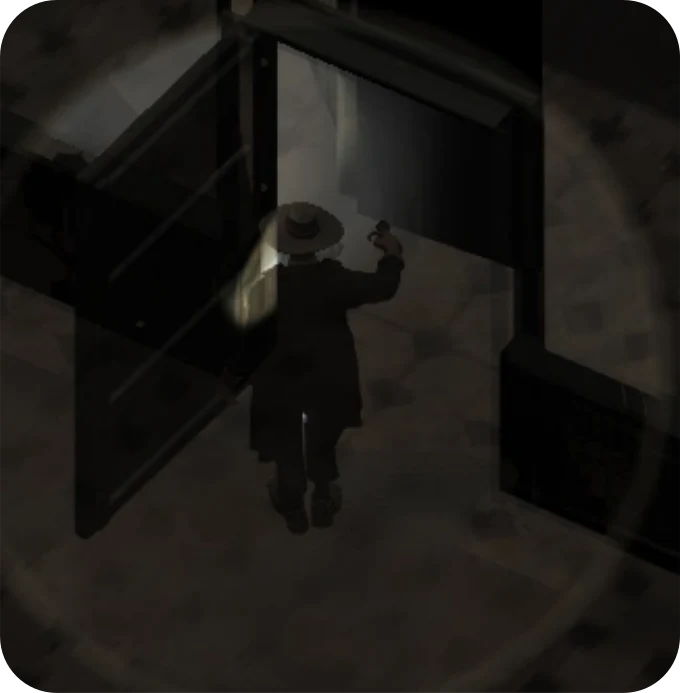
E Clara pushed the cover open from the inside; then Silas was able to open the future side door.

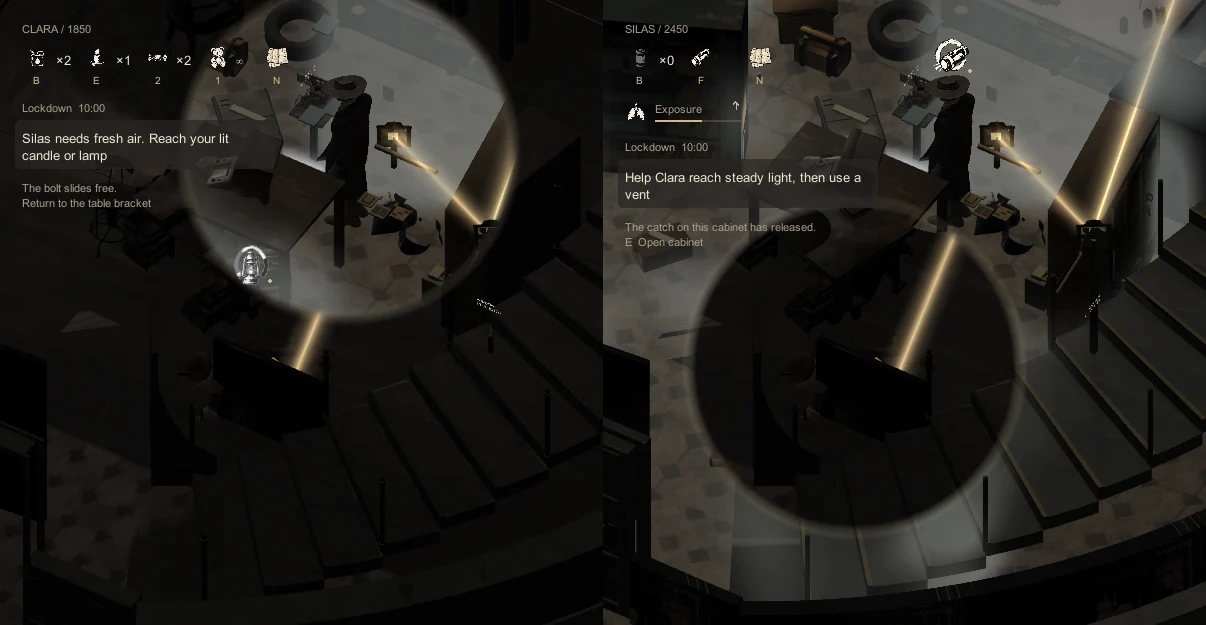
Silas carried; Clara moved synchronously

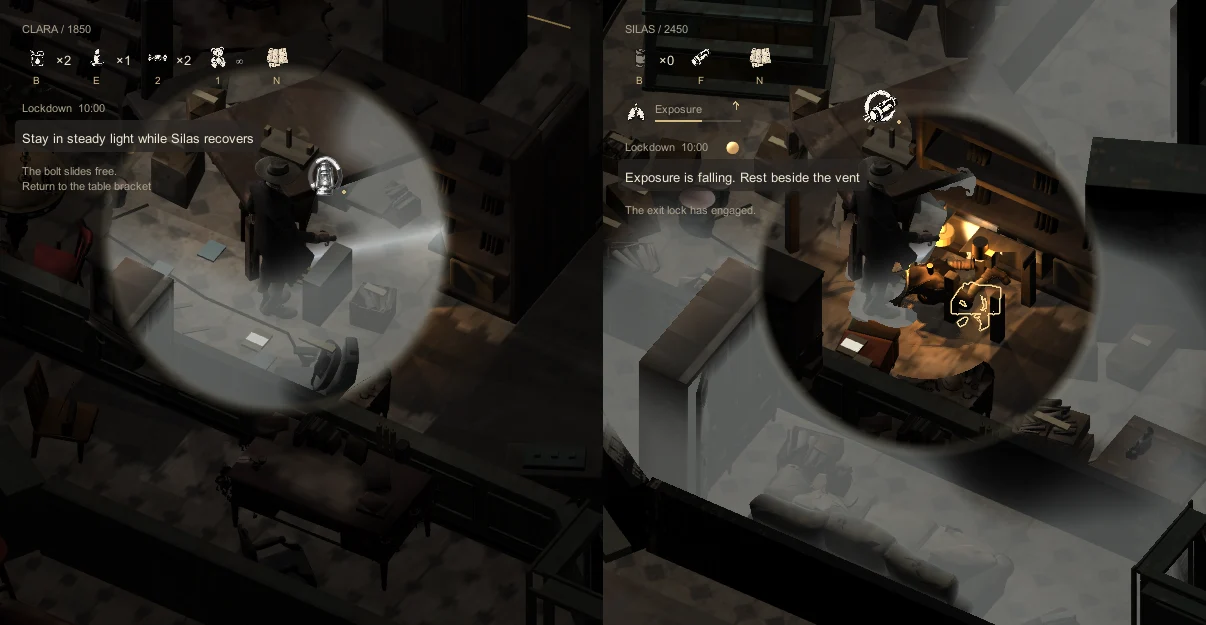
When Silas's exposed state required attention, Clara moved back to the continuously burning candle.

After confirming that she was in a stable illuminated area, Silas entered the corresponding ventilation range and waited for the exposure level to decrease; once recovered, he resumed the lighting.

Clara stays by the candle while Silas recovers in the ventilation area

candlestick

E When Clara carries a candle and has matches or a burning oil lamp, she lights it beside the candlestick and uses up one candle.

C Then, place the oil lamp near the candlestick and crawl towards the low cabinet under the table.

key

The two returned together to the main mirror base along the safety light source.

E Silas redirected the reflected light from the recording page back to the stairway latch

Silas then used the key he held to open the exit of his era and walked over.

The shared path back to the mirror base and stairway latch

Lighting coordination and poison fog restrictions

The rotating lighthouse light and the reflection target
4 s
sweep reaches selected target
6 s
beam has turned away

Same mirror angle; next sweep returns

The lighthouse beam periodically sweeps into the room, lasting approximately 4 seconds each time, followed by a 6-second interval. After the lighthouse beam stopped, the two needed to use oil lamps, candles, or flashlights to maintain the lighting in order to continue moving forward.

Silas enters the polluted room

0–45 s · grace · 45–105 s · harm ramps up · 105 s+ · full rate

P1 / P2: visible fog, no poisoning. P3: the fog’s height and density rise from the alarm; harmful exposure begins after the grace period.

After the P3 alarm is triggered, the toxic fog in the future scene gradually intensifies. The degree of Silas' poisoning will increase with the duration of his stay, and he needs to go to the ventilation outlet to recover. Light cannot remove the toxic fog, so he must first have Clara reach a place with stable lighting before he can leave the illuminated area.

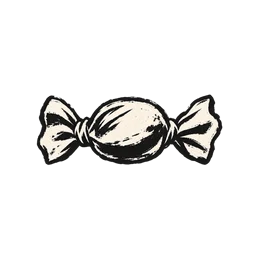
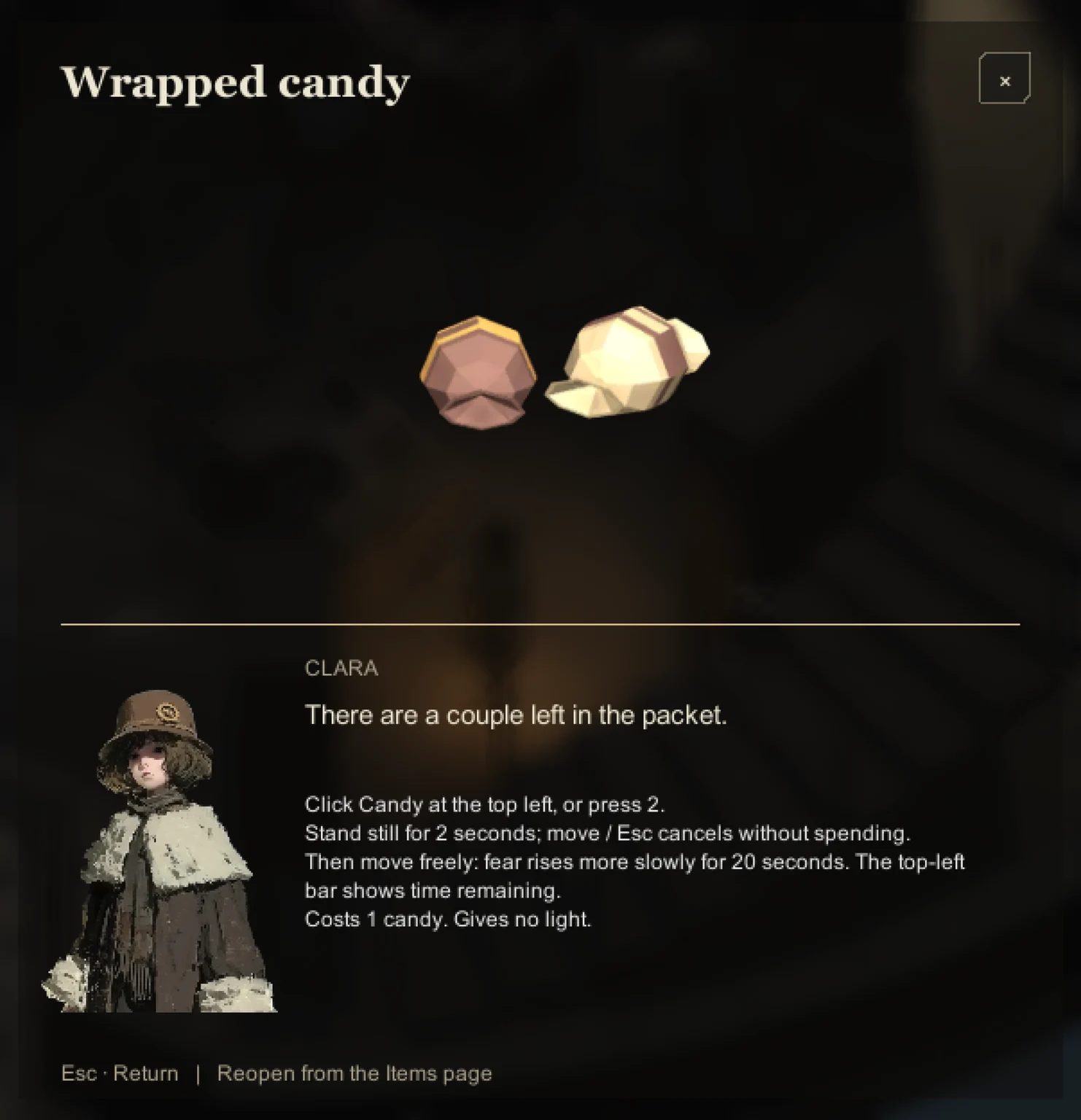
Wrapped candy item in the game
Candy A temporary item that helps players overcome their fear of darkness. Appearing randomly in the scene, with a limited number.
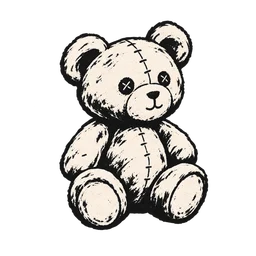
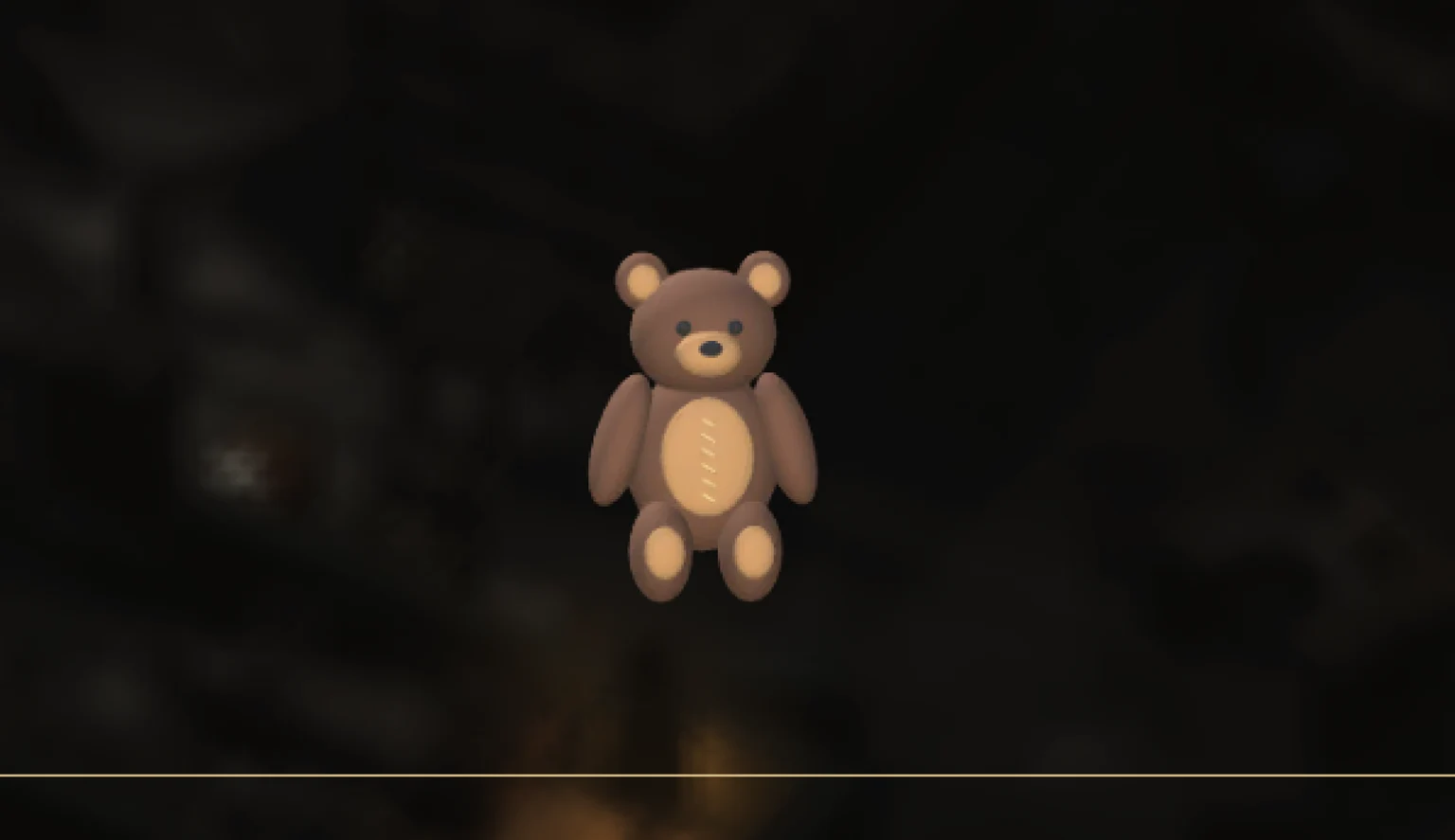
The bear discovered in the office
Bear Discover and take it in the office. There is no limit to the number of uses, but as the player's usage increases, the duration of the effect will shorten.
Return to the light source area and resume.

Programming

The same location

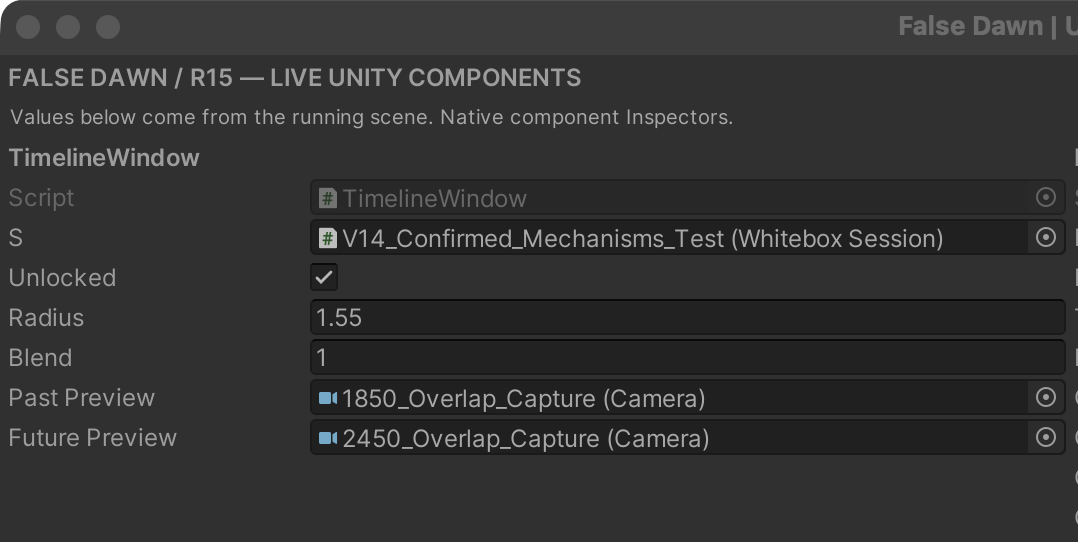
The two players at the same location, seen through the circular timeline windows.
01Convert the position of the partner to one that is visible in your own view.

First, remove the original point of the other party's era, and then add the original point of our own era.

Vector3 mapped=remote.transform.position-remoteOrigin+localOrigin+Vector3.up*(remote.crawling?.35f:.85f);
var center=view.WorldToViewportPoint(mapped);
LastCenter=center;
if(center.z<0||center.x<-.4f||center.x>1.4f||center.y<-.4f||center.y>1.4f) {
  Graphics.Blit(source,destination);
  return;
}
if(!other||other.width!=source.width||other.height!=source.height) {
  if(other) {
    other.Release();
    Destroy(other);
  }
  other=new RenderTexture(source.width,source.height,24,RenderTextureFormat.ARGB32) {
    name="Other era aligned view",filterMode=FilterMode.Bilinear
  }
  ;
  other.Create();
}
02Render and match the perspective using another camera

Align the camera's position and projection matrix, render another era into the RenderTexture, and then composite it using a circular mask centered on the character. Keep one's own character with a separate mask to avoid being covered.

preview.CopyFrom(view);
preview.enabled=false;
preview.rect=new Rect(0,0,1,1);
preview.targetTexture=other;
preview.aspect=view.aspect;
preview.projectionMatrix=view.projectionMatrix;
preview.transform.SetPositionAndRotation(view.transform.position-localOrigin+remoteOrigin,view.transform.rotation);
preview.cullingMask=~(1<<(past?10:11));
preview.depthTextureMode=DepthTextureMode.Depth;
// The capture has its own era lighting and projection; it never moves either player.
preview.Render();

Pollution accumulation

Pollution component in the Unity Inspector P3 light relay settings in the Unity Inspector
public void Simulate(float dt) {
  if(!s||settings==null)return;
  bool active=InP3;
  if(active!=wasP3) {
    ResetStage();
    wasP3=active;
  }
  if(!active) {
    exposure=0;
    poisoned=false;
  }
  else if(!s.freezeBudgets&&!Reading&&!s.p3.complete&&!s.p3.timedOut) {
    stageSeconds+=dt;
    if(!introWarned&&stageSeconds>settings.graceSeconds) {
      introWarned=true;
      s.Say(false,"雾开始往上漫了。待久了会喘不上气,镜座和书架旁都有通风口,难受了就过去缓一缓。","Silas");
    }
    var local=s.futurePlayer.transform.position-s.futureWorld.position;
    bool inside=local.x>=settings.min.x&&local.x<=settings.max.x&&local.z>=settings.min.z&&local.z<=settings.max.z&&local.y<settings.max.y;
if(InFreshAir||!inside)exposure=Mathf.Max(0,exposure-dt/Mathf.Max(1,settings.recoverySeconds));
else exposure=Mathf.Clamp01(exposure+dt*Concentration/Mathf.Max(1,settings.exposureSeconds));
if(exposure>=1) {
  poisoned=true;
  s.p3.timedOut=true;
  s.ReleaseCarry();
}
if(!warningLow&&exposure>.35f) {
  warningLow=true;
  s.Say(false,"咳……雾越来越浓了。附近的通风口还在送风,我得过去缓一缓。","Silas");
}
if(!warningHigh&&exposure>.72f) {
  warningHigh=true;
  s.Say(false,"喘不上气了,得先回通风口。","Silas");
}

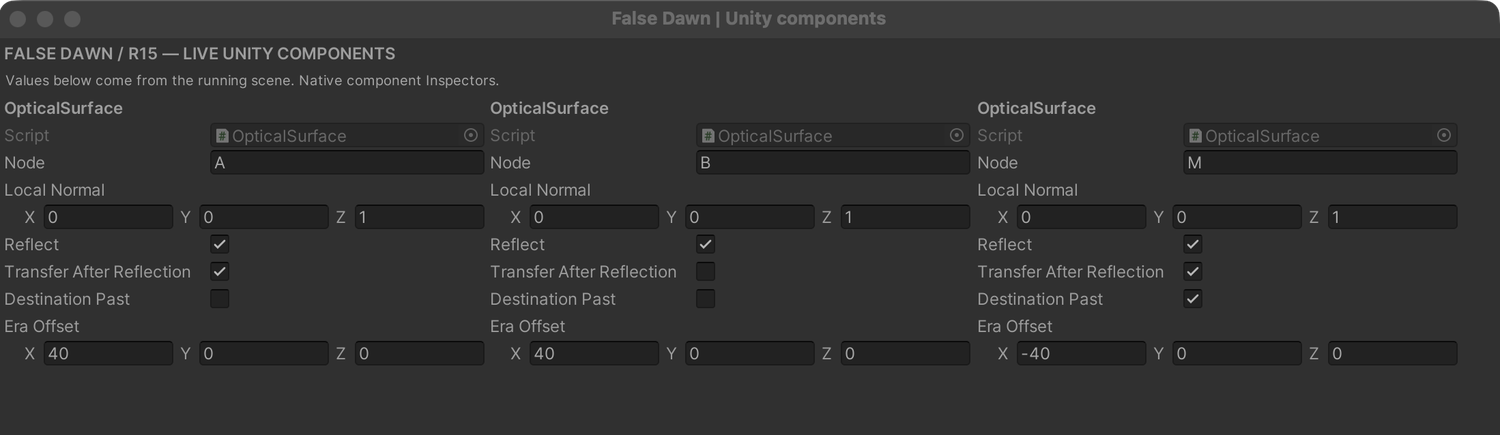
Optical surfaces & era offsets

Optical surface settings for A, B and M

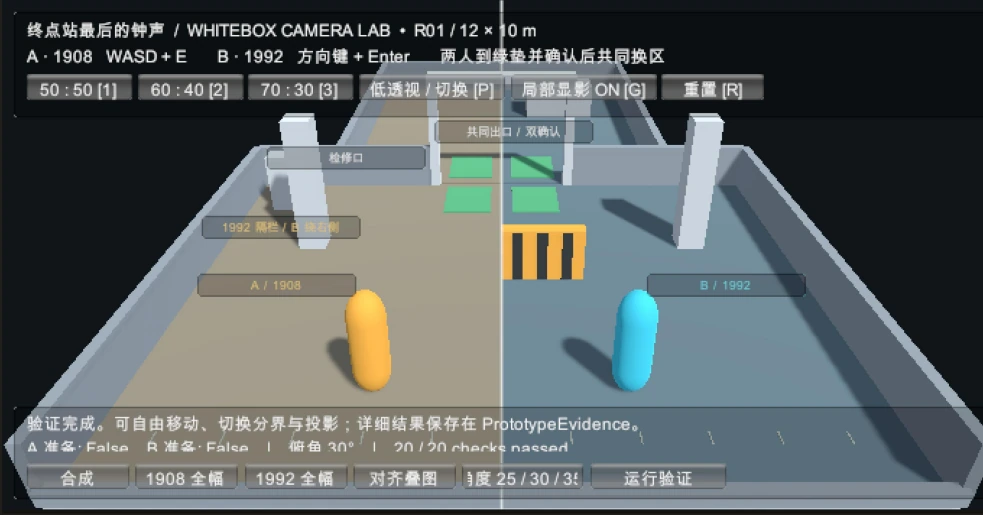
Timeline window & cooperation

Whitebox Camera Lab — 终点站最后的钟声, 1908 and 1992 Timeline window and local cooperation settings

Two local role windows respectively input the role number, the key held down, and the aiming position.

Production Process

  1. Concept generation, topic research, visual concept generation

    • Figma
    • Procreate
    • Midjourney
  2. Sketching, model creation, and rendering setup

    • Photoshop
    • Tripo 3D
    • Blender
  3. Demo production, program writing

    • Unity
    • ChatGPT
Two timelines on the laptop screenClara in the past workshopSilas in the future workshop
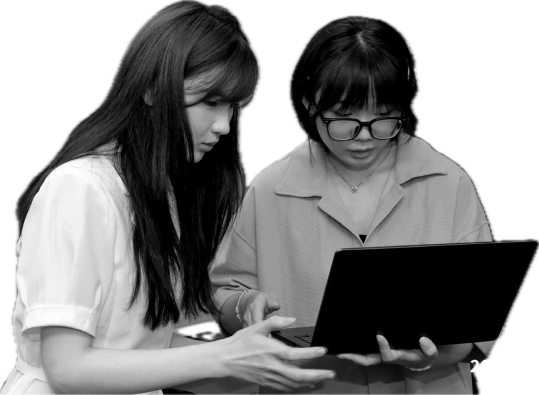
Two players testing False Dawn together.
Demo